School Violence Decreased with Remote Classes, but Cyberbullying and Group Exclusion Increased
Diverse Cyberbullying Methods...Victims Complain of Mental Distress
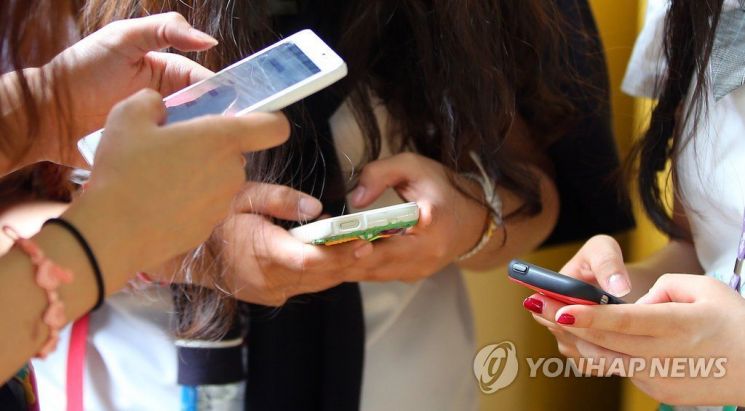 Due to the impact of the novel coronavirus infection (COVID-19), overall experiences of school violence have decreased, but incidents of group bullying and cyberbullying have relatively increased. The photo is unrelated to specific expressions in the article. [Image source=Yonhap News]
[Asia Economy Reporter Heo Midam] # A second-year student, A, attending a middle school in Seoul recently deleted all her social networking service (SNS) accounts, including Facebook, Instagram, and KakaoTalk. This was because a "silent hell" began after a fight with a friend last year. Classmates called A into group chat rooms and showered her with insults, and when A left the chat rooms, they invited her back to pour even harsher verbal abuse. The perpetrators also posted photos of A on Instagram without her permission, mocking her appearance. A said, "I can't sleep because my phone alarm goes off incessantly," and added, "I feel like they just see me as a plaything. Every time I look at SNS, I feel miserable."
Cyberbullying, which involves collectively ostracizing or persistently harassing a specific person online, is emerging as a serious problem among adolescents. Especially with the spread of the novel coronavirus disease (COVID-19) last year and the continuation of remote classes, cyberbullying has increased as physical and direct violence within schools has decreased.
The problem is that cyberbullying through SNS and other platforms is carried out in a sophisticated manner, making detection difficult. In particular, some students who have been persistently victimized by cyberbullying have resorted to extreme measures, leading to growing calls for stronger punishments. Experts suggest that mechanisms to objectively measure the reality of cyberbullying among children and adolescents need to be established.
Due to the decrease in school attendance days caused by the COVID-19 pandemic last year, the number of school violence cases reportedly declined. According to the "2020 School Violence Survey" conducted by the Ministry of Education and metropolitan/provincial education offices targeting students from 4th grade of elementary school to 2nd grade of high school, 0.9% of students reported experiencing school violence, down 0.7 percentage points from 1.6% the previous year.
On the other hand, the proportion of group bullying and cyberbullying increased. In the same survey, group bullying rose by 2.8 percentage points and cyberbullying by 3.4 percentage points compared to the previous year. Group bullying was most prevalent in elementary schools, followed by middle and high schools.

Cyberbullying refers to various forms of harassment inflicted on others related to the internet. Unlike traditional violence, which involves physical harm, cyberbullying takes diverse forms. Especially with the widespread use of smartphones, mobile messengers, and SNS, "cyberbullying" has become a new type of school violence.
Cyberbullying includes ▲inviting a person to a group chat room to bombard them with insults, known as 'tteka' ▲continuously inviting someone back after they leave the chat room, called 'KakaoTalk prison' ▲leaving the chat room while leaving only the target of bullying behind, known as 'bangpok' (room explosion).
Other forms include ▲'KakaoTalk ghosting,' where everyone in the chat room deliberately ignores one person, and ▲'sniping,' where the victim's real name is not mentioned but disparaging remarks are made so that anyone can guess who is being targeted.
The problem is that such harassment occurs subtly online, making it less visible than traditional school violence. Moreover, since bullying and harassment can happen anytime and anywhere without restrictions, the mental suffering of victims is inevitably greater.
Last year, a male student who committed cyberbullying against a female student on Facebook and other SNS was fined 5 million won. He was prosecuted for posting sexually defamatory content and comments about the female student on his Facebook in 2018. The female student was found dead in a flower bed of a high-rise apartment in Namdong-gu, Incheon, on the day the defamatory posts were made.
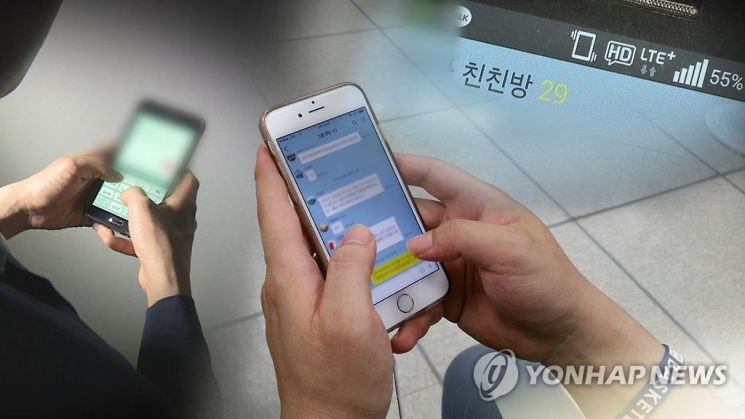
As a result, calls for regulation of cyberbullying are growing. Even if harm occurs due to cyberbullying among adolescents, if the perpetrator and victim do not belong to the same school, it is difficult to handle the case as school violence. Also, even if charges such as threats or defamation are proven, under current law, adolescents under 19 are subject to the Juvenile Act, so the level of punishment is not severe.
Office worker Kim (28) said, "The biggest problem with cyberbullying is the relentless harassment day and night," adding, "They should not be given leniency just because they are adolescents; strong punishment is necessary. Nowadays, adolescents sometimes commit crimes more cruel than adults. Also, experiencing such harassment at a young age will have a significant impact when they become adults." He continued, "Strict punishment is needed to prevent such incidents from happening."
Cyberbullying is treated as a serious social issue in other countries as well. In the UK, health and education classes inform students about the risks of cyberbullying and how to cope with it, and the US Department of Health and Human Services has established a cyberbullying website that guides not only students but also parents and teachers on how to deal with cyber harassment. Additionally, the New Zealand government has proposed legislation that could impose up to three years of imprisonment for cyberbullying offenses.
Experts have suggested the need for separate tools to measure cyberbullying damage. A research team led by Professor Jeon Jongseol of the Department of Social Welfare at Ewha Womans University, in a paper titled "An International Systematic Review of Cyberbullying Measurement," stated, "In the prolonged pandemic situation, not only learning but also leisure activities and friendships of children and adolescents are all conducted online. This shift to an online-centered environment has rapidly increased the damage caused by cyberbullying, which harms our children, and existing measurement tools have limitations in accurately capturing this."
They added, "For accurate screening and prevention and intervention of cyberbullying, standardized measurement tools are necessary, and it is especially important and urgent to develop tools that reflect sociocultural characteristics and have verified reliability and validity."
© The Asia Business Daily(www.asiae.co.kr). All rights reserved.
![Clutching a Stolen Dior Bag, Saying "I Hate Being Poor but Real"... The Grotesque Con of a "Human Knockoff" [Slate]](https://cwcontent.asiae.co.kr/asiaresize/183/2026021902243444107_1771435474.jpg)


















