[Kim Seon-ju, Senior Researcher at the Agency for Defense Development] The initial function of radar was limited to transmitting electromagnetic waves and simply detecting targets and measuring the distance between targets from the reflected signals. However, modern radar capabilities have advanced beyond target recognition and differentiation to acquiring image information.
Thanks to these technological advancements, radar now plays a key sensor role in modern warfare. In the long-range precision strike system (Kill-Chain), which plays a crucial role in protecting the nation from recent issues such as asymmetric power or nuclear threats, radar can acquire target information early and perform precise tracking of designated targets.
▲ The Radar Game Begins= Research on detecting objects using electromagnetic waves was secretly conducted by several countries for military purposes even before the 1930s. In 1935, the British research team led by Robert Watson Watt successfully detected and tracked an aircraft at a distance of 40 miles and an altitude of 1,000 feet using electromagnetic waves. The U.S. Navy named the equipment utilizing this technology RADAR (RAdio Detection And Ranging), marking the beginning of radar history.
During World War II, as fighter jets played an important role in combat, a fierce survival game began between radar systems trying to detect enemy fighters early and fighters attempting to hide their presence from radar and infiltrate enemy territory?this was the radar game. The nature of the radar game evolved into a more sophisticated and intense competition through the arms race among major countries during the Cold War, which was armed with advanced technology, and the rapid technological development in the civilian sector during the 1990s.
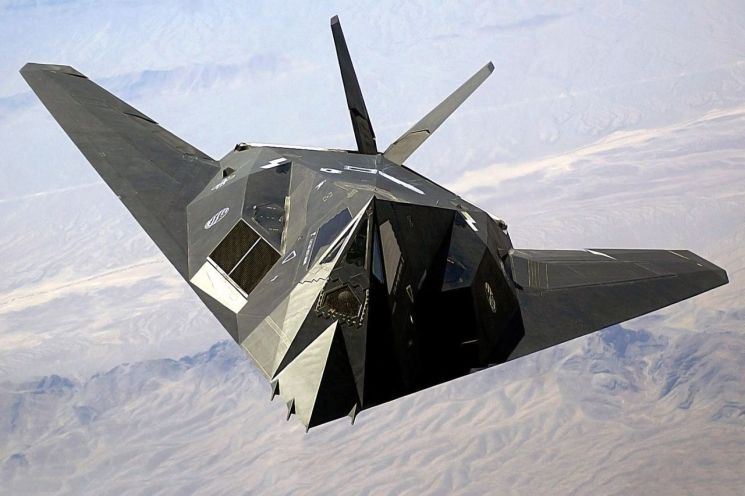
In modern combat situations, the presence of key sensors like radar that provide precise target information and precision weapons (such as missiles) boasting high hit rates has drastically reduced fighter survivability. As a result, major countries worldwide have focused on developing stealth technology to maximize the reduction of radar wave reflections, making fighters undetectable by radar to enhance survivability over the past several decades.
For radar, which must process signals reflected by objects, how much the target reflects radar electromagnetic waves is a critical factor, measured by the radar cross-section (RCS). Stealth technology aims to minimize the radar cross-section (RCS) so that radar cannot detect the target. Comparing the RCS of conventional aircraft and stealth aircraft, the RCS of stealth targets is only about 1/1000 to 1/10000 of conventional targets from most directions except for specific angles. The first fighter to operate with stealth technology in missions was the U.S. F-117 fighter, deployed during the 1991 Gulf War.
▲ Radar Components and Main Functions= Fundamentally, radar consists of a transmitter, antenna, receiver, signal processor, and controller. The transmitter generates signals in a predetermined form within the radar system and produces or amplifies power to transmit these signals over long distances. In the past, transmitters mainly used vacuum tube-type high-power oscillators and amplifiers, but recent advances in electronics have replaced these with semiconductor devices.
The antenna is a matching device that either radiates electrical signals generated by the transmitter into the air or converts electromagnetic signals from the air into electrical signals. It is the most important component for radar, which uses electromagnetic waves. Additionally, antenna technology closely relates to the history of radar, as it prominently represents the radar’s appearance.
The receiver amplifies the weak signals received through the antenna with low noise and converts them into a frequency band suitable for signal processing. It also determines the sensitivity of the radar to detect distant targets.
The signal processor is the core device responsible for the radar’s main functions and performance. The transmitted signals mix with various unwanted signals (noise, clutter, interference) from the surrounding environment. To extract only the desired target signals from these complex signals, multiple stages of signal processing are performed. The controller acts like the brain of the radar, managing the operation of all devices to ensure proper functioning and post-processing the signal-processed target information according to the requirements of external operators or operating systems.
▲ How to Classify Radar= Even today, various new types of radar are being developed not only for military use but also as important information acquisition sensors in civilian fields such as autonomous vehicles. Therefore, classifying radar within a fixed framework is a very complex and challenging task. Radar can be classified based on its functions, missions, detection range, operating frequency band, installation location, operating waveform, and antenna type. For example, based on installation location, radar can be categorized as ground-based, shipborne, airborne, or satellite-mounted. Radar names can be composed by combining these classification criteria. For instance, terms like “ground-based short-range search radar” or “airborne active phased array radar” are used.
As the names suggest, radar is a sensor using electromagnetic waves, so its characteristics are often greatly influenced by the operating frequency. Low frequencies are used primarily for long-range target detection, while high frequencies are used mainly for precise target tracking. When space for installing radar antennas is limited, higher frequencies are selected if possible, and when high output is required, lower frequency bands are chosen.
© The Asia Business Daily(www.asiae.co.kr). All rights reserved.
![Clutching a Stolen Dior Bag, Saying "I Hate Being Poor but Real"... The Grotesque Con of a "Human Knockoff" [Slate]](https://cwcontent.asiae.co.kr/asiaresize/183/2026021902243444107_1771435474.jpg)















