Gangnam-gu Health Status Survey Results for 945 Gangnam Residents Confirmed with COVID-19 from February 26 to December 31 Last Year (872 Domestic, 73 Imported Cases)
[Asia Economy Reporter Park Jong-il] The third wave of COVID-19 has passed its peak and entered a gradual decline. Following the 18th, when the daily new cases dropped to the 300s for the first time in 54 days, the number of new domestic confirmed cases as of midnight on the 19th remained stable at 386.
In the recent week (January 10?16), the average daily number of locally transmitted confirmed cases was 516.1, a significant decrease of 222 cases (30.1%) compared to the previous week (January 3?9, 738.0 cases).
The reproduction number (R), which indicates how many people one infected person infects, also fell from 0.88 to 0.79.
In particular, Seoul saw new confirmed cases drop to the 90s on the 19th after maintaining the 100s for 11 consecutive days. Compared to last month, when the daily cases stayed in the 300s for 15 consecutive days, this represents a substantial reduction in scale.
However, infections in daily life and hidden sources of infection remain. The proportion of confirmed cases with unknown infection routes increased to 29.5% in the past week, up from 28.2% the previous week, and the proportion of asymptomatic cases also rose from 35.6% to 37.1% during the same period.
The government extended the social distancing level 2.5 and the ban on private gatherings of five or more people for two more weeks until the 31st. After monitoring the situation for the next two weeks, it will decide whether to extend the current measures through the Lunar New Year holiday (February 11?14).
The global cumulative number of COVID-19 cases has surpassed 95 million. As of the 18th, Johns Hopkins University reported 95.09 million cases in the U.S., and the international statistics site Worldometer reported 95.53 million cases worldwide. The cumulative death toll has risen to over 2 million (2.04 million according to Worldometer), with an additional 1 million deaths occurring in less than four months since surpassing 1 million at the end of September last year.
The United States accounts for 25% of global confirmed cases and 20% of deaths, with 25 million cumulative cases and 400,000 deaths. Even on the eve of President Joe Biden’s inauguration, vaccine supply shortages continue to cause confusion.
France has moved its nationwide curfew time forward to 6 p.m., while Germany recorded a record high of 1,200 deaths in a single day.
In Japan, despite the state of emergency declaration, new confirmed cases have fluctuated around 6,000, prompting government officials to mention the possibility of canceling the Tokyo Olympics for the first time.
Concerns are growing as highly transmissible variants from the UK, South Africa, and Brazil have been detected worldwide. The U.S. Centers for Disease Control and Prevention (CDC) warned that the UK variant could dominate the U.S. by March.
President Moon Jae-in stated at yesterday’s New Year press conference, “Vaccinations will begin in February, and by September, we plan to complete the first dose for all citizens who need vaccination,” adding, “By then, herd immunity will be established.”
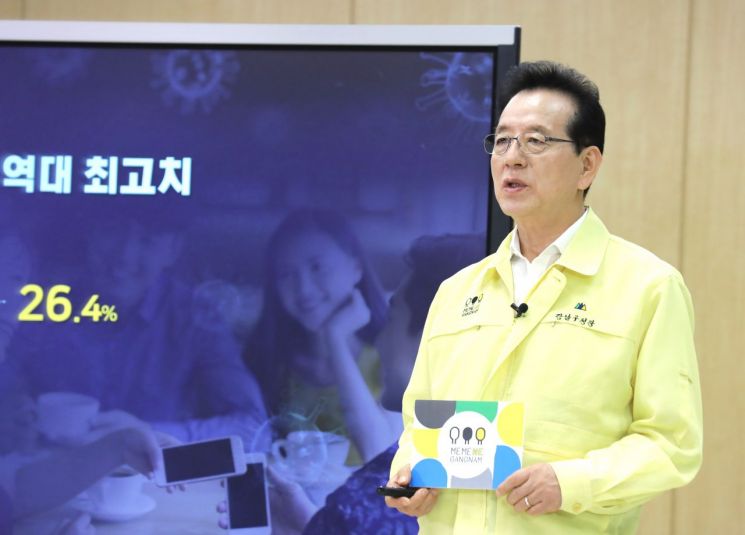
In this regard, Gangnam-gu has proactively formed a task force and is preparing detailed guidelines to ensure safe and systematic vaccination.
Now, let’s watch a video on the current COVID-19 status and key policies in Gangnam-gu.
As of the 19th, there have been 1,088 confirmed cases. Cases 1082, 1083, and 1085 through 1087 were confirmed positive as family members of previously confirmed Gangnam-gu residents. Case 1084 was confirmed through contact with a previously confirmed Gangnam-gu resident, and case 1088 was confirmed through contact with a confirmed case from another region.
Gangnam-gu is conducting a detailed epidemiological investigation to identify additional contacts related to a cluster infection at the ‘Olympia Sauna’ located in Yeoksam-dong (B2, 72 Nonhyeon-ro 79-gil). Male users of the sauna from the 6th to the 19th are requested to visit the Gangnam-gu Public Health Center or temporary screening clinics by the 22nd to undergo mandatory testing.
As of the 19th, Gangnam-gu is managing 967 individuals under self-quarantine, including 721 overseas arrivals and 246 domestic contacts.
The cumulative number of tests conducted at Gangnam-gu Public Health Center screening clinics and temporary screening clinics is 167,471. Of the 1,192 tests conducted the previous day, 61 were overseas arrivals and 1,131 were domestic residents.
Gangnam-gu surveyed the health status of 945 confirmed Gangnam-gu residents (872 domestic cases, 73 imported) diagnosed with COVID-19 from February 26 to December 31 last year. Among them, 303 (32%) were asymptomatic, and 484 have fully recovered.
It was analyzed that 455 are still undergoing treatment. Infection routes were 65% (610 cases) from contact with confirmed cases, 8% (73 cases) imported, and 23% unknown. Among contacts with confirmed cases, family transmission was the most common with 222 cases (36%).
By age group, among males, those in their 50s were the most affected with 95 cases, followed by 40s and 60s with 80 cases each, and then 20s with 67 cases. Among females, the order was 50s (95 cases), 60s (85 cases), 30s (70 cases), and 40s (68 cases). Women in their 30s and 40s, who accounted for 15% (138 cases) of all female confirmed cases, were largely linked to school-going children.
Six Gangnam-gu residents have died from COVID-19 (case fatality rate 0.63%). Except for one in their 50s, all were in their 70s. The cause of death was pneumonia or respiratory failure due to lung damage.
Among 310 respondents who were declared fully recovered after treatment, 31% (97 people) reported experiencing post-COVID symptoms such as ‘brain fog’?a persistent feeling of confusion and mental cloudiness?and decreased concentration, making it difficult to think or express clearly.
Most notably, one in five individuals across personal, workplace, and community settings reported a decline in quality of life due to income reduction and social withdrawal. Some workers, despite being declared recovered, were reportedly pressured to resign.
COVID-19 is an infectious disease that anyone can contract. Infectivity after recovery is low. People should not be stigmatized simply for having been infected.
Such social stigma discourages people from getting tested. If hidden infections increase, local communities will face greater risks. It is time to show solidarity, care, and respect for confirmed patients, their families, and those in self-quarantine who are going through difficult times.
Gangnam-gu offers free psychological counseling through the Gangnam-gu Public Health Center Mental Health Welfare Center for residents experiencing anxiety, insomnia, and other difficulties due to COVID-19.
© The Asia Business Daily(www.asiae.co.kr). All rights reserved.
![Clutching a Stolen Dior Bag, Saying "I Hate Being Poor but Real"... The Grotesque Con of a "Human Knockoff" [Slate]](https://cwcontent.asiae.co.kr/asiaresize/183/2026021902243444107_1771435474.jpg)















