Gangbuk Samsung Hospital Research Team Participates in International Study
"31 Genes Affect Gut Microbiome Quantity and Presence"
"Expected to Aid Personalized Nutrient and Drug Development"
[Asia Economy Reporter Lee Chun-hee] A study has revealed that human genes influence the presence and quantity of gut microorganisms (microbiome) and their composition.
The Microbiome Genome Consortium, involving the cohort research team of Kangbuk Samsung Hospital, announced on the 19th that they have identified human genetic factors related to the formation of gut microorganisms.
The Microbiome Genome Consortium research team, consisting of 11 countries including Korea, the United States, Canada, Israel, Germany, Denmark, the Netherlands, Belgium, Sweden, Finland, and the United Kingdom, analyzed human genetic factors affecting the composition of gut microbiota in over 18,000 individuals from 24 cohorts (homogeneous groups). The Kangbuk Samsung Hospital cohort participated as the only Asian group using Korean genome data.
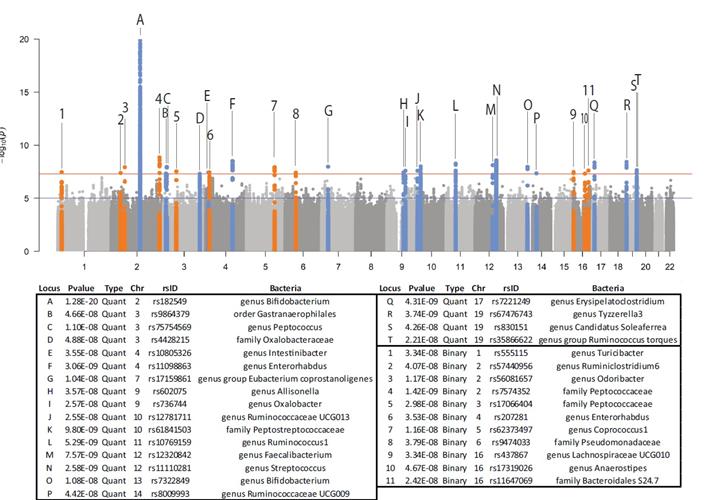
Through this study, the research team identified 31 human genetic loci (positions on chromosomes where genes are located) associated with gut microorganisms. Among these, 20 loci were found to influence the quantity of gut microorganisms, and 11 loci affected their presence or absence.
The team discovered that variations in the lactase (LCT) gene, which produces the enzyme that breaks down lactose?the main sugar in milk?are strongly associated with the amount of Bifidobacterium capable of digesting lactose. They also confirmed that variations in the fucosyltransferase (FUT2) gene are linked to the quantity of Ruminococcus torques.
Notably, using the genetic variation information identified in this study, the researchers found a causal relationship indicating that an increase in Bifidobacterium reduces the risk of ulcerative colitis, an inflammatory bowel disease, and that Oxalobacter formigenes has a protective effect against rheumatoid arthritis. The protective effects of specific microorganisms against diseases are expected by the research team to extend to further studies, including the development of microbiome-based therapeutics.
Additionally, the research team revealed that several other genes influence the composition of gut microbiota and are involved in human metabolism, nutrition, and immunity.
Professor Kim Hanna of the Research Support Team at Kangbuk Samsung Hospital, who participated in the study, said, "This study is a good example of large-scale international collaboration and is the first to accurately assess the impact of human genetic factors on gut microbial communities. We hope that these findings will aid in the development of personalized nutrients and drugs."
Shin Ho-chul, Director of Kangbuk Samsung Hospital, emphasized, "It is significant that the Kangbuk Samsung Hospital research team was the only one from Asia to participate in this study. The Kangbuk Samsung Hospital cohort plans to continue its efforts to achieve the goal of creating a genetic map of disease-related genes in Koreans."
Meanwhile, the results of this study were published in the latest issue of the internationally renowned journal Nature Genetics.
© The Asia Business Daily(www.asiae.co.kr). All rights reserved.
![Clutching a Stolen Dior Bag, Saying "I Hate Being Poor but Real"... The Grotesque Con of a "Human Knockoff" [Slate]](https://cwcontent.asiae.co.kr/asiaresize/183/2026021902243444107_1771435474.jpg)















