Trump Administration's Unilateral Demands vs. Biden's Alliance Participation Requests
Need to Join CPTPP Before the US
Strengthening Multilateralism and Free Trade Systems
Positive Impact on South Korea's Export Trends
Low Likelihood of Early North Korea-US Dialogue
Defense Cost Negotiation Gaps Unlikely to Narrow
[Asia Economy Reporters Naju-seok, Im Cheol-young, Moon Chae-seok] "A completely different time from the past four years is approaching." Experts in domestic diplomacy, security, trade, and economy expect that the United States under President-elect Joe Biden will be a completely different counterpart from the United States under President Donald Trump.
The roundtable discussion titled "The Opening Biden Era: America is Back" was conducted in writing, considering quarantine guidelines to prevent the spread of the novel coronavirus infection (COVID-19).
Experts foresee that Korea's dilemma in US-China relations will deepen further after the launch of the Biden era, which emphasizes alliances. They pointed out that the Biden administration's request for allied participation, rather than the Trump administration's unilateral demands, could become a greater burden. In particular, they predicted that the high-tech industries at the core of the US-China hegemonic competition, especially semiconductors, could be most significantly affected.
They advised that if Korea pursues joining the Comprehensive and Progressive Agreement for Trans-Pacific Partnership (CPTPP), declaring membership ahead of the US would be a way to reduce the cost of joining.
Regarding North Korea-US relations, suggestions were made that thorough preparation by the Korean government is required during the quiet negotiation phase. In terms of trade, they urged preparation for US-China decoupling.
The following are the main points from the urgent roundtable discussion.
- With alliance diplomacy highlighted in the Biden era, there are concerns that Korea may face difficult situations. What stance do you think Korea should take regarding China?
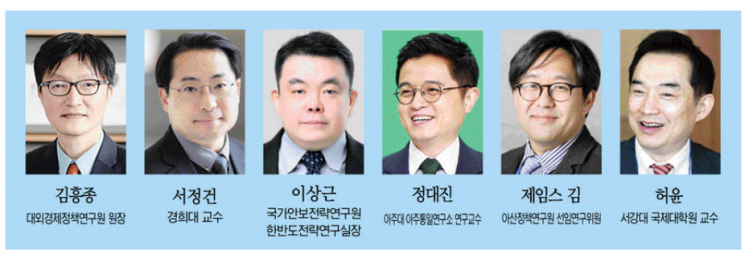
▲ Kim Heung-jong, President of the Korea Institute for International Economic Policy (KIEP) = The US will emphasize alliances and expect our government to clearly express support for US policies. Under the Trump administration, there was room to persuade China to accept our participation in sanctions due to situational inevitability or unpredictability, but if we align with the Biden administration's pressure policy on China, we must secure legitimate logic and grounds for each stance we take and explain them to China. China will also demand clear statements from Korea and may exert pressure using economic relations. The high-tech industries at the core of the US-China hegemonic competition are likely to be most affected. For example, semiconductors, which account for about 20% of our exports, faced a situation last year where new orders became impossible due to the US Department of Commerce's regulations on Huawei. Since President-elect Biden also emphasized America's comparative advantage in advanced technology, the US-China dispute in the high-tech sector is bound to intensify.
▲ Heo Yoon, Professor at Sogang University Graduate School of International Studies = Companies need to hedge risks related to China at the individual corporate level. Even companies that have established major supply chains in China need complementary adjustments to their supply chains. Reducing exposure to China, managing risky assets, and diversifying and decentralizing markets are unavoidable realities in the mid to long term.
▲ James Kim, Senior Research Fellow at the Asan Institute for Policy Studies = The Korean industry most affected by the US-China conflict will undoubtedly be the technology sector. Among these, semiconductors are likely to face the most difficult choices.
- There are predictions that after rebuilding its economy this year, the US will form a new trade bloc called CPTPP Plus or accelerate reforms of the World Trade Organization (WTO). What should our strategy be?
▲ Professor Heo = The US's declaration of joining will obviously reduce interest in CPTPP toward Korea. From the perspective of reducing joining costs, being one step ahead of the US is a useful response. However, the likelihood of the US immediately joining CPTPP is currently low.
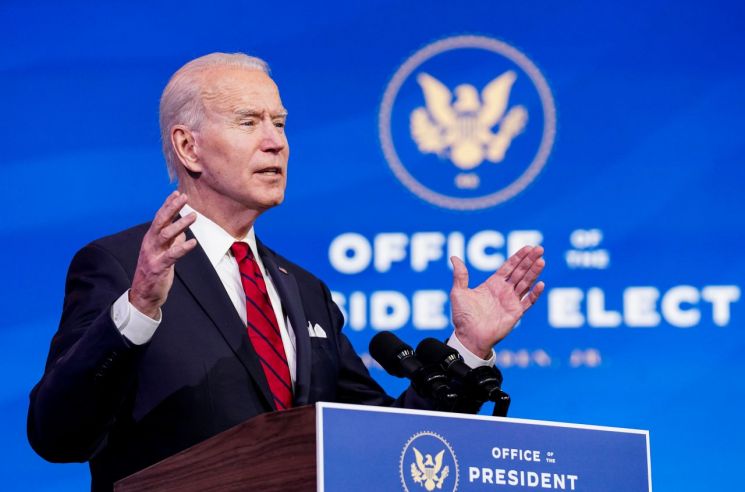
▲ President Kim = Our government should monitor the Biden administration's trade policy direction, 100-day policies, and the Trade Policy Agenda expected to be announced around March this year, and closely watch the US's movements related to CPTPP. The US is likely to lead a new form of regional mega-FTA incorporating key elements of free trade agreements (FTAs) concluded after the US-Mexico-Canada Agreement (USMCA) and the Trans-Pacific Partnership (TPP).
- If the Biden administration restores multilateral diplomacy, do you see a positive impact on Korea's exports?
▲ James Kim = If the multilateral system valued by President-elect Biden strengthens free trade, it is expected to have a positive effect on Korea's export trend. However, the outcome could vary depending on how US-China relations develop and how the international community perceives the US's sincerity, so it is a situation to watch in the short term.
▲ Professor Heo = President-elect Biden is an excellent successor to Trump in trade and China policy. While Biden's economic stimulus measures will act as positive factors, the global development of the COVID-19 pandemic, the recovery level of major economies, and the global ripple effects of the US-China hegemonic war are expected to have a greater impact.
- How do you foresee North Korea-US dialogue in the Biden era?
▲ Lee Sang-geun, Director of the Korea National Security Strategy Institute's Korea Strategy Research Office = The Biden administration emphasizes a bottom-up approach and principled diplomacy, so the possibility of rapid progress in North Korea-US dialogue is low. North Korea is unlikely to withdraw its demand for the US to present a new solution without special reasons, as it believes it has done enough. However, if severe natural disasters or special situations occur this year, leading North Korea to face a crisis, there is a possibility that dialogue could progress through accepting US humanitarian aid.
▲ Jeong Dae-jin, Research Professor at Ajou University Ajou Unification Research Institute = Until the first half of this year, it is expected that both sides will observe changes in the other and focus on resolving domestic issues, showing a pattern of 'strategic patience.' North Korea will emphasize the withdrawal of hostile policies and sanction relief from the US, while the US will stress denuclearization and human rights improvements in North Korea. However, both sides will seek compromises to secure their strategic interests with a practical attitude. Through variations of 'strong against strong' and 'tit for tat' approaches, North Korea-US dialogue is expected to gradually resume.
▲ Seo Jeong-geon, Professor at Kyung Hee University = For the Biden administration, the policy area likely to be raised first after resolving internal issues is the revival of the Iran nuclear deal (JCPOA - Joint Comprehensive Plan of Action). The North Korea issue will be deprioritized if North Korea does not provoke with nuclear or missile tests. There is no need to be anxious or worried about this situation. It should be seen as time gained for policy consultation with the US, and our government needs to lead and pressure to ensure that very concrete and innovative US North Korea policy proposals emerge in the first half of the year. If the US administration considers a North Korea version of the JCPOA, our government may need to start a proactive review of including Japan in the matter.
- What do you think is the way for the Moon Jae-in administration to find a breakthrough in inter-Korean relations?
▲ Director Lee = Although Kim Jong-un mentioned 'spring days like three years ago,' the conditions include halting joint US-ROK military exercises and advanced weapons imports, which are very difficult for Korea to accept. For the important policy goal of transferring wartime operational control (OPCON), confirming joint operational capabilities through joint US-ROK exercises is essential, and it is impossible to give up the introduction of F-35s while the US, China, Japan, and Russia possess stealth aircraft. There is no special breakthrough, and patience is required to persuade North Korea to accept cooperation measures such as quarantine cooperation, which North Korea criticizes as non-essential.
▲ Professor Seo = If progress in inter-Korean relations is structurally difficult regardless of North Korea-US relations, our government should actively formulate and pursue strategies to advance North Korea-US relations. However, it is desirable to prepare various inter-Korean cooperation items in advance and build public consensus so that inter-Korean relations can be pushed forward together when North Korea-US relations begin to improve.
- Will differences in views between Korea and the US on defense cost negotiations and OPCON transfer continue in the Biden era?
▲ Professor Seo = The OPCON transfer is expected to face more concrete pressure due to domestic political factors such as defense industry companies or defense budgets in the US, so differences in views between the Biden administration and our government are unlikely to narrow. It is necessary to publicize the OPCON transfer issue within US politics. Currently, some support groups are emerging and expanding within the Republican and Democratic parties for so-called retrenchment diplomacy, including US troop withdrawals overseas, so it is necessary to analyze these groups and formulate strategies.
▲ Professor Jeong = Compared to the Trump era, the traditional and normal friendly relations and dialogue system of the US-ROK alliance are expected to be restored. As North Korea's nuclear capabilities continue to advance, the security environment will keep changing, and the conditions themselves will continue to change. The excessive conditions for OPCON transfer should be reviewed and renegotiated.
© The Asia Business Daily(www.asiae.co.kr). All rights reserved.
![Clutching a Stolen Dior Bag, Saying "I Hate Being Poor but Real"... The Grotesque Con of a "Human Knockoff" [Slate]](https://cwcontent.asiae.co.kr/asiaresize/183/2026021902243444107_1771435474.jpg)
















