Blizzard, the Game Company Behind StarCraft, Diablo, and Overwatch
Company Philosophy: "Do Whatever You Want"
Free Internal Atmosphere, Contributing to Company Growth
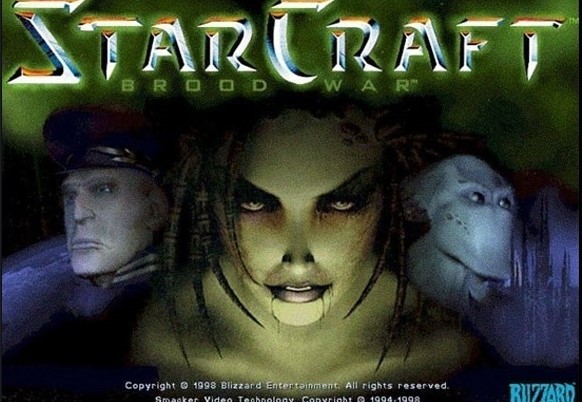
[Asia Economy Reporter Heo Midam] StarCraft, Diablo, Overwatch... These are games that many may have heard of even if they haven't played them. The online game company that created these games, Blizzard Entertainment (Blizzard), is one of the most beloved game companies in the world. Numerous star developers, a free company atmosphere, and a continuous stream of hit titles all contributed to making Blizzard a global enterprise.
In particular, Blizzard has a deep connection with Korea. Released in 1998, StarCraft achieved tremendous success after settling in Korea, gaining such popularity that it was even dubbed the "national game." At one point, 40% of Blizzard's total revenue came from the Korean market.
Regarding this, Mike Morhaime, Blizzard's CEO, said, "Without Korea, Blizzard would not have achieved the success it has today." What was the secret behind Blizzard's huge popularity not only worldwide but also in Korea?
 Founders of Blizzard. From left, Frank Pearce, Mike Morhaime, Allen Adham. Photo by Blizzard Entertainment.
◆ A Chance Prank Leads to a Bond... Three Friends Unite
Blizzard's beginning dates back 30 years to February 1991. At that time, Mike Morhaime, Blizzard's CEO, borrowed $15,000 (approximately 17 million KRW) from his grandmother as seed money and founded the company with two college colleagues. His partners were Allen Adham and Frank Pearce, college friends attending the University of California, Los Angeles (UCLA), and Blizzard's start began from this chance meeting of the three.
Although they attended the same school, Morhaime and Adham were strangers at first and were working in the campus computer lab. One day, when Adham briefly left his seat, Morhaime, feeling playful, changed Adham's computer password to "Joe." However, when Adham returned, he calmly entered the password and resumed his work. Ironically, Morhaime was the one who was surprised by this.
Curious about how Adham had unlocked the password, Morhaime later discovered that they had been using the same password. This incident rapidly brought the two closer together.
While they built their friendship on this unique bond, their career aspirations differed greatly. Adham had always wanted to create games since high school, whereas Morhaime, who majored in electrical engineering, hoped to become a semiconductor researcher. At the time, he was gaining experience as an intern at a semiconductor company in the U.S.
However, Adham continued to persuade Morhaime, and eventually, along with their college friend Pearce, they founded "Silicon & Synapse," the predecessor of Blizzard.
 Photo by Blizzard Entertainment
◆ Blizzard's Secret to Success: Unique Worldview and Free Corporate Culture
Although Blizzard is now a familiar company to everyone, it did not achieve success immediately. Until the release of the real-time strategy simulation game Warcraft in 1994, they suffered severe financial difficulties. The three founders even used their personal credit cards to cover company operating expenses and the salaries of about ten employees during tough times.
The reason Blizzard could establish itself as a world-renowned game company after enduring harsh times lies largely in its unique worldview. Blizzard not only focused on the fun of the games themselves but also gave each character in the games distinct stories. These stories intertwined to create a cohesive universe.
Moreover, characters did not remain confined to a single game but appeared across multiple games, which piqued gamers' interest. The rich narratives embedded in the characters stimulated gamers' curiosity, increasing interest in other games featuring those characters.
Additionally, Blizzard's firm philosophy influenced its success. Blizzard upholds eight core philosophies, including ▲Commit To Quality ▲Learn & Grow ▲Lead Responsibly.
The philosophy that deserves special attention is "Embrace Your Inner Geek." Here, "Geek" is slang referring to someone deeply knowledgeable about IT technology or related fields.
Following this philosophy, Morhaime encouraged active discussions among employees regardless of rank or role within Blizzard. In fact, Warcraft originated from ideas that emerged during employee discussions.

Morhaime, who fostered a free atmosphere within the company, was a gentle yet decisive leader. Blizzard first unveiled StarCraft in 1994, but it received harsh criticism for being too similar to Warcraft.
In response, Morhaime declared that StarCraft's development would be restarted from scratch, making this decision despite investors' criticism. Four years after the initial unveiling, in 1998, StarCraft was re-released and achieved a global sales record of 11 million copies.
At the time, Morhaime said, "It is more respectful to gamers to release a perfect game later than to rush out an unsatisfactory game due to schedule pressure." His philosophy of prioritizing game completeness shone through.
◆ From Warcraft to Overwatch... Blizzard Loved Worldwide
Blizzard's popularity continued to rise. Released in 1995, Warcraft II: Tides of Darkness boasted improved systems and graphics compared to its predecessor, earning Blizzard its first Game of the Year award. This game gained significant popularity among gamers worldwide, laying the foundation for Blizzard as a global game company.
Rising as a blue-chip in the gaming market with Warcraft, Blizzard released the role-playing game Diablo in 1997. This title surpassed Warcraft in popularity and received explosive responses from gamers worldwide.
Diablo broke the mold of single-player role-playing games by creating an environment where many people could enjoy playing together, earning praise. The competitive gameplay against unseen opponents was enough to excite gamers globally at the time.
Since then, regarded as a blue-chip in the gaming industry, Blizzard has become one of the most beloved global game companies worldwide through a series of hit releases including Overwatch.
© The Asia Business Daily(www.asiae.co.kr). All rights reserved.
![Clutching a Stolen Dior Bag, Saying "I Hate Being Poor but Real"... The Grotesque Con of a "Human Knockoff" [Slate]](https://cwcontent.asiae.co.kr/asiaresize/183/2026021902243444107_1771435474.jpg)

















