Ministry of Economy and Finance, 2021 Work Report
This Year's Core Tasks: 'Overcoming the COVID-19 Crisis and Risk Management, Rapid and Strong Economic Recovery'
Maintaining Expansionary Fiscal Policy... Early Execution of Fiscal Budget at Record High Levels
Tailored Damage Support, 90% Payment Before Lunar New Year
Accelerating Preparation of Various Housing Supply Plans... Strengthening Comprehensive Real Estate Tax and Capital Gains Tax on Corporations and Multi-homeowners from June
Formulating Population Policies to Expand Economic Participation of Women and Elderly in the First Half of the Year
Upside Factor for Economy: 'Early Commercialization of Vaccine'... Downside Factors: 'Prolonged Third Wave and Virus Mutation'
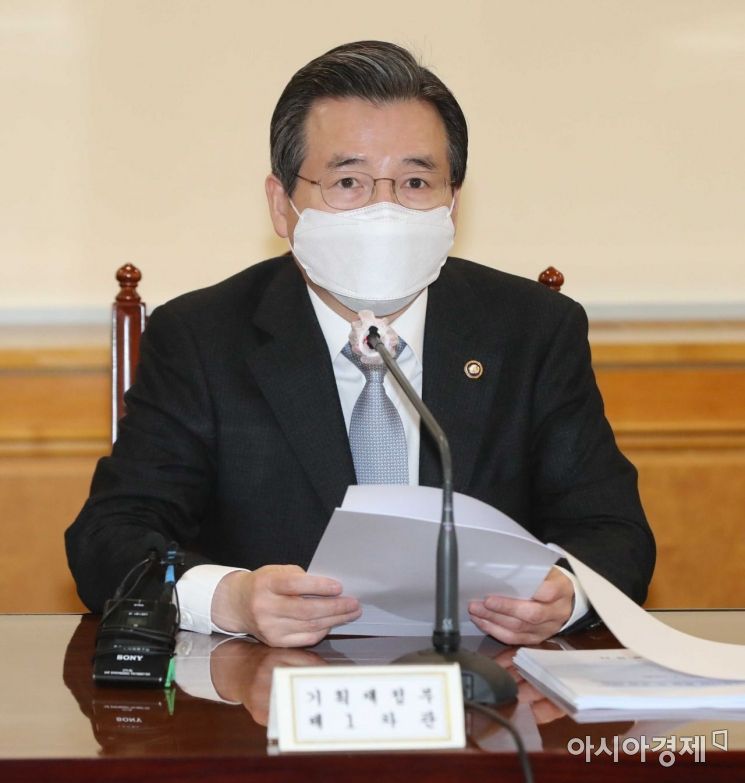
[Sejong=Asia Economy Reporter Ju Sang-don] The government will launch free COVID-19 vaccinations for all citizens nationwide starting February, accelerating efforts to overcome COVID-19 early through quarantine, tailored damage support, and comprehensive domestic demand revitalization. It will also expedite the preparation of various housing supply plans and focus its capabilities on policy development to respond to demographic changes.
On the 19th, the Ministry of Economy and Finance announced the 2021 work plan containing these details.
Kim Yong-beom, First Vice Minister of Economy and Finance, said, "We have set two goals: rapid and solid overcoming of the COVID-19 crisis and economic recovery, and strengthening inclusive innovation growth and an inclusive nation. First, we will quickly overcome the COVID-19 crisis through enhanced quarantine and tailored damage support."
◆Free COVID-19 Vaccinations Starting February= The government plans to sequentially and swiftly introduce the 56 million doses of vaccines secured so far starting in February and closely cooperate with quarantine authorities to ensure fast and flawless free vaccinations.
Additional budget requirements due to extra vaccine procurement will be covered by contingency funds. A Ministry of Economy and Finance official explained, "The number of doses increased from 44 million to 56 million, resulting in additional costs. We will fully support this with the remaining contingency funds we have secured."
Furthermore, the government plans to accelerate the rapid development of domestic treatments and vaccines by investing about 130 billion won (including 94 billion won from the 2020 supplementary budget) in clinical support for COVID-19 therapeutics and vaccines.
The government's active engagement in vaccine administration and development of vaccines and treatments is based on the judgment that preventing further COVID-19 spread will determine the extent of South Korea's economic recovery this year. The Ministry of Economy and Finance expects a "growth rebound" for this year's economy, citing "early commercialization of vaccines" as an upside factor and "prolonged third wave and virus mutation" as downside factors.
The government will also focus on tailored damage support alongside quarantine efforts. The goal is to pay more than 90% of tailored damage support measures such as the Small Business Support Fund and Income Stabilization Fund before the Lunar New Year. Additionally, the income and corporate tax deduction rate for voluntary rent reductions will be increased from the current 50% to 70%. The rent and overdue interest reductions on state-owned and public institution-owned properties, implemented since last year, will also be extended until June.
◆Maintaining Expansionary Fiscal Policy and Promoting Comprehensive Domestic Demand to Boost Economic Recovery= The government stated it will strive to achieve a rapid and strong economic rebound to restore the economy to pre-COVID-19 crisis levels in the first half of the year through efforts to enhance economic vitality across domestic demand, investment, and exports. To this end, 63% of the 2021 budget of 558 trillion won, which is 45.7 trillion won more than last year, will be executed early by June, focusing on job creation and social overhead capital (SOC) projects with high economic ripple effects.
Investment projects will be expanded from 100 trillion won to 110 trillion won, and comprehensive tax and fiscal incentives will be provided to stimulate consumption rebound. In the first half of the year, the individual consumption tax on automobiles will be reduced by 30% (tax rate from 5% to 3.5%), and additional special deductions for credit card consumption in 2021 and rebates for purchasing high-efficiency home appliances for vulnerable groups will be implemented. The issuance of local love gift certificates (from 9 trillion to 15 trillion won) and Onnuri gift certificates (from 2.5 trillion to 3 trillion won) will be expanded, with plans to spend 5 trillion won in the first quarter alone.
◆Future Growth Engines: 'Full-scale Promotion of Korean New Deal and Low-carbon Economic Transition'= The government will actively foster future growth engines such as the Korean New Deal, BIG3 (future cars, bio-health, system semiconductors), and eco-friendly low-carbon economic transition. A total of 21 trillion won will be invested in the Korean New Deal this year, with priority allocation of resources planned for next year's budget as well. To activate private investment, a policy-type New Deal fund targeting 4 trillion won will be established this year, and a New Deal innovation product track will be created to grant special procurement privileges (such as negotiated contracts and purchase exemptions) for New Deal-related products, promoting public procurement.
To popularize future cars, the government aims to achieve a supply target of 380,000 units by next year and strengthen the ecosystem by converting 470 parts companies to future cars and building autonomous vehicle infrastructure. The bio-health sector aims for a global market share of 3% and annual exports of 20 billion dollars by expanding the opening and utilization of health and medical big data and establishing a bio fund. For system semiconductors, to achieve global market share targets (18% for foundry, 2% for fabless), efforts will be made in next-generation semiconductor R&D and building cooperation platforms between fabless companies and demand firms.
The government will also proactively respond to the eco-friendly low-carbon economic transition. By the first half of this year, it will prepare mid- to long-term greenhouse gas reduction scenarios for carbon neutrality by 2050 and establish strategies for key sectors such as energy, industry, and transportation by the fourth quarter. Additionally, a comprehensive review of the carbon pricing system will be conducted through research projects this year.
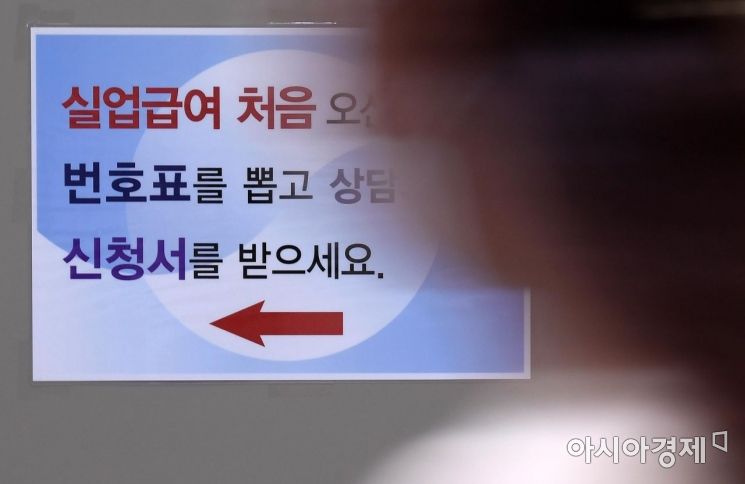
◆Focused Support for Vulnerable Groups Severely Affected Economically= The government will also devote efforts to employment stability and social safety net expansion for vulnerable groups. Vice Minister Kim said, "During the COVID-19 crisis, vulnerable groups have been hit harder and faced greater economic difficulties, highlighting the importance of strong protection for them. To minimize welfare blind spots for vulnerable groups, we will steadily prepare the phased abolition of the livelihood benefit support obligation and the introduction of a Korean-style sickness allowance through inter-ministerial consultations to strengthen the social safety net."
First, the government plans to provide 1,042,000 direct jobs for employment-vulnerable groups such as youth and the elderly and create 63,000 social service jobs for elderly and childcare services. To maintain and stabilize private sector jobs, the employment retention support scale will be significantly increased to 1.4 trillion won, and the temporary expansion of the leave allowance support rate for businesses subject to gathering restrictions or bans will be raised from 67% to 90% until March this year.
In terms of expanding employment and social safety nets, employment insurance coverage will be gradually extended to all workers. Also, to raise the standard median income stepwise and eliminate livelihood benefit blind spots, the support obligation will be fully abolished by 2022. Public rental housing supply will be expanded from 181,000 to 209,000 units, focusing on youth and newlyweds, and the supply of jeonse-type public rental housing will be increased by establishing 9,000 new units.
◆Gradual Normalization of Temporary Expenditure Increases Due to COVID-19 Response= The government plans to enhance fiscal sustainability through fiscal rules and expenditure efficiency and promote public innovation that citizens can feel, such as public sector efficiency. In preparation for the implementation of fiscal rules in 2025, it will proactively review phased fiscal volume management plans and consider gradually normalizing projects with temporarily increased expenditures after the economic crisis ends.
Fiscal operation system reforms aligned with policy environment changes will also be pursued. Key measures include preparing performance plans at the program level (to be submitted to the National Assembly in September) for macro-level performance management, amending the National Finance Act, and strengthening performance management infrastructure through the establishment of a performance database (DB). Additionally, the introduction of an "operating-type private investment method," where the private sector purchases management and operation rights after the expiration of the management period of private investment projects and operates and manages them for a certain period, will be promoted.

◆Economic Risk Factors: 'Real Estate and Population'= The Ministry of Economy and Finance identified real estate and population decline as risk factors for the Korean economy and pledged meticulous management. Vice Minister Kim said, "The real estate market issue is the most urgent task in terms of national housing and livelihood stability. We will carefully monitor the implementation of previously announced measures and accelerate the preparation of various housing supply plans." To block speculative demand, comprehensive real estate tax and capital gains tax strengthening for corporations and multi-homeowners will be implemented without fail from June 1.
In response to demographic changes, the "3rd Population Policy Task Force (TF)" will be launched in February to prepare and sequentially announce measures on key tasks such as expanding economic participation of women and the elderly, enhancing university competitiveness amid declining school-age population, and establishing response systems for rapidly increasing health and care demands due to the aging population in the first half of the year. Specific institutional designs and securing resources for the core tasks of the "4th Basic Plan for Low Fertility and Aging Society (2021-2025)" will also be pursued.
Vice Minister Kim said, "The Ministry of Economy and Finance will fully concentrate its policy capabilities in January and February to swiftly implement urgent tasks such as tailored damage support measures, Lunar New Year livelihood measures, and real estate market stabilization. We will thoroughly implement the policies reflected in this year's work plan to achieve rapid and solid crisis overcoming, economic recovery, inclusive innovation growth, and strengthening of an inclusive nation."
© The Asia Business Daily(www.asiae.co.kr). All rights reserved.
![Clutching a Stolen Dior Bag, Saying "I Hate Being Poor but Real"... The Grotesque Con of a "Human Knockoff" [Slate]](https://cwcontent.asiae.co.kr/asiaresize/183/2026021902243444107_1771435474.jpg)

















