Early Next Month, Public-Private Governance 'Carbon Neutral City Promotion Committee' to Launch
[Asia Economy Honam Reporting Headquarters Reporter Park Seon-gang] Gwangju Metropolitan City announced on the 17th that it will fully promote the Gwangju-type AI-Green New Deal to realize a ‘2045 Carbon Neutral Energy Self-Reliant City’ starting this year.
The Gwangju community declared a ‘Climate Crisis Emergency’ in August last year and announced the ‘Gwangju-type AI-Green New Deal Comprehensive Plan.’ Following this, a public-private governance body involving administration, the council, industry, civil society organizations, and experts was formed from policy formulation to execution stages. Starting with the launch of the ‘Carbon Neutral City Promotion Committee’ in early next month, full-scale operations will commence.
This year, the AI-Green New Deal aiming for carbon neutrality and energy self-reliance by 2045 will implement 62 projects with three main strategies: ‘Green Transition City, Climate Safe City, and Green Industrial City,’ investing 347.7 billion KRW from city funds along with separate private capital.
As the first step, a mid- to long-term roadmap will be established to realize carbon-neutral energy self-reliance by 2045, setting greenhouse gas reduction targets by phase and sector, with annual progress checks. Simultaneously, a pre-review system for climate crisis response and common performance management indicators will be operated to ensure execution capability.
In the green energy transition sector, 800 million KRW (including 400 million KRW private capital) will be invested in the ‘Citizen Solar Power Plant Installation Project,’ where citizens form energy cooperatives to raise funds, install solar power facilities, and share profits.
Two hundred million KRW will be invested to establish an Energy Transition Village Hub Center to support energy transition education and citizen-led solar power activities.
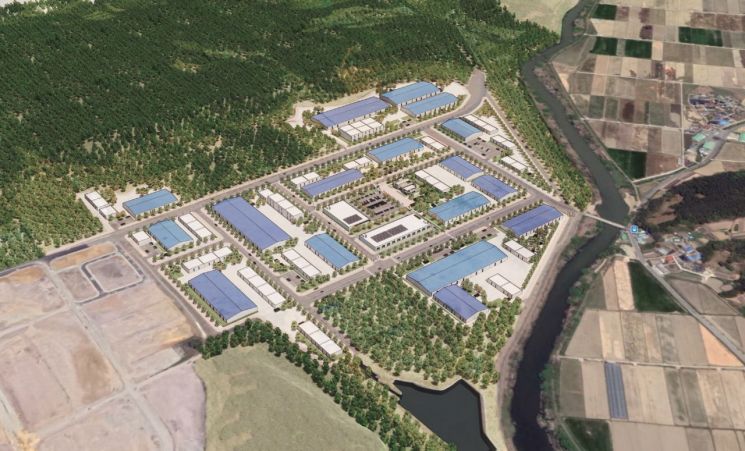
In the Advanced Industrial Complex, designated last November as the ‘Green Energy ESS Power Generation Regulatory Free Zone,’ 19.5 billion KRW will be invested from this year to promote a private-sector-led power trading demonstration project.
In the building sector, 16 billion KRW will be invested in green remodeling projects to improve energy performance and living environments at 47 locations including national and public daycare centers, health centers, public medical facilities, and three permanent rental housing complexes with 3,500 households that have been completed for over 15 years.
In the transportation sector, 44 billion KRW will be invested to gradually expand the introduction of eco-friendly vehicles, starting with six hydrogen city buses first introduced in December last year, supporting early retirement of about 7,300 old diesel vehicles and purchase of about 1,200 new electric vehicles.
To establish a stable hydrogen supply base, 16 billion KRW will be invested to add Wolchul and Jangdeung hydrogen charging stations in addition to the Byeokjin-dong hydrogen charging station, and a hub-type hydrogen production base will be built by next year.
In the green space and ecology sector, 35 billion KRW from city funds will be invested in 14 sites including the Yeongsangang Riverside Park, which has not yet been developed among financial parks, and private capital of 1.0807 trillion KRW will be invested in nine private parks to begin full-scale land acquisition.
Jangnok Wetland, the country’s first urban national wetland, will establish communication channels with environmental groups and residents to devise ways to wisely utilize this precious natural asset.
In the resource circulation sector, a model will be developed to expand the separate collection of transparent PET bottles, implemented in apartment complexes since December last year, to areas outside apartment complexes.
Additionally, recycling rates will be increased by expanding regional living resource recovery centers capable of stably processing disposable products, whose output has increased due to the prolonged COVID-19 pandemic.
In the industrial sector, the Clean Air Industry Cluster, which develops fine dust reduction technologies for industrial and transportation sectors and provides demonstration facilities, will complete detailed design and site acquisition by the second half of the year with 16.6 billion KRW of national funds. The Eco-friendly Air Industry Demonstration Complex, supporting the development and commercialization of core technologies for improving air quality in multi-use facilities, will invest 8.4 billion KRW to build equipment and establish the center.
Park Nam-ju, Director of the Environment and Ecology Bureau, said, “This year marks the first year of the Green New Deal in Gwangju, transforming from a city dependent on high-carbon energy to a citizen-led energy self-reliant, carbon-neutral eco-friendly green city.” He added, “We will take the lead in pioneering a new path ahead of change to make Gwangju a pleasant and clean city of carbon neutrality.”
© The Asia Business Daily(www.asiae.co.kr). All rights reserved.
![Clutching a Stolen Dior Bag, Saying "I Hate Being Poor but Real"... The Grotesque Con of a "Human Knockoff" [Slate]](https://cwcontent.asiae.co.kr/asiaresize/183/2026021902243444107_1771435474.jpg)















