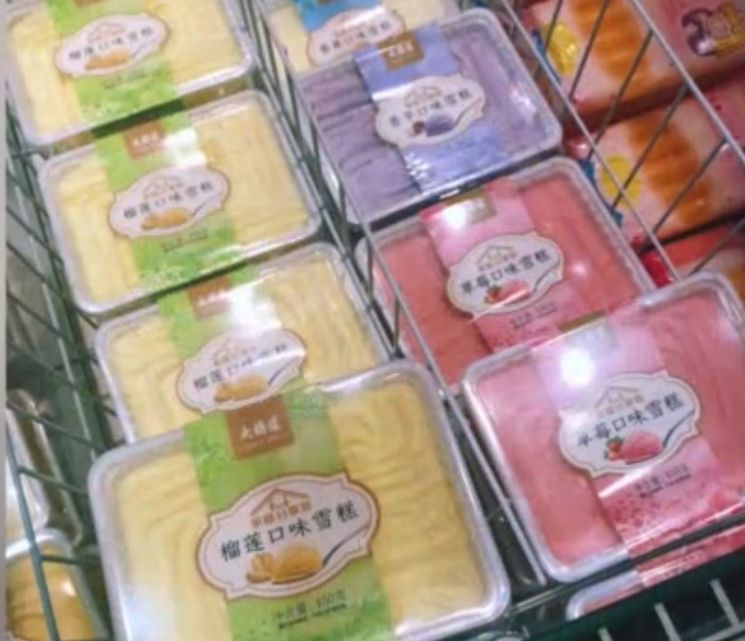
[Asia Economy Reporter Choi Eun-young] China, which is on high alert due to the rapid resurgence of the novel coronavirus (COVID-19), has been embroiled in controversy after the COVID-19 virus was detected in ice cream following last year's 'COVID salmon' incident.
On the 15th, China Daily reported that the COVID-19 virus was found on the packaging of ice cream produced by a food company in Tianjin (天津). Foreign media stated, "More than 2,200 boxes of the product have already been distributed in the market."
On the same day, the Tianjin epidemic prevention command announced that nucleic acid tests conducted on ice cream samples commissioned by the Daqiaodao (大橋道) food company showed positive results in three samples. After a positive result in the first test on the 13th, a retest conducted the following day also returned positive results.
The ice cream, packaged in white plastic containers in a spoonable form, comes in three flavors: chocolate, strawberry, and taro. Following the consecutive positive results, Tianjin epidemic authorities immediately shut down the factory and launched an investigation. The investigation revealed that during the relevant period, 1,588 boxes (6 units per box) of chocolate flavor, 1,627 boxes of strawberry flavor, and 1,621 boxes of taro flavor were produced, totaling 4,836 boxes. Of these, 2,251 boxes (13,506 units), excluding factory inventory, were distributed in the market.
Nucleic acid tests on 1,662 factory workers have so far shown 700 negative results. Tianjin epidemic authorities promptly closed the factory and also began investigating the import process of the ice cream ingredients, including New Zealand milk powder and Ukrainian whey powder.
Particular efforts are being made to recall the ice cream sold in the market. Authorities publicly disclosed this fact through an 'urgent notice' and urged citizens who purchased the product to "report immediately if they experience any health abnormalities." Measures to collect unsold ice cream and to close related wholesale and retail stores are also underway.
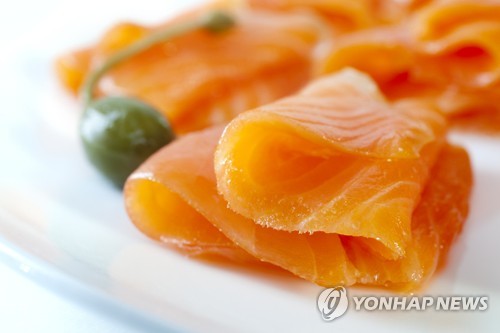 China boycotted salmon imports after COVID-19 was detected on a cutting board used for imported salmon at the Xinfadi Market in Beijing.
 [Image source = Yonhap News]
The 'COVID ice cream' incident has sparked concerns within China about the possibility of a 'second frozen salmon' crisis. Last June, Beijing, which had recorded zero confirmed cases for nearly two months, experienced a rapid resurgence due to salmon imported from COVID-19 infected countries, which was packaged and delivered to the Xinfadi market.
The epidemic prevention authorities concluded that "the coronavirus was found in the freezer where the salmon was stored," identifying imported frozen food as the cause of the resurgence. Since then, whenever COVID-19 spreads within China for unclear reasons, frozen food has been the first subject of investigation, maintaining a strict vigilance posture.
Amid the authorities' heightened alert, Li Hongzhong, Tianjin's Party Secretary, immediately visited the factory, held an on-site meeting, and personally ordered measures to prevent further spread. So far, Tianjin has no confirmed domestic cases excluding 16 imported cases.
© The Asia Business Daily(www.asiae.co.kr). All rights reserved.
![Clutching a Stolen Dior Bag, Saying "I Hate Being Poor but Real"... The Grotesque Con of a "Human Knockoff" [Slate]](https://cwcontent.asiae.co.kr/asiaresize/183/2026021902243444107_1771435474.jpg)
















