[Asia Economy Reporter Suyeon Woo] Hyundai Motor Company's Ioniq 5 and Tesla's Model Y are set to compete head-to-head in this year's domestic electric sports utility vehicle (SUV) market. Industry attention is focused on how consumers will respond to these two new SUV models ambitiously launched by Hyundai and Tesla in the Korean market.
On the 13th, Hyundai Motor Company unveiled teaser images of the first model under its dedicated electric vehicle brand Ioniq, the 'Ioniq 5.' The Ioniq 5 is the first model to apply Hyundai Motor Group's dedicated electric vehicle platform 'E-GMP,' capable of driving up to 500 km (WLTP standard) on a single charge, and can be charged up to 80% within 18 minutes through its ultra-fast charging system.
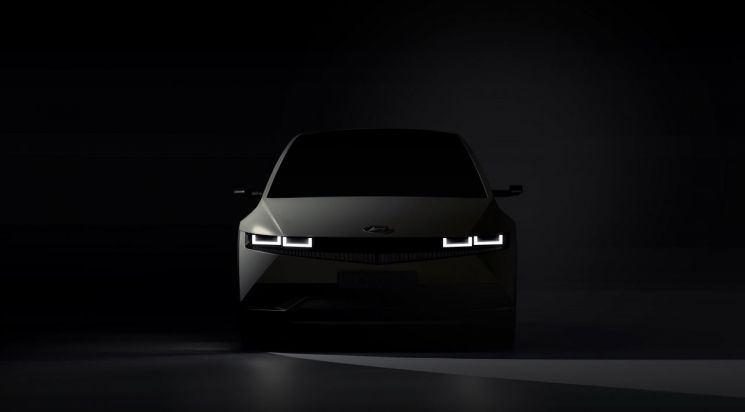
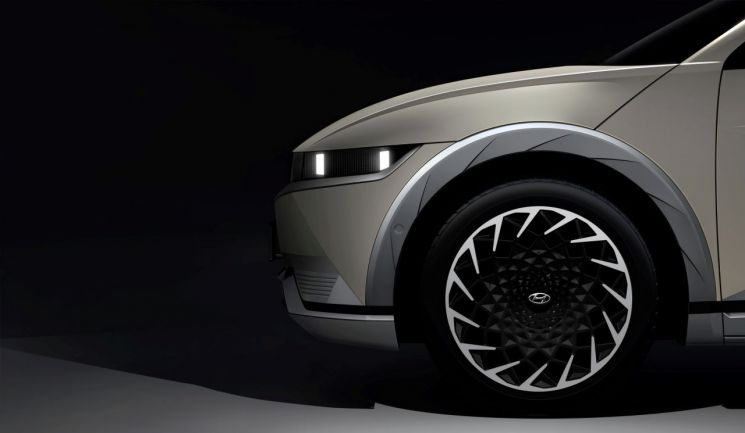
The Ioniq 5 pursues a futuristic yet eco-friendly design by applying 'Parametric Pixels' and environmentally friendly colors and materials. Parametric Pixels are designed by shaping pixels, the smallest units that make up an image, and will be applied across all future Ioniq brand vehicles.
On the front of the vehicle, Hyundai applied the 'Clamshell' hood for the first time, which wraps around the entire upper part, minimizing the parting lines where surfaces meet and are divided by lines. This creates a sleek and high-tech image. The vehicle's wheels also feature the largest-ever 20-inch aerodynamic structure wheels.
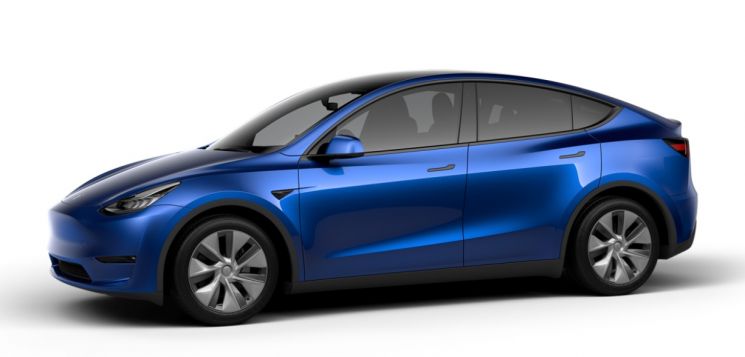
Meanwhile, on the same day, Tesla, the world's number one electric vehicle brand, also unveiled the actual Model Y electric SUV in the domestic market. Tesla is displaying the Model Y at Lotte Department Store Yeongdeungpo Branch and Lotte World Mall for general customers to see, and plans to officially launch it in Korea soon.
The Model Y is an affordable electric SUV that will open the era of mass-market electric SUVs for Tesla. It is released as a crossover utility vehicle with a maximum seating capacity of seven and adopts an all-wheel-drive system. The driving range of the Tesla Model Y Long Range is 511 km (domestic standard). The zero-to-100 km/h acceleration time for the Performance trim is only 3.7 seconds, and the top speed is 241 km/h.
Industry insiders believe that the decisive factor for the success of the two models will ultimately be not only their product competitiveness but also 'pricing.' In the case of electric vehicles, where subsidies account for a large portion of the selling price, whether subsidies are provided is considered a critical factor for expanding adoption. According to this year's government subsidy policy, electric vehicles priced below 60 million KRW at launch can receive full subsidies, those priced between 60 million and 90 million KRW receive about half, and vehicles priced above 90 million KRW are not eligible for subsidies.
© The Asia Business Daily(www.asiae.co.kr). All rights reserved.
![Clutching a Stolen Dior Bag, Saying "I Hate Being Poor but Real"... The Grotesque Con of a "Human Knockoff" [Slate]](https://cwcontent.asiae.co.kr/asiaresize/183/2026021902243444107_1771435474.jpg)

















