Recent Economic Trends in January 2021
Deterioration of Consumption Indicators Due to COVID-19 Impact
December Domestic Card Approval Amount Down 3.3%... Decline After 8 Months'
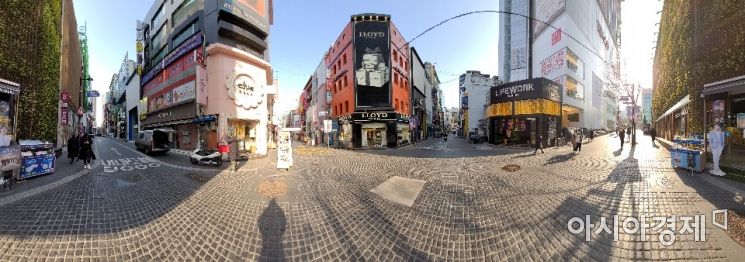
[Sejong=Asia Economy Reporter Joo Sang-don] At the end of last year, domestic consumption sharply contracted due to the third wave of the novel coronavirus infection (COVID-19), causing the December domestic card approval amount to turn to a decline for the first time in eight months. The government recently assessed the Korean economic situation as "uncertainty in the real economy continues."
On the 15th, the Ministry of Economy and Finance announced the 'Recent Economic Trends (Green Book) for January 2021' containing these details.
The Green Book summarized, "Recently, our economy has seen an expansion in export recovery, but due to the third wave of COVID-19 and strengthened social distancing measures, domestic demand has contracted, employment indicators have slowed, and uncertainty in the real economy continues."
The term "uncertainty" began appearing in the Green Book after the spread of COVID-19 starting in March last year. In March, it was assessed that "uncertainty in the real economy and financial markets is expanding," followed by a diagnosis in April that "export uncertainty is increasing." In May, instead of "uncertainty," the phrase "downside risks in the real economy are expanding" was used, and from June onward, it was assessed that "uncertainty continues." Since then, expressions such as "continuing" and "expanding" have been repeatedly used regarding the uncertainty of our economy. In December, it was viewed as expanding, but in January this year, it was again assessed as continuing.
Kim Young-hoon, head of the Economic Analysis Division at the Ministry of Economy and Finance, explained, "Currently, the spread of COVID-19 and strengthened social distancing measures have been ongoing for over a month," adding, "It was judged that the uncertainty that expanded last month (December 2020) is still continuing."
The main background for the Ministry of Economy and Finance's recent assessment that uncertainty in the Korean economy continues is that while industrial activity indicators increased, retail sales decreased, and the decline in employment numbers significantly widened. In fact, in November last year, production in the manufacturing and service sectors increased by 0.3% and 0.7% respectively compared to the previous month, resulting in a 0.7% increase in total industrial production. December exports also rose 12.6% year-on-year, thanks to improvements in information and communication technology (IT) exports and an increase in working days (+1 day). However, November retail sales decreased by 1.4% year-on-year, and the number of employed persons dropped by 628,000 in December, significantly expanding the decline.
In particular, the domestic card approval amount in December last year decreased by 3.3% compared to a year earlier, marking a decline again after eight months since April (-5.7%). Department store sales fell by 14.1%, increasing the decline from the previous month (-3.9%), and the growth rate of online card sales slowed. The year-on-year growth rate of online sales was 35.5% last year, then dropped to 26.6% in October and 19.2% in December.
As of December, the Consumer Sentiment Index (CSI) was 89.8, down 8.1 points from the previous month, and the Business Survey Index (BSI) for manufacturing performance was 82, down 3 points. The January outlook also fell 4 points to 77.
On the other hand, the increase in housing sale prices and jeonse (long-term lease) prices expanded in December last year. Sale prices rose from 0.54% in November to 0.90% in December, and jeonse prices increased from 0.66% to 0.97% during the same period.
Director Kim said, "Externally, the continued spread of COVID-19 in major countries and strengthened lockdown measures have somewhat weakened the improvement in real indicators, but expectations for economic recovery are also spreading due to recent vaccinations and the possibility of strengthened policy responses in major countries," adding, "We will speedily implement tailored damage support measures in response to the third wave of COVID-19 and strengthen comprehensive policy responses for livelihood and employment stabilization."
© The Asia Business Daily(www.asiae.co.kr). All rights reserved.
![Clutching a Stolen Dior Bag, Saying "I Hate Being Poor but Real"... The Grotesque Con of a "Human Knockoff" [Slate]](https://cwcontent.asiae.co.kr/asiaresize/183/2026021902243444107_1771435474.jpg)















