[Asia Economy Reporter Dongwoo Lee] Since the outbreak of the novel coronavirus disease (COVID-19), it has been forecasted that customer-tailored services based on big data will become the core competitiveness of the subscription economy.
The Korea Chamber of Commerce and Industry (KCCI) invited Professor Hak-yeon Lee from the Department of Industrial Engineering at Seoul National University of Science and Technology on the 15th to hold this year's first management concert under the theme "Subscription Economy, Changing the Business Landscape." Due to the impact of COVID-19, the lecture was conducted in the form of a web seminar.
Professor Lee stated, "The millennial generation, which has emerged as a new consumer group, desires various experiences rather than ownership of products," adding, "Business models are also shifting from simple product sales to continuously selling the functions provided by products or the final outcomes."
Professor Lee classified subscription economy types into three major categories: regular delivery type, rental type, and unlimited type. The regular delivery type allows customers to receive specific products such as cosmetics and flowers on predetermined dates. The rental type involves paying a subscription fee to use high-priced items like cars, artworks, and home appliances without owning them. The unlimited type refers to unlimited subscription to digital content such as movies and music by paying a monthly fee. He pointed out that the success factors differ for each type of subscription business.
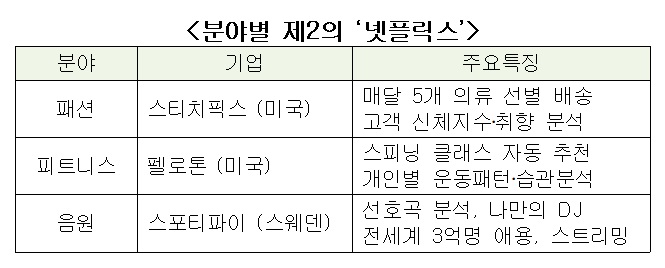
Professor Lee emphasized the success factor of the subscription economy lies in directly providing customer preference services based on big data. He explained, "Netflix's core success factor is consumer preference analysis and personalized recommendation services based on big data," and added, "Companies gaining attention as the 'second Netflix,' such as Stitch Fix, Peloton, and Spotify, also provide personalized services like a personal coordinator, trainer, or DJ, rather than just cost-effectiveness."
He stressed that subscription services based on big data are also gaining popularity in manufacturing. He analyzed, "Nike's recently launched subscription service is a D2C (Direct-to-Consumer) model where the manufacturer directly selects and recommends products and services tailored to individual consumers without going through distribution channels." This approach eliminates distribution steps, allowing direct sales to consumers and enhancing price competitiveness.
He also highlighted that business models collecting lifestyle data of customers to provide customized services for products such as dishwashers, air conditioners, and lighting are attracting attention.
Professor Lee advised, "The core of the subscription economy is to provide personalized outcomes so that customers do not need to request anything," and urged, "Domestic companies should strengthen their big data and artificial intelligence capabilities and accelerate digital transformation."
Meanwhile, Professor Lee's lecture is available for viewing from the day of the event on the Korea Chamber of Commerce and Industry Insight YouTube channel and the KCCI website's 'Online Seminar' section.
© The Asia Business Daily(www.asiae.co.kr). All rights reserved.
![Clutching a Stolen Dior Bag, Saying "I Hate Being Poor but Real"... The Grotesque Con of a "Human Knockoff" [Slate]](https://cwcontent.asiae.co.kr/asiaresize/183/2026021902243444107_1771435474.jpg)
















