Controversy Over 'RPS' Sexual Crimes Objectifying Idols
"Punish RPS Users," Petition Submitted to Blue House
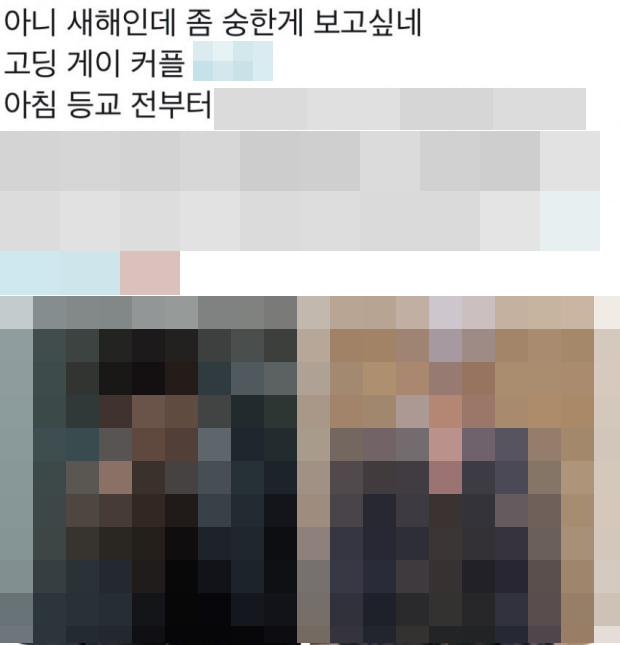
[Asia Economy Reporter Kim Young-eun] The act of sexualizing male and female idols and consuming them as protagonists in novels has sparked controversy as it becomes a public issue. While public opinion calls for immediate regulation, arguing that such acts constitute internet sex crimes, some claim it is a form of 'fandom culture.'
Recently, voices have emerged on portal sites and social networking services (SNS) demanding a ban on the so-called 'RPS' that sexualizes real idols. RPS stands for 'Real Person Slash,' and it is problematic because it depicts idols as protagonists in novels engaging in homosexual sexual relations or sexual assault.
In particular, many idols sexualized in RPS are minors under the age of 19, raising concerns about exposure to harmful sexual culture. RPS, mainly created and consumed on SNS like Twitter and online communities, is sometimes called the 'Entertainment Industry Nth Room.' The scale of RPS has grown beyond simple sharing to include microtransactions and even illegal publishing, prompting calls for regulation.
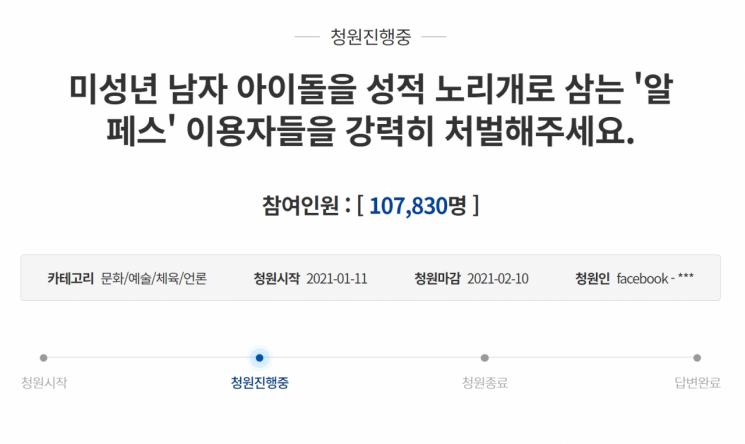
On the 11th, petitions appeared on the Blue House National Petition Board titled "Please severely punish RPS users who sexualize minor male idols" and "Please severely punish users of 'erotic novels' who sexualize minor female idols."
The petitioner stated, "Numerous male idols have already been sexualized through the 'RPS' culture, which features real male idols as protagonists in homosexual novels depicting perverse sexual acts and rape in explicit terms," adding, "What is even more infuriating is that RPS users are fully aware that their actions are criminal, yet shamelessly insist, 'The idol market survives because we keep consuming idols. Therefore, agencies cannot sue us.'
The petitioner continued, "This attitude of controlling victims through consumer power and rendering them helpless recalls the behavior of many power-based sex crime perpetrators like those in the Nth Room case," emphasizing, "Regardless of whether the victim is female or male, powerful or powerless, no one is immune in the culture of sex crimes. I urge active administrative measures to investigate and severely punish users of sex crime novels immediately and to establish regulatory measures for SNS."
The petition garnered over 100,000 signatures by 2 p.m. on the 12th, just one day after posting. Additionally, on SNS, hashtag campaigns such as '#RPSisSexCrime' are ongoing, calling for the cessation of consuming novels that sexualize idols and for punishing consumers.
However, those who consume RPS argue that this culture is an extension of so-called 'fanfic' (fan fiction) and 'fan art,' which fictionalize their favorite idols or celebrities as protagonists, claiming it is a 'fandom culture' and therefore not problematic.
They also claim that RPS has been a longstanding culture, that agencies do not impose sanctions on fandoms, and that no victims have come forward, emphasizing 'freedom of expression.'
In related political developments, calls for punishment continue. On the 12th, Ha Tae-kyung, a member of the People Power Party, posted on his Facebook, "Those who create and illegally distribute obscene materials exploiting male idols sexually through 'RPS' must be severely punished."
He added, "Consumers have defended it as a 'play culture' among fans existing since the first generation of idols. Although it involves real idol singers, it is merely fans' fantasies and thus not illegal," but criticized, "However, the court's judgment was different. Recently, a man who distributed obscene comics featuring children and adolescents was fined, and the platform company that facilitated the distribution was also held accountable."
© The Asia Business Daily(www.asiae.co.kr). All rights reserved.
![Clutching a Stolen Dior Bag, Saying "I Hate Being Poor but Real"... The Grotesque Con of a "Human Knockoff" [Slate]](https://cwcontent.asiae.co.kr/asiaresize/183/2026021902243444107_1771435474.jpg)
















