Prosecutors and Law Firms Also Judge Based on Parties' Claims of 'Charge Name and Amount'
Confusion Expected Until Detailed Manual Is Developed
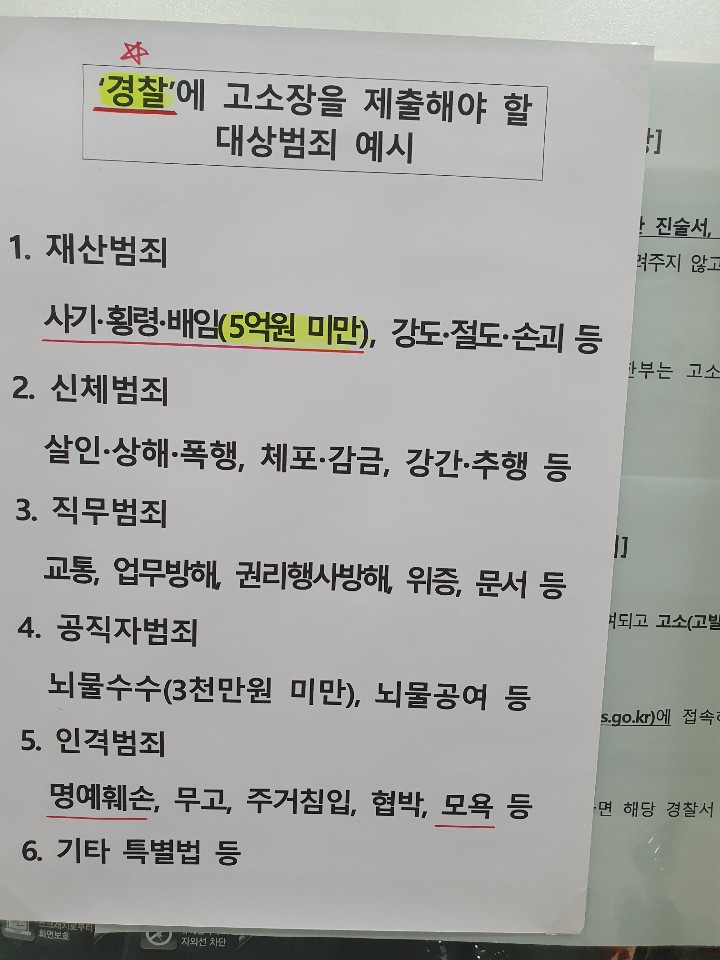 Notice posted at the reception desk of the Complaint and Accusation Task Force on the 1st floor of the Seoul Central District Prosecutors' Office in Seocho-dong, Seoul. Photo by Choi Seok-jin
[Asia Economy Reporter Choi Seok-jin] “They say that if it is not subject to prosecution investigation, the complaint must be filed at the police station.”
The revised Prosecutors' Office Act, which significantly reduces the scope of direct investigations by prosecutors, came into effect on the 1st, causing confusion among citizens trying to file complaints and accusations.
In particular, ordinary citizens who write and submit complaints themselves without hiring a lawyer are experiencing inconvenience because it is not easy to distinguish whether the case is one that can be submitted to the prosecution.
According to the legal community on the 6th, starting from the first working day of this year on the 4th, the prosecution has been guiding complainants who want to file complaints or accusations for crimes not subject to prosecution investigation to submit them to the police.
At the Seoul Central District Prosecutors' Office, the largest prosecution office in the country, about 20 complainants came to file complaints or accusations on the 4th alone but turned back to the police station after being guided by staff.
On the first floor of the Seoul Central District Prosecutors' Office building in Seocho-dong, Seoul, the office dedicated to complaints and accusations posted a notice titled “Examples of Crimes for Which Complaints Must Be Submitted to the Police” next to the entrance door and in front of the reception desk where it is easily visible to visitors.
The notice included specific amounts for crime names that are easily confused by complainants, such as fraud, embezzlement, and breach of trust under 500 million KRW among property crimes, and bribery under 30 million KRW among public official crimes, highlighted with fluorescent and red pens.
The prosecution, which must check and filter the contents of complaints and accusations one by one, is also facing difficulties.
An employee A at the prosecution office said the day before, “It takes time to directly check complaints and accusations, and the fastest way is to ask the complainant directly about the crime name and damage amount.”
A said, “I rejected about 20 cases yesterday, and when I explained that these complaints and accusations could not be accepted by the prosecution, most understood,” adding, “None of the complaints and accusations filed by law firms have been rejected yet.”
Law firms also have no choice but to decide the institution to file complaints and accusations based on the client's claims for now.
Attorney B from a large law firm and former deputy chief prosecutor said, “If the case is not under the prosecution’s jurisdiction (investigative authority), filing a complaint with the prosecution will just result in it being transferred to the police, so the complaint should be submitted to the police. However, the exact damage amount can only be confirmed at the prosecution stage after investigation, so at the accusation stage, we have no choice but to listen to the parties and make a judgment.”
He added, “Until the prosecution or police create manuals for their members and specific standards are established through discussions in the prosecution-police consultative body, there will be many ambiguous and difficult practical issues for the time being.”
From this year, the prosecutor’s direct investigative authority has been reduced under Article 4 (Duties of Prosecutors) Paragraph 1 of the revised Prosecutors' Office Act to six major crimes: ▲corruption crimes ▲economic crimes ▲public official crimes ▲election crimes ▲defense industry crimes ▲large-scale disasters, and ▲police officer crimes, as well as cognizable crimes directly related to these crimes and crimes referred by the police.
Even for these types, according to the Presidential Decree “Regulations on the Scope of Prosecutors’ Investigation Initiation,” the prosecution’s investigative authority applies only when the amount of gain or damage exceeds a certain threshold, such as bribery (over 30 million KRW), violation of the Political Funds Act (over 50 million KRW), fraud, embezzlement, breach of trust (over 500 million KRW), and tax evasion (over 500 million KRW).
Meanwhile, if a complaint about a crime outside the prosecution’s investigative scope is received by the prosecution through mail or other means, the prosecution must transfer the case to the police. On the other hand, since the police have no restrictions on their investigative scope, even for the six major crimes subject to prosecution investigation, if a complaint is first received by the police, the police will conduct the investigation.
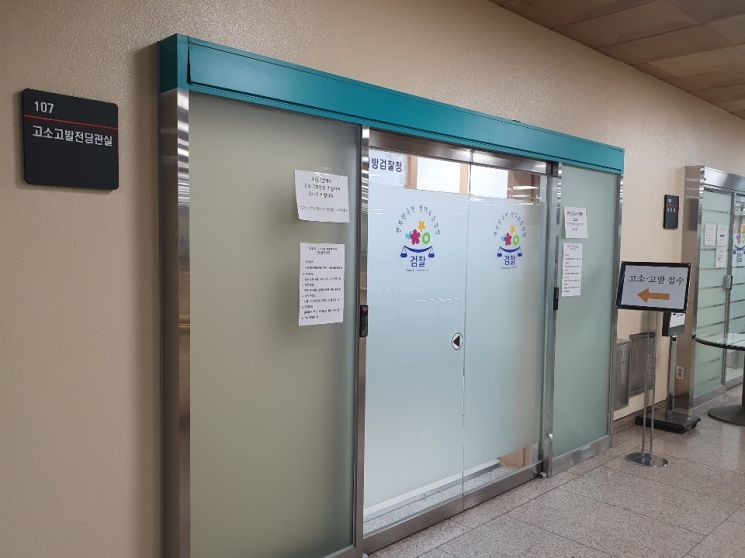 Entrance of the Dedicated Office for Complaints and Accusations on the 1st floor of the Seoul Central District Prosecutors' Office in Seocho-dong, Seoul. / Photo by Choi Seok-jin
© The Asia Business Daily(www.asiae.co.kr). All rights reserved.


















