Published in the international academic journal Nature
[Asia Economy Reporter Ki-min Lee] A research team supported by the Samsung Future Technology Development Project has newly identified how the adult brain maintains memories, opening the door to developing treatments for neurological disorders such as autism, schizophrenia, and dementia.
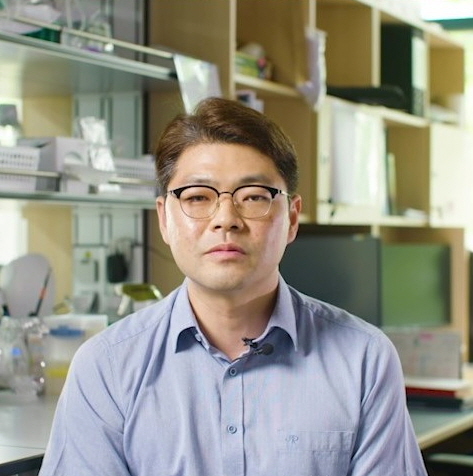
On the 5th, the Samsung Future Technology Development Project announced that Professor Jeong Won-seok’s research team from the Department of Biological Sciences at KAIST collaborated with Dr. Park Hyung-joo’s team at the Korea Brain Research Institute to achieve this result. The findings of Professor Jeong’s team were published in the top international journal Nature on December 23 last year (local time).
The research presented a previously unknown mechanism, recognized as a breakthrough in the field of brain and cognitive science. Synapses, which are connections between neurons responsible for learning and memory, undergo a process where existing synapses disappear and new ones form during memory formation. Until now, the academic community had not clearly understood how synapses disappear and what role this phenomenon plays in memory formation. It was only speculated that microglia, a type of glial cell that supports neurons and maintains brain homeostasis along with astrocytes and oligodendrocytes, might remove synapses and thus influence memory formation.
However, Professor Jeong’s team discovered that astrocytes remove synapses more actively than microglia. For this study, the team introduced a new analysis method using fluorescent proteins and found that when astrocyte function was suppressed to prevent synapse removal?while leaving microglia intact?abnormal synapses rapidly increased in the brain. This overturned existing theories and demonstrated that synapse removal by astrocytes is essential for the function of neural circuits and memory formation. The team also validated their findings through in vivo experiments using mice.
Professor Jeong explained, "Based on this research, if we can regulate the synapse removal activity of astrocytes, it could pave the way for new treatments for neurological disorders such as autism, schizophrenia, and dementia." Professor Jeong’s team has been receiving research support since June 2017 as part of the Samsung Future Technology Development Project, while Dr. Park’s team is supported by the National Research Foundation’s Brain Original Technology Development Project and the Korea Brain Research Institute’s institutional projects.
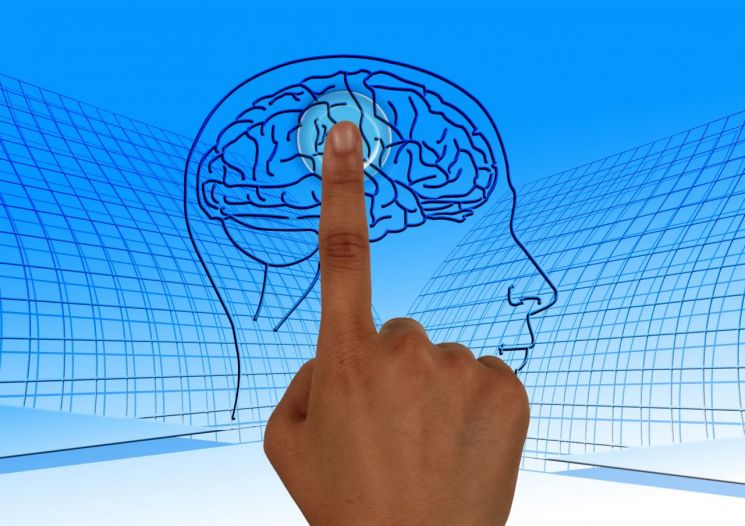 New Memory Retention Method Identified, Opening the Way for Dementia Treatment.
 [Image Source=Pixabay]
© The Asia Business Daily(www.asiae.co.kr). All rights reserved.
![Clutching a Stolen Dior Bag, Saying "I Hate Being Poor but Real"... The Grotesque Con of a "Human Knockoff" [Slate]](https://cwcontent.asiae.co.kr/asiaresize/183/2026021902243444107_1771435474.jpg)
















