Kim Jun-hyung, President of the Korea National Diplomatic Academy, "To respond to the confrontation between the North-China-Russia and South-Korea-US-Japan camps, we must actively promote the 'Korean Peninsula Peace Process'"
Institute of Foreign Affairs and National Security publishes '2021 International Situation Outlook'
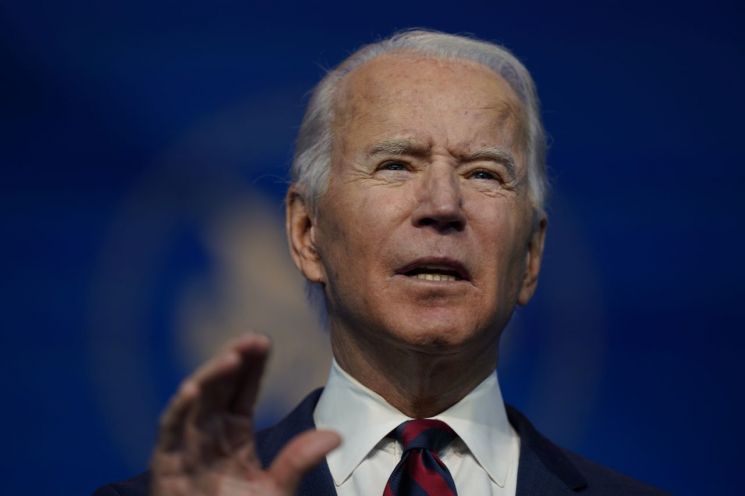
[Asia Economy Reporter Lim Cheol-young] There is a prospect that the U.S. Biden administration may seek dialogue with North Korea rather than pressuring it.
On the 22nd, the Institute of Foreign Affairs and National Security at the Korea National Diplomatic Academy, in a press release distributed ahead of the publication of the '2021 International Situation Outlook,' predicted that the Biden administration, which will take office in January next year, is more likely to complete policy review early and attempt dialogue rather than focusing on sanctions pressure against North Korea.
Contrary to some concerns that provocations might occur during the U.S. administration transition, North Korea is expected to focus on preventing the spread of the novel coronavirus disease (COVID-19), restrain nuclear and missile provocations, and observe the U.S. stance.
However, the institute forecasted that the deadlocked trilateral talks among South Korea, North Korea, and the U.S. will be difficult to resume early. Although the U.S. plans to engage in denuclearization negotiations in the latter half of next year, it is unlikely to reach an agreement within the year due to differences in positions between North Korea and the U.S., and there may be twists and turns such as suspension of talks.
South Korea is also expected to actively engage in negotiations to resume dialogue with both North Korea and the U.S., but it will be difficult to improve relations in the short term due to the impact of COVID-19 and other factors. The institute stated that the South Korean government, as a party to the North Korean nuclear issue and a facilitator of North Korea-U.S. dialogue, is expected to actively pursue dual-track diplomacy targeting both North Korea and the U.S. to prevent North Korea’s nuclear and missile provocations and to restart and advance North Korea-U.S. negotiations. However, it cited North Korea’s political situation in response to COVID-19 after the 8th Party Congress in January next year and the joint South Korea-U.S. military exercises in March as obstacles.
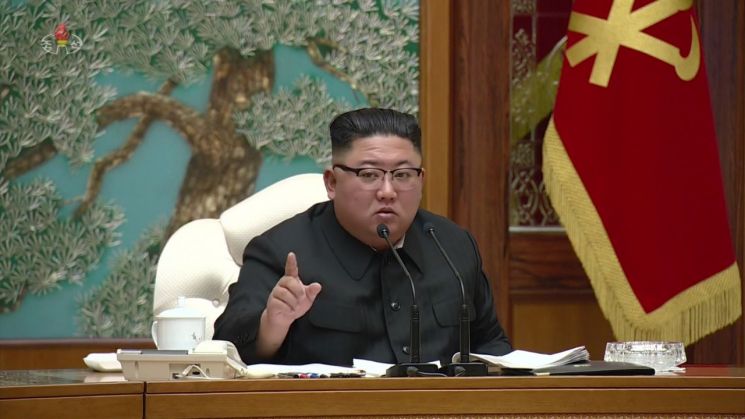
In the long term, it diagnosed that after the fear of COVID-19 spread eases, the U.S. will show willingness to resume North Korea-U.S. denuclearization talks, which could lead to improved inter-Korean relations. In particular, since the UN Security Council’s fast-track approval of humanitarian aid to North Korea related to COVID-19 on November 30, inter-Korean exchanges and cooperation are expected to resume through humanitarian support including medical and food aid to North Korea.
Regarding South Korea-U.S. relations, it predicted that the Biden administration will strive to restore the alliance and smoothly resolve pending issues such as the Special Measures Agreement (SMA) negotiations on defense cost-sharing, which have been in a 12-month agreement gap.
The institute also forecasted that the Biden administration will maintain regional stability in Asia while continuing to check China. This is because pursuing liberal values and a multilateral approach, the bipolarization of the international order led by U.S.-China competition, and the ‘value bloc’ between liberal and anti-liberal camps are likely to deepen further.
It analyzed that the administration will assign high strategic priority to Asia and strengthen military, diplomatic, and economic engagement, pursuing a fundamentally competitive policy toward China. Above all, it expects that cooperation with allies will be strengthened in areas such as 5G technology, trade norms, and regional security to check China, and that South Korea will actively participate and promote closer South Korea-U.S. cooperation in this regard.
Director Kim Jun-hyung said, "In the context of the global COVID-19 pandemic, exclusive nationalism, security populism, and the revival of geopolitical politics will act as destabilizing factors in the world order," adding, "The direction of U.S.-China relations and whether the confrontation between the North China-Russia bloc and the South Korea-U.S.-Japan bloc intensifies will be the biggest variables determining the situation on the Korean Peninsula and Northeast Asia."
He emphasized, "South Korea needs to make active diplomatic efforts to prevent the revival of confrontation between the North China-Russia and South Korea-U.S.-Japan blocs, and South Korea’s response card for this is the active promotion of the ‘Korean Peninsula Peace Process’ to achieve peaceful coexistence between the South and the North."
© The Asia Business Daily(www.asiae.co.kr). All rights reserved.
![Clutching a Stolen Dior Bag, Saying "I Hate Being Poor but Real"... The Grotesque Con of a "Human Knockoff" [Slate]](https://cwcontent.asiae.co.kr/asiaresize/183/2026021902243444107_1771435474.jpg)












