Jeonnam and Gyeongbuk Have the Most Vacant Houses Over 30 Years Among Local Governments
Maintenance Projects Face Difficulties Obtaining Owner Consent
Japan Imposes Vacant House Maintenance Obligations... Demolition if Not Complied
Utilizing ICT Technologies Such as Autonomous Driving and Smart City Development
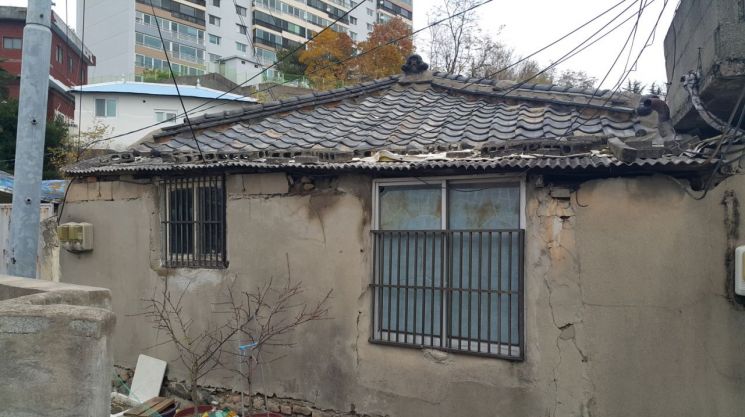
[Asia Economy Reporter Kim Bo-kyung] Jeonnam and Gyeongbuk, the highest-risk regions for local extinction, are also ranked first and second among local governments with the most old vacant houses. According to the 2015 Population and Housing Census by Statistics Korea, the number of vacant houses nationwide reached 1,069,000, an increase of 250,000 from 819,000 in 2010. Looking at vacant houses over 30 years old by province, Jeonnam had 51,000 (49.0%), Gyeongbuk 50,000 (46.3%), and Gyeongnam 40,000 (40.4%), in that order.
An official from the Jeonnam Provincial Office said, "It is estimated that there are more than five vacant houses in each small village," adding, "We are promoting a vacant house maintenance project, but it is difficult because almost no residents agree to demolition or sale." They explained that the reluctance to demolish the house where they were born and raised, combined with the desire to sell it at the highest possible price, are intertwined. However, abandoned houses not only spoil the local landscape but also risk becoming crime-prone areas. There is also a risk of collapse and fire, which can deteriorate the surrounding living environment.
Japan, which experienced aging and local extinction crises earlier than Korea, saw a rapid increase in vacant houses starting in the 1950s. To prevent the negative impact of neglected vacant houses on the surroundings, local government ordinances require owners to properly maintain and manage their properties. If owners fail to comply, authorities can issue orders for action, and if these are ignored, demolition is also permitted.
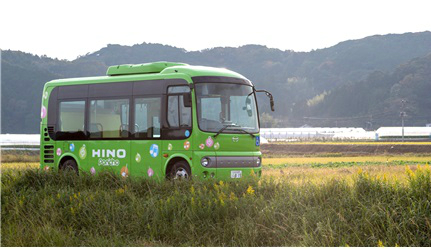
Japan has also utilized information and communication technology (ICT) to address local extinction issues. First, they introduced an 'autonomous public bus' system that travels throughout mountainous areas. In 2018, Hatachi City in Ibaraki Prefecture conducted autonomous driving experiments by converting unused railway tracks into bus-only roads, with plans to deploy the system from next year. This has the advantage of expanding transportation infrastructure without adding personnel. Safety is ensured through remote monitoring and operation. It is expected that elderly people will be able to visit hospitals and commercial facilities without personal vehicles.
Additionally, the government and local authorities have collaborated with startup companies to remote-enable various services such as medical care, nursing, and shopping. Elderly people can communicate via remote video calls through TV connections or use virtual reality (VR) technology to shop in virtual stores online.
There are also attempts to solve local extinction problems through smart city development. The 'Kashiwanoha Smart City' located in Kashiwa City, Chiba Prefecture, a small city on the outskirts of the metropolitan area, is considered one of Japan’s representative smart cities. Equipped with solar and wind power facilities, it utilizes energy produced directly on-site. It is characterized by creating a self-sufficient environment within the region, covering food production, industrial development, and resident health management. Furthermore, it has infrastructure necessary for fostering new industries, such as shared offices that facilitate information exchange among diverse talents. Residents of the smart city use wristwatch-type digital health devices to monitor their health status in real time, and the recorded health data is transmitted to a center for 24-hour management.
© The Asia Business Daily(www.asiae.co.kr). All rights reserved.
![Clutching a Stolen Dior Bag, Saying "I Hate Being Poor but Real"... The Grotesque Con of a "Human Knockoff" [Slate]](https://cwcontent.asiae.co.kr/asiaresize/183/2026021902243444107_1771435474.jpg)

















