[Used Goods Trade Black Hand] Evolving Used Goods Trade Scams,
What Is the Solution?
Fake Safe Transaction Site Phishing
Between Seller and Buyer
Methods Like Taking Payment and Disappearing
New Scam Techniques Continuously Developed
Neglect in Legal Management of Peer-to-Peer Trade
Need for Collective Information Sharing Among Users
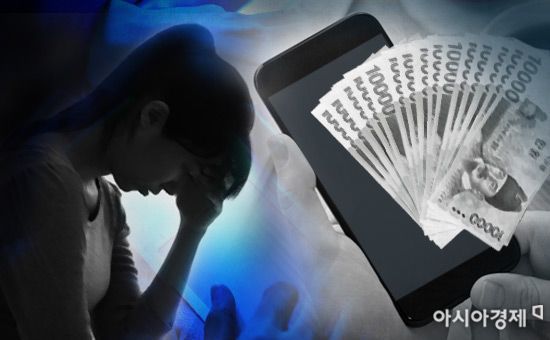
[Asia Economy Reporters Byungdon Yoo, Jeongyun Lee] It is no longer surprising to encounter scams in secondhand transactions where the scammer takes the money but does not send the goods or delivers bricks instead. As the secondhand market expands, consumers are increasingly exposed to more diverse and sophisticated fraudulent schemes.
The most common method is impersonating safe transactions. This involves hijacking the escrow service, a transaction protection service that mediates between buyers and sellers. Sellers post listings pretending to offer safe transactions or send fake safe transaction site URLs via text messages. When buyers click on these links, they see screens identical to escrow services like Naver Pay, making it easy to be deceived.
For example, Mr. A, who tried to purchase a tent and heater on a secondhand platform, contacted the seller via chat and KakaoTalk. When the seller suggested using Naver Pay for a safe transaction and sent a link, Mr. A accessed it and proceeded with the payment without suspicion. After transferring 600,000 KRW, he contacted the seller, who then claimed that the commission payment was insufficient and demanded an additional deposit. Even after paying the commission, the seller sent a screenshot showing a message that a refund failed on Naver Pay and said, "Naver's policy has changed, and refunds are only possible from 2 million KRW, so you need to deposit an additional 1.4 million KRW." Only then did Mr. A realize it was a scam and reported it to the police.
Now, not only buyers but also sellers can become victims. This is called a "three-party scam," where the scammer contacts the person who posted the item pretending to be a buyer to obtain photos and account numbers, then poses as the seller to another interested buyer, providing the photos and the obtained account number to receive payment. The third party pays the money, and the scammer intercepts the goods in the middle. Sophisticated methods also include demanding refunds and having the money deposited into their own account.
Experts say that in peer-to-peer secondhand transactions, which are relatively less regulated legally, the most effective way to eradicate scams is through "collective information sharing." This involves actively sharing suspicious account numbers and contact information within the trading community. Kim Hwarang, CEO of TheCheat, a company providing scam information inquiry services, stated, "Contact numbers and account numbers used in scams are typically reused two to three times on average." He advised that establishing institutional measures to prevent the reuse of information used in various financial scams, not just secondhand transactions, would be more helpful in preventing fraudulent crimes.
© The Asia Business Daily(www.asiae.co.kr). All rights reserved.
![Clutching a Stolen Dior Bag, Saying "I Hate Being Poor but Real"... The Grotesque Con of a "Human Knockoff" [Slate]](https://cwcontent.asiae.co.kr/asiaresize/183/2026021902243444107_1771435474.jpg)














