Conflicts Intensify Over Strengthening Sales Regulations as Youth Drinking Problem Grows
[Asia Economy Kuala Lumpur Hong Seong-ah, Guest Reporter] Malaysia, an Islamic country, has introduced stricter regulations on alcohol sales as underage drinking has become a social issue. However, the debate is intensifying as supporters argue that the measures will improve the environment that encourages drinking, while opponents claim it is oppression against non-Muslims.
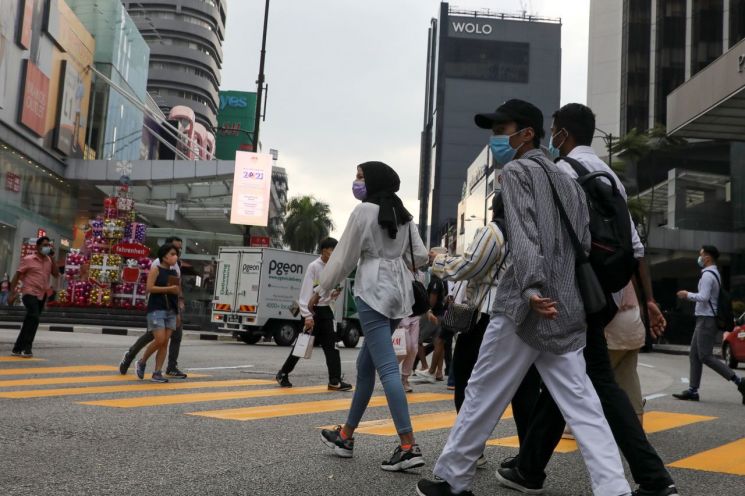
According to local media such as The Star on the 8th, Kuala Lumpur, the capital city, announced new guidelines for issuing alcohol sales permits, banning the production, sale, and consumption of 'Samsu,' a distilled liquor with an alcohol content of up to 70%, starting from the 15th. Samsu is a distilled liquor with an alcohol content ranging from 37 to 70 degrees, but it is priced at only 3 to 5 ringgit (about 800 to 1400 won) per 150ml bottle, making it easily accessible to low-income groups and teenagers. Kuala Lumpur also plans to completely halt the issuance of distilled liquor sales permits to small businesses such as grocery stores, convenience stores, and Chinese medicine shops in the city starting October 1 next year to improve the environment that encourages drinking. Small businesses will only be allowed to sell low-alcohol beverages such as beer from 7 a.m. to 9 p.m. Low-alcohol beverages like beer must be displayed separately from other drinks.
Alcohol sales outlets near schools, hospitals, religious facilities, and police stations will also be prohibited. Alcohol sales in restaurants and bars will be restricted from 10 a.m. to midnight, but with an additional alcohol sales permit, sales can continue until 2 a.m. the following day. Furthermore, all alcohol businesses must display their sales permits at the entrance and are required to show warning messages such as "No drinking under 21." Although a beer festival held in Kuala Lumpur in 2017 was canceled, this is the first time that sales hours and locations have been restricted. These regulations were introduced to improve Malaysia's drinking culture. Although Malaysia is an Islamic country, drinking culture is widespread mainly among Chinese and Indian Malaysians. According to the 2019 National Health and Morbidity Survey (NHMS), the drinking population in Malaysia was 11.8% in 2019, up from 8.4% in 2015. Additionally, 45.8% of drinkers were found to binge drink six or more drinks at a time.
Islamic groups have long argued for restricting alcohol sales to prevent social losses caused by drinking culture. The Islamic Non-Governmental Organization Coalition Committee has advocated for activities to limit drinking behavior to prevent harms such as drunk driving and domestic violence. Therefore, the Pan-Malaysian Islamic Party (PAS) welcomed Kuala Lumpur's policy, stating that it protects citizens from the harms of excessive drinking and improves the environment that encourages drinking.
However, the Chinese-based Democratic Action Party (DAP) demands a review of the regulations, arguing that they do not guarantee the rights of non-Muslims. DAP lawmaker Tan Kok Wai said, "The new regulations infringe on the rights of non-Muslims and minorities, so a review is necessary." He also criticized the policy for not considering businesses struggling due to COVID-19. DAP lawmaker Ramasamy also opposed the regulations, calling them oppression against minority religions. Ramasamy said, "The harm caused by drinking culture in Malaysia is minor, but Kuala Lumpur is trying to build Islamic fundamentalism through these regulations." According to the Malaysian Department of Statistics, Muslims accounted for 69% of the total population as of 2019. He explained, "80% of all traffic accident deaths are motorcycle and other two-wheeler accidents, and 60% of motorcycle deaths occur in rural areas, not big cities." In fact, as of 2018, deaths caused by drunk driving accounted for only 0.85% of all traffic accident fatalities. On social networking services (SNS), criticism is growing that Kuala Lumpur is discriminating against non-Muslims. Article 11 of the Malaysian Constitution states that while Islam is the official religion of Malaysia, the rights of non-Muslims must also be guaranteed.
© The Asia Business Daily(www.asiae.co.kr). All rights reserved.
![Clutching a Stolen Dior Bag, Saying "I Hate Being Poor but Real"... The Grotesque Con of a "Human Knockoff" [Slate]](https://cwcontent.asiae.co.kr/asiaresize/183/2026021902243444107_1771435474.jpg)
















