KB Real Estate LiveOn Weekly Housing Market Trends
House Prices Soar in Busanjin-gu, Geumjeong-gu, and Gangseo-gu
Regions Avoiding Regulations... Balloon Effect Movement
From Gimpo to Paju, From Busan to Ulsan
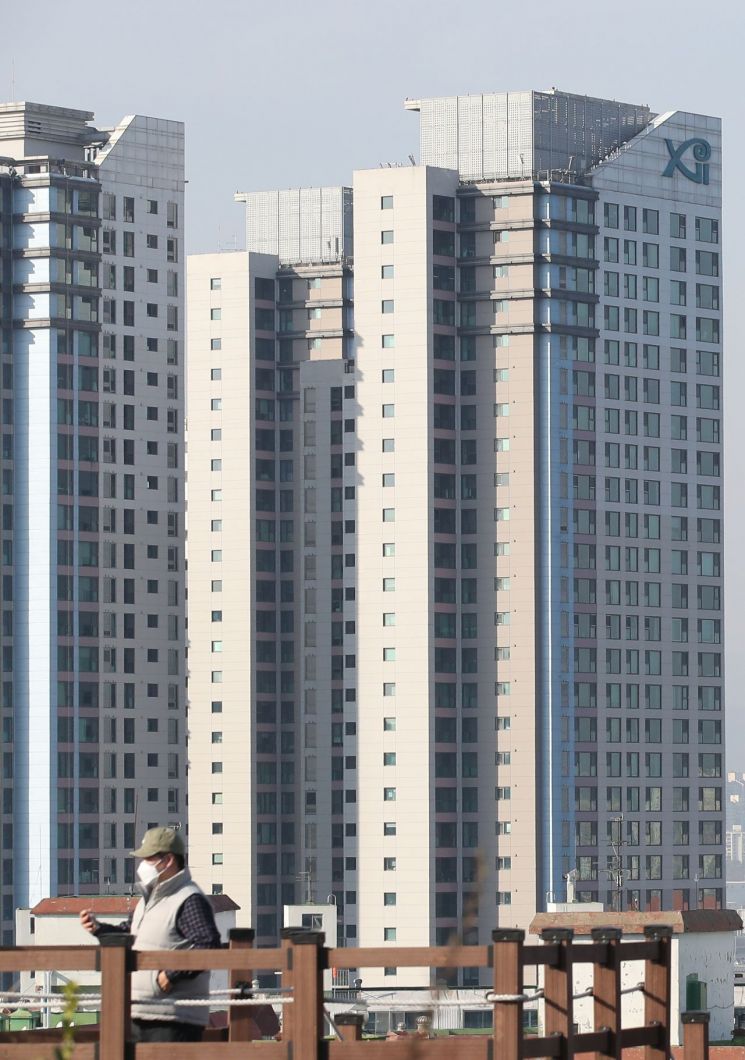
[Asia Economy Reporter Moon Jiwon] As the government designated Gimpo in Gyeonggi Province and Busan as regulated areas, the 'balloon effect' is shifting to nearby non-regulated areas.
According to the weekly KB Housing Market Trend data released by KB Kookmin Bank's Real Estate Live On on the 26th, as of the 23rd, apartment sale prices in Busan rose by 1.06%, showing a larger increase compared to the previous week (1.02%).
In Busan, the apartment sale price increase rates were particularly high in Busanjin-gu (2.42%), Geumjeong-gu (2.13%), and Gangseo-gu (2.02%). These areas recently avoided being designated as regulated zones.
Earlier, on the 19th, the Ministry of Land, Infrastructure and Transport designated seven new regulated areas after deliberation by the Residential Policy Deliberation Committee, including Gimpo City in Gyeonggi Province (excluding Tongjin-eup, Wolgot, Haseong, and Daegot-myeon), Busan's Haeundae, Suyeong, Dongnae, Yeonje, and Nam districts, and Daegu's Suseong-gu.
After the designation, apartment listings increased in the regulated areas, somewhat reducing the rate of price increase, but the nearby regions are experiencing market instability due to the shifted 'balloon effect.'
In fact, despite the recent sharp rise in housing prices, Ulsan, which was not designated as a regulated area, saw apartment sale prices increase by 1.25% this week. Nam-gu in Ulsan recorded a significant rise of 2.32%. Paju, a non-regulated area near Gimpo (1.34%), also recorded a 1.25% increase.
Apartment sale prices in Seoul rose by 0.31%, similar to last week's 0.29%, with the upward trend slightly slowing by region. Eunpyeong-gu (0.73%), Gangnam-gu (0.50%), Nowon-gu (0.46%), Gwangjin-gu (0.46%), and Guro-gu (0.41%) saw relatively larger increases.
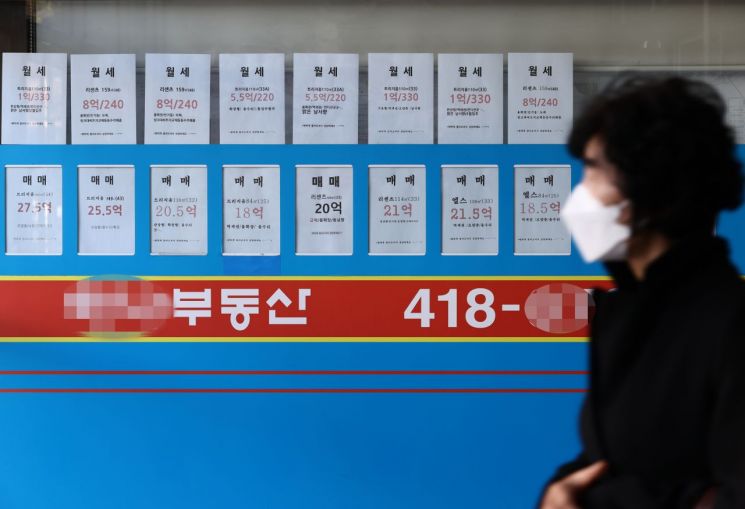 Information on sales, jeonse, and monthly rent posted at a real estate agency in Seoul (Photo by Yonhap News)
Although the government recently introduced measures to resolve the spreading jeonse (long-term lease) crisis, the jeonse market remains unstable.
Seoul's apartment jeonse prices rose by 0.61% this week, a larger increase compared to the previous week (0.53%). The highest increases were in Gwangjin-gu (0.99%), Gangnam-gu (0.90%), Songpa-gu (0.88%), Guro-gu (0.86%), and Yangcheon-gu (0.84%), with no areas showing a decline.
Jeonse prices in Gyeonggi Province also rose by 0.40% compared to the previous week, driven by increases in Gimpo and Paju. Gimpo (1.09%), Paju (0.8%), Yeongtong-gu in Suwon (0.7%), Gwangju (0.69%), and Jungwon-gu in Seongnam (0.68%) showed significant rises.
As jeonse prices continue to rise, the sales market is gradually becoming unstable. Seoul's buyer dominance index rose to 94.5, up from 90.2 last week.
The buyer dominance index ranges from 0 to 200, and a value above 100 indicates 'more buyers.' In Seoul, due to ongoing regulations, the index fell to 80.3 on the 2nd but has recently been rising again.
Additionally, Daegu (117.5), Daejeon (109.3), and Ulsan (140.3) all exceeded 100, indicating concentrated buyer sentiment.
© The Asia Business Daily(www.asiae.co.kr). All rights reserved.
![Clutching a Stolen Dior Bag, Saying "I Hate Being Poor but Real"... The Grotesque Con of a "Human Knockoff" [Slate]](https://cwcontent.asiae.co.kr/asiaresize/183/2026021902243444107_1771435474.jpg)
















