Detection of Unfair Promotional Expenses and Receipt of Sales Incentives
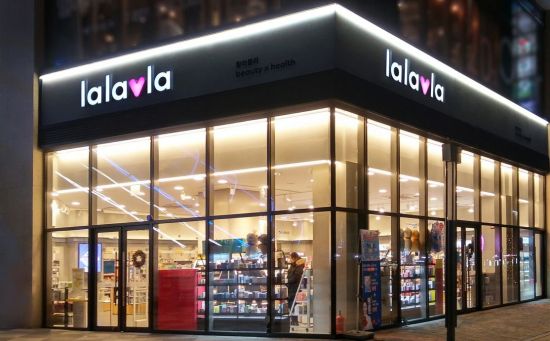 Night view of Lalavla. (Photo by GS Retail)
[Asia Economy Reporter Moon Chaeseok] GS Retail, which operates Lalavla, the second-largest Health & Beauty (H&B) store in Korea (formerly Watsons Korea before its merger in 2017), was caught by the Fair Trade Commission (FTC) for illegal activities such as embezzling over 500 million KRW from suppliers under the pretext of event expenses. The FTC announced that it will impose a fine of 1.058 billion KRW and corrective orders on GS Retail, which absorbed Lalavla through the merger with Watsons Korea.
According to the FTC on the 22nd, GS Retail engaged in multiple illegal acts against numerous suppliers, including ▲not providing contracts before transactions ▲cutting product payments ▲unfair returns ▲and shifting promotional and sales incentive costs without agreements.
GS Retail signed 17 purchase supply contracts with 13 suppliers but did not provide the contracts before the transactions. During the same period, it signed 32 purchase supply contracts with 25 suppliers but did not include in the contracts the clause that additional fees would be charged for using SNS sales promotion methods provided by GS Retail, yet collected about 79 million KRW for SNS usage fees. This violates the Large-scale Distribution Business Act.
Additionally, GS Retail deducted about 530 million KRW from product payments to 38 suppliers in 2015 and 2016 under the name of costs for its own Health & Beauty award ceremonies. The law prohibits reducing payments for supplied products without justifiable reasons. The legally recognized "justifiable reasons" include ▲when the supplied products differ from the contracted products ▲when products are damaged or spoiled due to the supplier's responsibility ▲or when products have defects.
GS Retail also returned goods worth approximately 9.8 billion KRW, which were directly purchased from suppliers, without justifiable reasons. Furthermore, it conducted 213 promotional events with 76 suppliers and made them bear the promotional event costs without written agreements related to the events. All these actions are illegal.
In annual basic contracts with 30 suppliers, GS Retail did not establish agreements regarding the purpose, timing, frequency, ratio, or amount of sales incentives but still received about 280 million KRW in incentives. Sales incentives refer to economic benefits given by suppliers to large-scale distributors to increase product sales in direct purchase transactions. The law restricts receiving incentives without legally mandated contract terms on sales incentive payments in annual basic contracts with suppliers, which GS Retail violated.
Kwon Soon-guk, head of the Distribution Transaction Division at the FTC, stated, "There is concern that the COVID-19 crisis will increase incentives for large-scale distributors to unfairly shift promotional costs, sales incentives, and return costs onto suppliers," adding, "We plan to strengthen monitoring of unfair practices by large-scale distributors."
© The Asia Business Daily(www.asiae.co.kr). All rights reserved.
















