Foreign Investors Allowed to Trade at Shanghai International Energy Exchange from 19th
Some Volumes from London Exchange Expected to Move to Shanghai
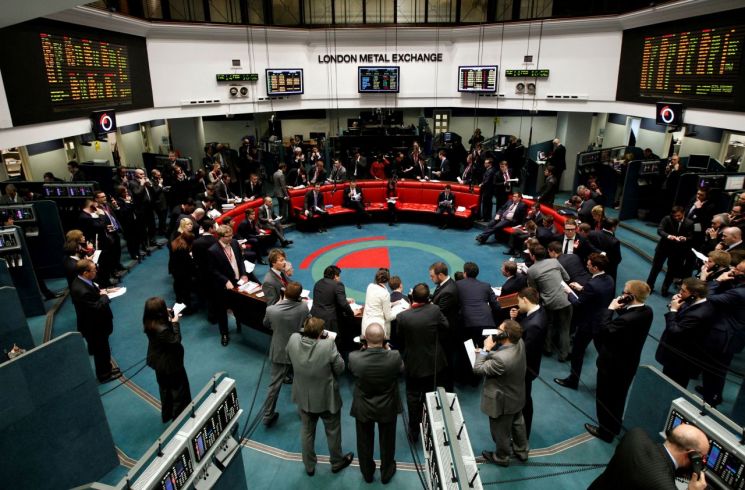
[Asia Economy Reporter Jeong Hyunjin] China is taking measures to open its copper futures market to foreign investors. Considering that China is the largest consumer market for copper, a key material in manufacturing, its influence on global prices is expected to grow even further.
According to major foreign media on the 18th, the Shanghai International Energy Exchange (INE) will start yuan-denominated copper futures trading for foreign investors from the 19th. Although copper futures trading has been conducted at INE, foreign investors had to establish a local company to participate, making trading itself difficult due to stringent conditions. However, with this new measure, foreign investors can trade directly without having to pay a separate high value-added tax.
Experts predict changes in the copper futures trading structure centered around the UK. As some copper futures trading shifts from the London Metal Exchange (LME) to Shanghai, China's influence in the process of determining copper prices is expected to increase. Unlike the UK, China allows traded copper to be stored in warehouses outside the customs duty area, so no separate import duties need to be paid. Foreign media reported that since London lacks separate warehouses and may incur additional costs, investors might prefer China more.
Colin Hamilton, an analyst at BMO Capital Markets, said that since over 70% of copper consumption occurs in Asia, China's opening policy will be successful. He stated, "I believe China will eventually become the benchmark for the international copper market."
China already holds the greatest influence in the copper market. As the largest single market consumer accounting for 40-50% of global copper consumption, copper prices have a significant impact on its economy. Jun Zhuo, head of Huatai Financial's US branch, said, "China does not want its economy or market to be shaken by foreign markets."
Following the impact of the COVID-19 pandemic, copper prices, which plummeted in March, have steadily risen. On the 16th, the LME closed at $7,108.0, marking the highest level in two years. The price increase was driven by expected demand growth as the Chinese economy recovers. On that day, trading closed at $7,068.0, down 0.56% from the previous day.
The Chinese government has successively opened commodity markets such as crude oil and iron ore to foreign investors over the years. In 2018, China opened its crude oil futures market. Since then, China's influence in the oil market has expanded. In April, amid the COVID-19 pandemic and oil price collapse, the price of West Texas Intermediate (WTI) crude oil in the US dropped to near zero, but in China, it maintained around $30 per barrel, illustrating a notable difference. John Browning, CEO of Bands Financial, explained that China prepared storage space for traded oil, which helped maintain trading and support international prices even after the COVID-19 outbreak.
© The Asia Business Daily(www.asiae.co.kr). All rights reserved.
![Clutching a Stolen Dior Bag, Saying "I Hate Being Poor but Real"... The Grotesque Con of a "Human Knockoff" [Slate]](https://cwcontent.asiae.co.kr/asiaresize/183/2026021902243444107_1771435474.jpg)















