Expansion of Capacity Limits for General Management Facilities
Ban on Gatherings and Meals After Church Services
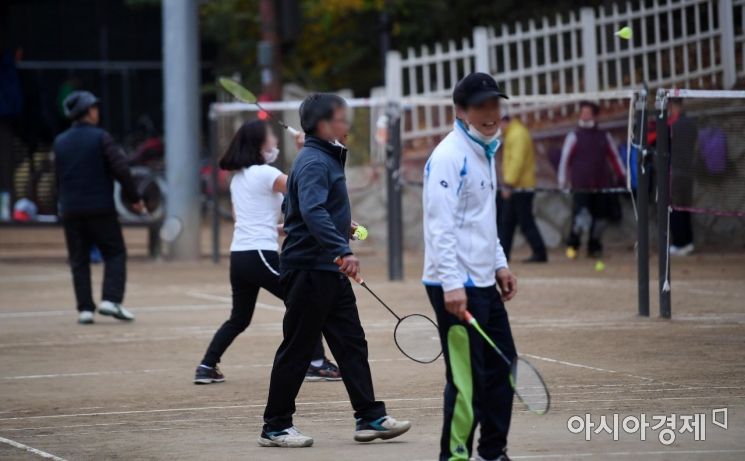 On the 17th, when the government decided to raise the social distancing level to 1.5 in the Seoul metropolitan area, citizens were playing badminton without properly wearing masks at a public sports facility in a park in Seoul. Photo by Kim Hyun-min kimhyun81@
[Asia Economy Reporters Choi Dae-yeol, Kim Heung-soon, Jo Hyun-ui] As of the 17th, the number of new confirmed cases of the novel coronavirus infection (COVID-19) in double digits has appeared not only in the metropolitan area but also in several other places such as Gwangju, Jeonnam, and Gangwon. Unlike in the past when large-scale cluster outbreaks occurred mainly around the metropolitan area or specific facilities and events in other regions, recently the virus is spreading in various everyday life settings that we commonly encounter.
The virus is spreading in places where wearing masks is difficult, such as saunas, restaurants, and cafes, as well as through small gatherings like clubs, schools, academies, and even family and acquaintances. Following some local governments applying level 1.5 social distancing, the metropolitan area will also raise the level starting from the 19th, which the health authorities expect will raise awareness among the general public.
Infections Spreading Throughout Daily Life
Local Infections Reach 200s After Two and a Half Months
As of midnight on the day, the number of patients presumed to be infected locally was 202, marking the first time in 76 days since September 2nd (253 cases) that the figure has reached the 200s. Local infections have been steadily increasing this month, and imported cases continue to appear consistently at 20 to 30 per day.
In the Gwangju and Jeonnam areas, COVID-19 spread through university hospitals, workplaces, restaurants, and pubs, followed by secondary transmissions through family and acquaintances. In Gyeonggi Province, cluster cases emerged through university clubs and academies, and dozens of cluster outbreaks occurred nationwide in places such as prayer houses, nursing homes, training programs, military units, schools, and gyms.
Authorities believe the recent infections are due to increased social activities among young people at workplaces and schools following the easing of social distancing measures in mid-last month. Since COVID-19 symptoms tend to be absent or mild in younger patients, many cases may go undetected after infection. As contact increases while infection sources remain in the community, the virus is spreading. According to health authorities, about half of the roughly 2,000 new confirmed cases this month are patients aged 40 or younger. Although mask-wearing has become widespread and hygiene rules are better followed than before, the virus is still finding its way in during moments when masks are briefly removed in places like restaurants or through family and acquaintance gatherings.
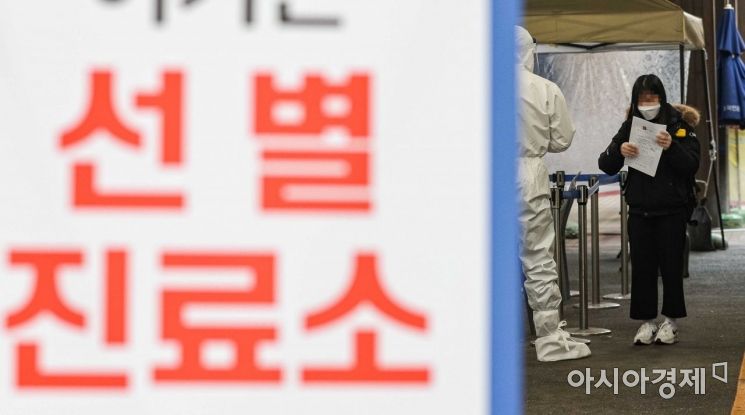 On the 17th, when the government raised the social distancing level to 1.5 in the metropolitan area, a citizen visiting a screening clinic in Songpa-gu, Seoul, is undergoing a COVID-19 test. Photo by Kang Jin-hyung aymsdream@
One Person per 4㎡ at Weddings and Funerals... Korean Series Tickets to be Resold
Gatherings and Concerts Limited to Under 100 People
No Seat Movement Allowed in Clubs and Hunting Pojangmacha
Under the level 1.5 social distancing measures effective from the 19th, the number of facilities subject to capacity restrictions will significantly increase. The previous rule of one person per 4㎡, which applied to high-risk facilities such as entertainment venues, will be extended to most general management facilities including wedding and funeral halls, bathhouses, and beauty salons. In clubs and hunting pojangmacha (outdoor drinking tents), risky behaviors such as dancing or moving between seats are prohibited. Eating food is not allowed in karaoke rooms. Religious facilities may hold in-person services only up to 30% of seating capacity. While level 1 recommended refraining from gatherings and meals, this will be strengthened to a prohibition.
Social welfare facilities, including daycare centers, will continue to operate under strict quarantine measures. However, for in-person school attendance, while level 1 allowed adjustments based on local and school conditions under the principle of two-thirds or less attendance, level 1.5 requires strict adherence to this rule. Restaurants and cafes will not have restricted operating hours but will be limited to one person per 4㎡, and additional quarantine measures such as maintaining 1-meter distance between tables, leaving one seat empty, and installing partitions will be expanded to businesses with facility areas of 50㎡ or more.
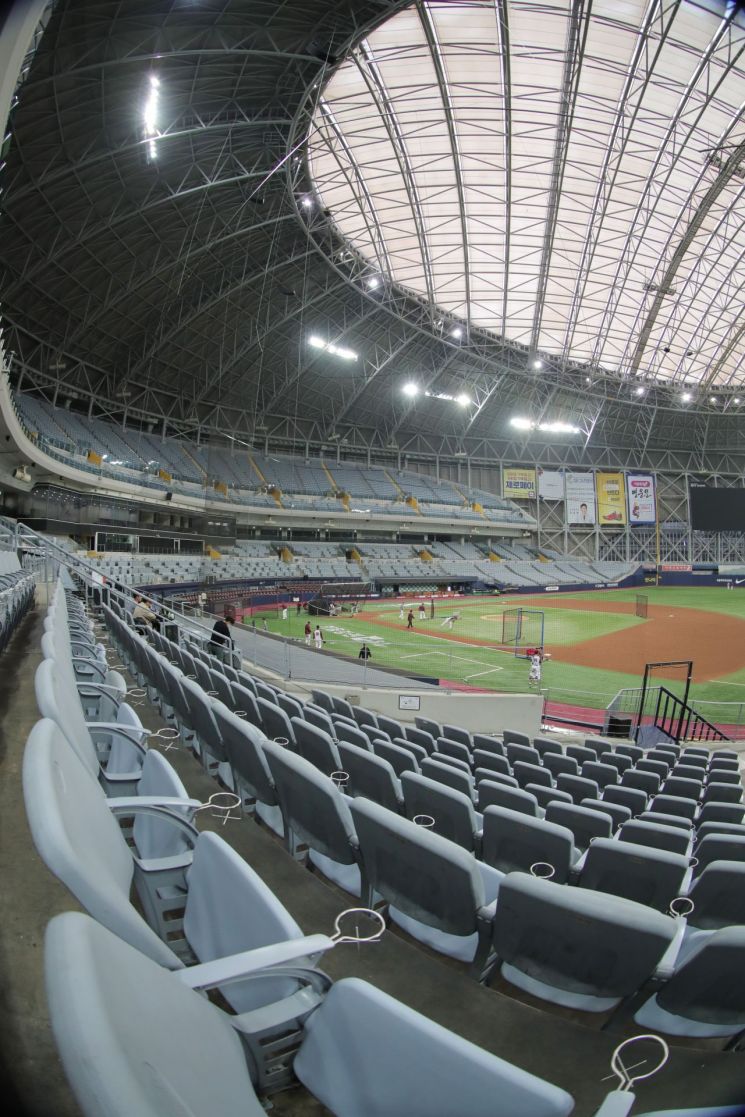
Mandatory mask-wearing locations will add one outdoor sports stadium to the existing facilities. Spectator attendance at sports events will be limited to 30% capacity. Consequently, starting from the third game of the professional baseball Korean Series scheduled on the 20th, attendance will be capped at 30% or less. Tickets for the Korean Series between NC and Doosan were originally sold out for all seven games, but this measure necessitates reselling. Initially, 8,200 tickets, half the capacity of Gocheok Sky Dome, were allocated per game, but from the third game onward, this will be reduced to 5,100 tickets.
Events or gatherings with more than 500 people can proceed with notification to the local government as under level 1, but gatherings or protests involving risky activities such as chanting or singing, popular music concerts, festivals, and academic events will be limited to fewer than 100 people.
© The Asia Business Daily(www.asiae.co.kr). All rights reserved.



















