Savings to Protection 'Portfolio Improvement'
Hanwha Life, Protection Premium Income Grows 3.3%
Samsung Life, Protection New Contract APE Up 2.9%
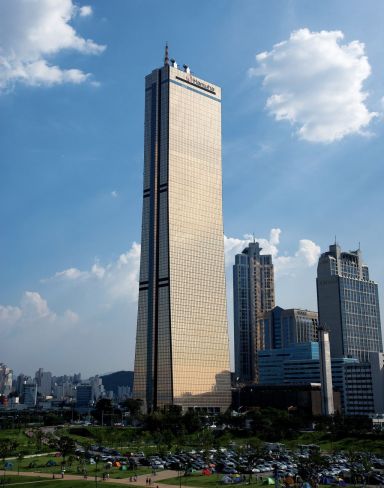
[Asia Economy Reporter Oh Hyung-gil] Life insurance companies are recording strong performance as they actively enter the protection-type insurance market. Despite the industry downturn, the portfolio improvement efforts to reduce savings-type insurance and increase protection-type insurance ahead of the introduction of the new International Financial Reporting Standard (IFRS17) and the new solvency regime (K-ICS) in 2023 appear to have been effective.
According to the insurance industry on the 13th, Hanwha Life's net profit for the third quarter was 65.5 billion KRW, a 7.4% increase compared to the same period last year. Premium income rose 12.8% to 3.4361 trillion KRW.
On a cumulative basis, net profit surged by a remarkable 56.3% year-on-year to 241.2 billion KRW. Although sales slightly decreased to 12.7278 trillion KRW, operating profit successfully turned positive at 21.25 billion KRW.
A Hanwha Life official explained, "Despite the interest rate cuts and increased stock market volatility caused by the COVID-19 pandemic continuing from the beginning of the year, we maintained a solid level of operations."

At the center of this growth is protection-type insurance. Protection-type premium income grew 3.3% compared to the same period last year. General account premium income grew 8.5% year-on-year to 2.569 trillion KRW, of which protection-type insurance accounted for 59%. This is a 3% increase from the same period last year.
This trend is also evident in Samsung Life Insurance, which announced its earnings the day before.
Samsung Life's third-quarter net profit was 995 billion KRW, up 1.8% from the same period last year. In particular, the new contract annualized premium equivalent (APE), which converts the premium payments of new contracts into an annual basis, increased 3.7% year-on-year to 2.04 trillion KRW. Protection-type new contract APE rose 2.9% from 1.426 trillion KRW to 1.468 trillion KRW. The launch of new health products led the growth of protection-type insurance alongside whole life insurance.
Dongyang Life also pursued a protection-type centered sales strategy this year. Of Dongyang Life's premium income of 3.9424 trillion KRW from the first to third quarters, protection-type insurance accounted for 1.742 trillion KRW, a 7.9% increase compared to the same period last year. Protection-type APE recorded 380.1 billion KRW, an 8.7% growth year-on-year. However, net profit was 107.9 billion KRW, down 24.8% from the same period last year.
A Dongyang Life official said, "The principle is to expand a sustainable growth foundation," adding, "We will continue the protection-type centered sales strategy and maintain stable growth through risk management and profitability enhancement."
Life insurance companies affiliated with financial holding companies also saw protection-type insurance drive their performance. NH Nonghyup Life recorded a cumulative third-quarter net profit of 64.3 billion KRW, more than doubling compared to 24.7 billion KRW in the same period last year. The strong sales of protection-type insurance positively impacted the results. The proportion of protection-type insurance sales, which was about half of new contracts in 2018, increased to 88.3% last year and 91.9% as of the first half of this year.
Shinhan Life's performance improvement was also notable. Shinhan Life achieved a net profit of 171.3 billion KRW in the third quarter, a 56.0% surge compared to the same period last year. Protection-type insurance APE increased 7.9% year-on-year to 304.8 billion KRW, successfully improving the portfolio. Orange Life posted a third-quarter net profit of 213.3 billion KRW, a slight increase of 0.8% compared to the same period last year.
Protection-type insurance is expected to continue to determine the survival of life insurers going forward. An industry insider explained, "Life insurers still have strengths in savings-type insurance, but for liability management, they have no choice but to focus on protection-type insurance," adding, "Consumers' interest concentrated on disease and nursing care insurance is also a reason why the protection-type insurance market is becoming more competitive."
© The Asia Business Daily(www.asiae.co.kr). All rights reserved.


















