Illegal Private Loans Targeting Youth Persist
Small Payments and Phone Cashing Also Lead to 'Daelip'
Government to Operate 'Special Illegal Private Finance Eradication Period' Until Year-End
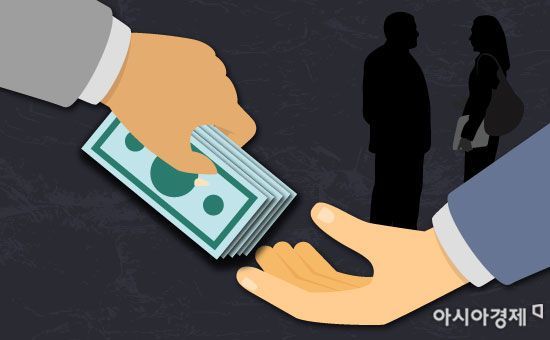
[Asia Economy Reporter Song Seung-yoon] Kim Seong-jong (20, pseudonym), who lives in Busan, resorted to so-called 'small-amount payment scams' to cover living expenses. This method converts the small-amount payment limit set on his mobile phone into cash. Kim's phone limit was 1 million won. Kim paid for gift certificates with this money and handed them over to the dealer, who was supposed to deduct a commission and give him cash. To collect more cash, the dealer had him activate four more mobile phones. The small-amount payment scam was combined with a 'phone scam.' Kim made payments totaling 5 million won and spent nearly 5 million won on phone activation fees. The dealer disappeared. Kim was left with four new phone lines and over 10 million won in debt.
Jo Jae-han (22, pseudonym), who lives in Seoul, tried something called a 'work loan.' Since he was unemployed and had difficulty getting a loan, he paid a 3 million won upfront fee to a dealer who promised to fabricate documents such as income or employment certificates. The dealer also cut off contact.
These days, when it is difficult to find decent part-time jobs, illegal private loans targeting young people who need quick cash but lack social experience are rampant. In addition to the aforementioned small-amount payments, phone scams, and work loans, cases exploiting financial institutions' non-face-to-face (untact) services are common. This so-called 'parent loan' involves inducing the use of parents' mobile phones and IDs to execute loans. 'Daelip' (proxy deposits), which lend small amounts to teenagers and charge exorbitant interest rates exceeding 1000% annually, are also widespread.
On social networking services (SNS) and other online platforms, illegal loan information is easily found with just a search. Many ads use logos of commercial banks or phrases like 'officially registered company' to appear legitimate. Last year, the Financial Supervisory Service detected 16,356 such illegal advertisements, a 37.4% (4,456 cases) increase from the previous year. By type, unregistered lending accounted for 8,010 cases, followed by mobile phone small-amount payment cash conversion with 2,367 cases, and work loans with 2,277 cases.
The government has designated the end of the year as a 'special eradication period for illegal private finance' and is conducting a comprehensive crackdown. Police and local government special judicial police conducted intensive crackdowns on illegal private finance until the end of August, arresting a total of 861 people. The Ministry of Science and ICT, the Korea Communications Standards Commission, and the Financial Supervisory Service also detected and blocked 76,532 illegal private finance advertisements and blocked 2,083 phone numbers used in offline advertisements.
© The Asia Business Daily(www.asiae.co.kr). All rights reserved.
![Clutching a Stolen Dior Bag, Saying "I Hate Being Poor but Real"... The Grotesque Con of a "Human Knockoff" [Slate]](https://cwcontent.asiae.co.kr/asiaresize/183/2026021902243444107_1771435474.jpg)














