Jeonse Measures Delayed Again... Concerns Over Impact of Rising Jeonse Prices on Sales
Equity Accumulation Type Sale Housing "Not a Fundamental Solution to Jeonse Crisis"
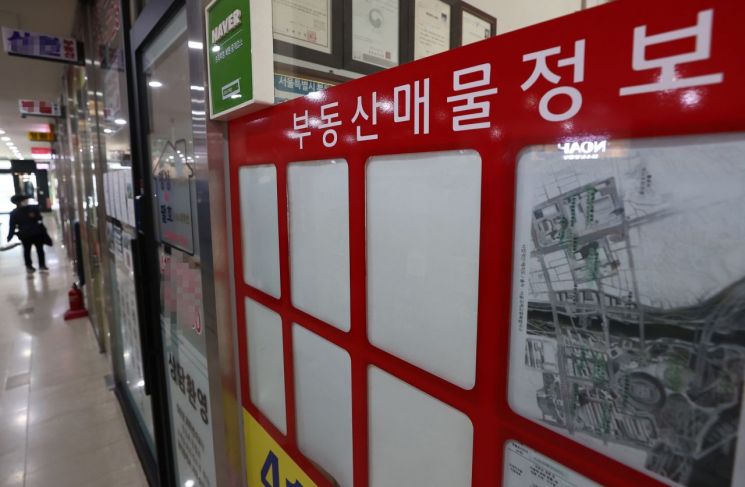
[Asia Economy Reporter Jang Sehee] The anticipated jeonse (long-term lease) measures expected this week appear to be delayed again. This is because it is difficult to find appropriate measures to ease the jeonse shortage without stimulating the sales market.
It is judged that it is difficult to drastically increase the supply of rental housing immediately, and expanding the monthly rent tax credit is not a fundamental solution.
According to the Ministry of Economy and Finance and the Ministry of Land, Infrastructure and Transport on the 1st, the government is currently seeking countermeasures to resolve the jeonse shortage, but it is reported that an announcement this week is difficult.
A government official said, "It is difficult to present jeonse measures within this week." The government intends to resolve the jeonse shortage through equity accumulation-type sale housing, but there are criticisms that the supply plan for equity accumulation-type housing is difficult to see as a short-term remedy.
Deputy Prime Minister Hong previously said, "Equity accumulation-type housing will be gradually applied starting with highly preferred urban sites, and sales are expected to be possible from 2023," adding, "Equity accumulation-type sale housing is expected to become a new supply model that actively supports home ownership for future non-homeowners with real demand."
Equity accumulation-type housing is a method where only 20-25% of the land and building equity is acquired at the initial sale, and the remaining equity is acquired in installments over 20-30 years.
President Moon Jae-in officially announced the supply of "high-quality medium-sized public rental apartments" in the budget address on the 28th of last month. Here, high-quality medium-sized public rental means supplying public rental housing with an increased area from the existing 60㎡ to 85㎡.
However, the supply timing of equity accumulation-type sale housing is in 2023, and high-quality medium-sized public rental housing is also not in a state where supply can be drastically increased immediately. In other words, it can provide hope for the future but is not a measure to immediately resolve the jeonse shortage.
It is also reported that the internal conclusion is that converting public sale units into rental units is inappropriate as a jeonse measure. This is from the perspective that converting sale units into jeonse units could negatively affect the sales market.
The government is also considering advancing the supply schedule of public rental housing by 1-2 years. However, since the supply volume that can be advanced is limited, the prevailing analysis is that it is not enough to change the trend of the jeonse shortage. Regarding the expansion of monthly rent income deduction proposed by Minister of Land, Infrastructure and Transport Kim Hyun-mi during the recent National Assembly audit, it is reported that the fiscal authorities are not seriously considering it.
According to the National Tax Statistics Yearbook, the average monthly rent tax credit per person is around 300,000 KRW. Even if the tax credit amount is doubled extremely, it is evaluated that the immediate impact on the jeonse shortage would not be significant.
Meanwhile, the government has judged that market interventions such as standard rent are excessive and is not considering them at all.
© The Asia Business Daily(www.asiae.co.kr). All rights reserved.
![Clutching a Stolen Dior Bag, Saying "I Hate Being Poor but Real"... The Grotesque Con of a "Human Knockoff" [Slate]](https://cwcontent.asiae.co.kr/asiaresize/183/2026021902243444107_1771435474.jpg)















