Trumpnomics VS Bidenomics
China's Hardline Policy Likely Unchanged... Differences in Approach
South Korea, with High Export Dependence on China, Faces Impact... Both Countries Need to Watch Each Other
Biden Supports Multilateral Trade Order but Has No Detailed Plans
Biden Focuses on Eco-Friendly Policies
Positive for Solar and Electric Vehicle Industries... Carbon Tax May Become a Trade Issue
Dollar Weakness Trend May Intensify if Biden Wins
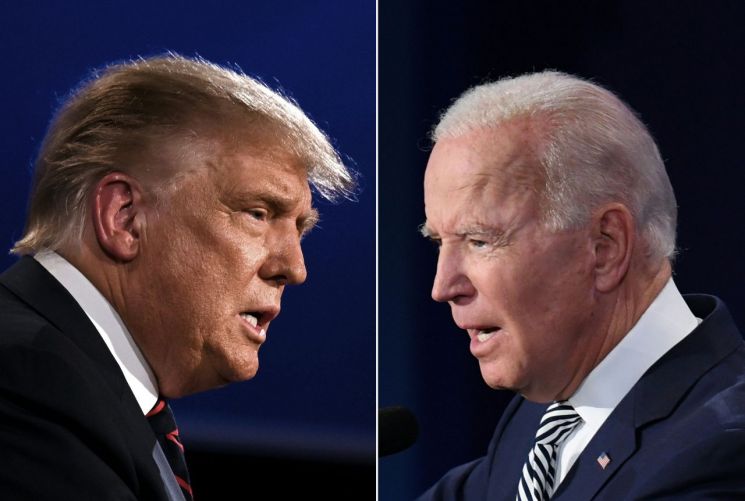 U.S. President Donald Trump (left) and Democratic presidential candidate Joe Biden (right)
 [Image source=Yonhap News]
[Asia Economy Reporter Kim Eun-byeol] With the U.S. presidential election just two days away, attention is also focused on the impact of the major economic policies of the presidential candidates on South Korea. Among the U.S. economic policies, trade and commerce policies play a crucial role for South Korea, where exports account for the majority of the economy. Economic experts expect that regardless of which candidate wins, a tough stance against China will be difficult to disappear. This is because the economic downturn in the U.S. caused by the COVID-19 shock makes economic nationalism inevitable. This is not welcome news for South Korea, which has a high proportion of exports to China. However, if Democratic candidate Joe Biden is elected, industries in the 'Green New Deal' sector are likely to gain momentum, and the revival of multilateral trade policies is seen as a positive factor.
"Tough stance against China remains regardless of who wins"
On the 1st (local time), based on Biden’s campaign and foreign media reports, it is expected that even if Biden wins, there will be little change in U.S. economic nationalism and a tough stance against China. Economic experts say that it is difficult to find significant differences between Biden’s trade and commerce policies, which could greatly affect South Korea, and those of President Donald Trump.
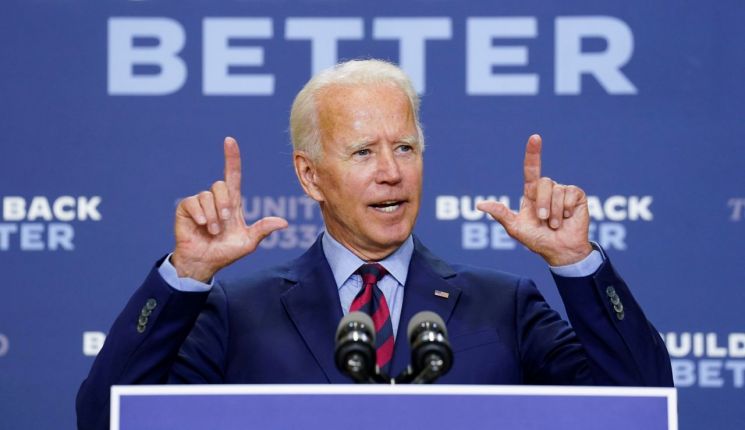
Under the slogan "Build Back Better," Biden has introduced various economic policies and repeatedly stated that he will focus on rebuilding the U.S. domestic economy. His stance is to revive the U.S. domestic economy, which has worsened due to COVID-19, through the revival of U.S. manufacturing ('Made in America') and job creation ('Buy American'). Although there are differences in degree, his overall position is similar to Trump’s slogan "Make America Great Again." The policy direction toward China is also expected to remain almost unchanged. Biden has stated that he will "correct China’s unfair trade practices and reform China’s structure that undermines the multilateral trade order."
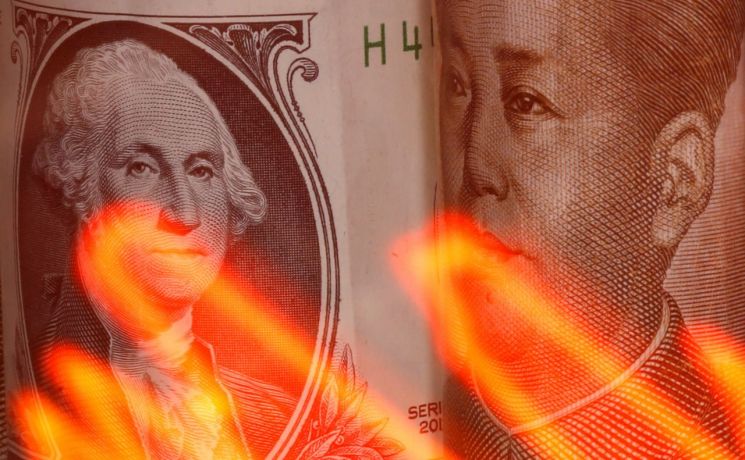
If the U.S. pursues a tough stance against China, South Korea will inevitably be affected. Currently, about 25% of South Korea’s exports are to China. South Korea exports intermediate goods to China, and China uses these intermediate goods imported from South Korea to manufacture finished products for export, forming a solid industrial structure. If the U.S. takes a tough stance against China, China’s imports of intermediate goods from South Korea will inevitably decrease. However, the fact that Korean products could emerge as substitutes by not using Chinese products is an advantage.
On the 25th of last month, the Bank of Korea evaluated in its 'Overseas Economic Focus' that "the U.S.-China conflict is likely to intensify and prolong regardless of the election outcome due to the nature of global hegemony competition." Although there are differences between President Donald Trump and Democratic candidate Joe Biden in various fields such as international politics and security, global trade order, and environmental and energy issues, there will be no major difference in the overall U.S.-China trade conflict. According to a PEW survey, the proportion of negative responses toward China is increasing in the U.S. Even among Democratic supporters, the negative response rate rose from about 62% earlier this year to 68% in June-July, and among Republican supporters, it surged from 72% to 83% during the same period.
As China shows rapid growth and expands its global influence, the U.S. is expected to continue checks and balances due to concerns over weakening influence. Both the Republican and Democratic parties have formed a bipartisan consensus on anti-China policies. The Bank of Korea said, "Both candidates are strengthening checks on China, so South Korea may face increased pressure to choose sides between the U.S. and China," and "Regardless of who wins, pressure to reduce China’s share in supply chains will increase."
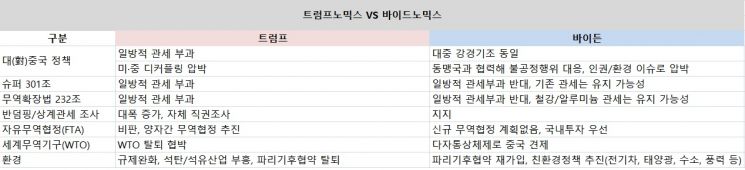
Biden’s approach to pressuring China through multilateral trade order differs from Trump
Biden’s method of pressuring China is expected to differ from President Trump’s. Biden has stated that he will work with allies to correct China’s unfair trade practices and reform China’s structure that undermines the multilateral trade order. This suggests that sudden trade sanctions triggered in a 'top-down' manner, as seen under Trump, may be avoided. It is also expected that Biden will pressure China on human rights and environmental issues, which is a different approach.
The Bank of Korea anticipates that if Biden wins, the restoration of relations with allies and the revival of multilateral systems will likely improve the global trade environment. In this case, uncertainty in the trade environment will decrease, and South Korea’s trade conditions may improve somewhat.
However, in conclusion, even if Biden is elected, it is highly likely that tariffs against China will remain. Although Biden has expressed opposition to tariffs imposed under Trump’s Trade Expansion Act Section 232 and Super 301 provisions, he has never mentioned withdrawing existing measures.
Although Biden has pledged to lead reforms of the World Trade Organization (WTO) to reshape the multilateral trade order, he has not presented specific plans, which raises questions. The website E-IR (E-International Relations), which reports on international affairs, forecasted negatively, stating that "WTO reform will be a very long and difficult task, as it has been so far." It also pointed out that although Biden supports multilateralism, the 'Buy American' clause promoting U.S. purchases violates WTO rules.
Green and low-carbon industries to gain momentum if Biden elected... Monetary and fiscal policies to be maintained
The biggest difference between the economic policies of the two candidates lies in environmental policy. Biden has declared that he will rejoin the Paris Climate Agreement on his first day in office. This agreement to combat global warming was controversial when Trump withdrew from it, and Biden’s declaration signals his emphasis on eco-friendly policies. Therefore, if the Biden administration takes office, carbon adjustment taxes are expected to emerge as a new trade issue.
From South Korea’s perspective, Biden’s eco-friendly policies are expected to be favorable for domestic solar power and electric vehicle industries. Biden has announced plans to replace U.S. school buses and federal government vehicles with electric and hydrogen vehicles and to expand California-style fuel efficiency regulations nationwide. As demand for electric vehicles is expected to surge, domestic companies’ opportunities are also expected to expand.
Overall monetary and fiscal policies are expected to remain similar to the current ones. According to estimates by the U.S. Congressional Budget Office, both candidates are expected to significantly increase federal debt after taking office. If Trump is elected, the federal debt is projected to rise from 98% of GDP currently to 125% by 2030; under Biden, it is expected to increase to 128% during the same period. Since the fiscal input amounts of both candidates are similar, monetary easing policies are expected to continue. As long as the U.S. maintains its zero interest rate policy, South Korea’s low interest rate environment is also likely to be maintained. There is also speculation that if Biden is elected and the Democrats control Congress in a 'Blue Wave' scenario, pressure for a weaker dollar may increase.
© The Asia Business Daily(www.asiae.co.kr). All rights reserved.
![Clutching a Stolen Dior Bag, Saying "I Hate Being Poor but Real"... The Grotesque Con of a "Human Knockoff" [Slate]](https://cwcontent.asiae.co.kr/asiaresize/183/2026021902243444107_1771435474.jpg)

















