KB Real Estate LiveOn 'Weekly KB Housing Market Trends'
Jeonse Supply-Demand Index Hits Highest Level in 5 Years and 7 Months
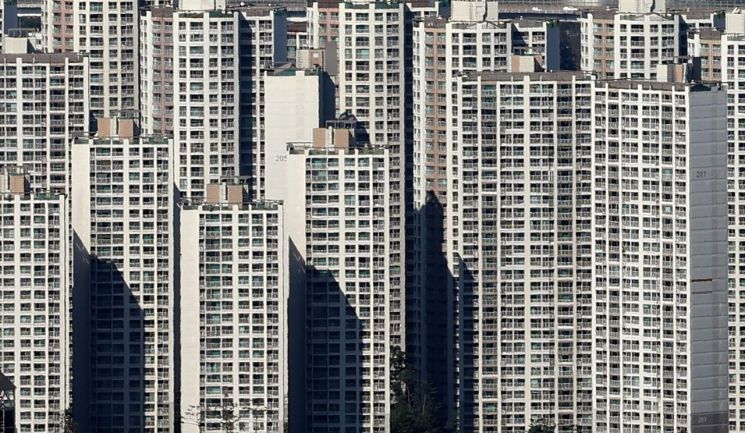
[Asia Economy Reporter Moon Jiwon] The 'Jeonse crisis' spreading mainly in the metropolitan area shows no signs of easing. The rate of increase in Seoul apartment Jeonse prices expanded compared to the previous week, and the Jeonse supply-demand index, indicating the shortage level of Jeonse supply, rose to the highest level in 5 years and 7 months.
According to the KB Housing Market Trend data released by KB Real Estate Live On on the 29th, Seoul apartment Jeonse prices rose by 0.55% this week, an increase from 0.51% the previous week.
The rise was high in the Gangnam area, including Songpa-gu (0.98%), Seocho-gu (0.95%), and Gangnam-gu (0.94%), and Jeonse prices also increased significantly in Yeongdeungpo-gu (0.77%) and Jongno-gu (0.76%). KB Real Estate Live On explained, "Not only non-Gangnam areas but also Gangnam areas rose," adding, "There are no areas with a decline."
The Seoul apartment Jeonse supply-demand index recorded 195.3, the highest figure in about 5 years and 7 months since March 16, 2015 (195.7). The Jeonse supply-demand index, expressed within the range of 0 to 200, indicates a higher proportion of Jeonse supply shortage when exceeding 100.
This index was around 150 in January this year but surpassed 180 at the end of July when the two lease laws were introduced and has been steadily rising since.
This is interpreted as a result of a decrease in listings due to an increase in tenants extending existing Jeonse contracts through the right to request contract renewal. The Jeonse crisis is spreading as more people are looking for Jeonse houses due to subscription waiting demand for the 3rd new town and the recent overlap with the autumn moving season.
Jeonse prices for apartments in Gyeonggi-do also rose by 0.48%, and Incheon increased by 0.32%. In Gyeonggi, Gwangju (1.56%), Suwon Yeongtong-gu (1.54%), Goyang Deogyang-gu (0.86%), Suwon Paldal-gu (0.83%), and Bucheon (0.82%) showed high increases, while in Incheon, Yeonsu-gu (0.83%), Gyeyang-gu (0.40%), Seo-gu (0.28%), Bupyeong-gu (0.17%), and Namdong-gu (0.16%) rose in that order.
Outside the metropolitan area, Jeonse prices are also rising sharply in five metropolitan cities. The recent three-week rise rates were 0.12% → 0.24% → 0.31%, showing an expanding trend.
Jeonse prices in other local areas outside metropolitan cities (0.14%) also increased. Sejong (0.91%), Gyeongbuk (0.16%), Gyeongnam (0.14%), Chungbuk (0.13%), Chungnam (0.10%), Jeonbuk (0.08%), Jeonnam (0.06%), and Gangwon (0.01%) rose, with no areas showing a decline.
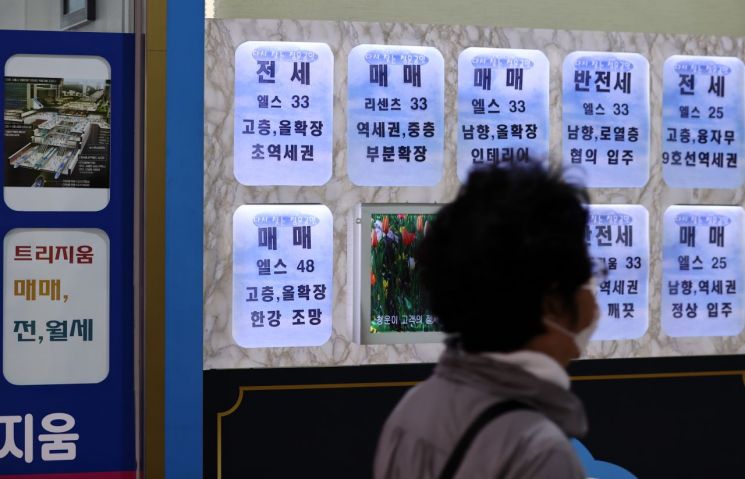
Seoul apartment sale prices rose by 0.30% this week, showing a similar increase to the previous week (0.31%). Nowon-gu (0.72%), Gangbuk-gu (0.66%), Jung-gu (0.60%), Jungnang-gu (0.45%), and Yongsan-gu (0.42%) showed relatively high increases.
The Seoul apartment buyer dominance index recorded the 80s for five consecutive weeks. KB Real Estate Live On explained, "With a decrease in purchase inquiries, the sales market appears quiet."
Gyeonggi-do apartment prices also rose by 0.40%. Gimpo, where house prices have recently risen sharply due to the 'balloon effect' in non-regulated areas, showed a high increase of 2.42%, and Gwangju (0.92%), Goyang Ilsandong-gu (0.69%), Goyang Deogyang-gu (0.62%), and Suwon Yeongtong-gu (0.60%) also rose significantly.
In Incheon (0.06%), Gyeyang-gu (0.23%), Yeonsu-gu (0.08%), Seo-gu (0.06%), Namdong-gu (0.04%), and Bupyeong-gu (0.02%) rose compared to the previous week. Sejong (0.36%), Gyeongbuk (0.19%), Jeonnam (0.10%), Gangwon (0.09%), Gyeongnam (0.07%), Chungnam (0.06%), Chungbuk (0.04%), and Jeonbuk (0.01%) also showed upward trends.
© The Asia Business Daily(www.asiae.co.kr). All rights reserved.
![Clutching a Stolen Dior Bag, Saying "I Hate Being Poor but Real"... The Grotesque Con of a "Human Knockoff" [Slate]](https://cwcontent.asiae.co.kr/asiaresize/183/2026021902243444107_1771435474.jpg)

















