Lotte Super Violates Large-Scale Distribution Act with Unfair Returns and Improper Use of Supplier Employees
Fair Trade Commission Imposes 3.91 Billion KRW Fine
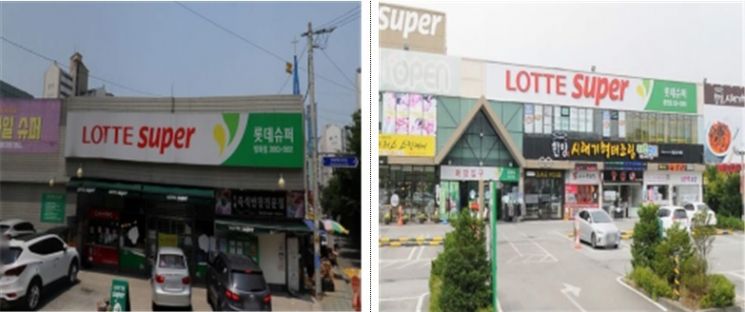 The left is Lotte Shopping Banghwa Branch, and the right is CSU Distribution Chuncheon Branch. Lotte Shopping and CSU Distribution operate under the unified store brand name "Lotte Super." (Photo by Korea Fair Trade Commission)
[Asia Economy Reporter Moon Chaeseok] Lotte Super, a leading corporate supermarket (SSM) in South Korea, has been sanctioned by the Fair Trade Commission (FTC) for delivering contracts late to suppliers, returning products without justifiable reasons, and improperly collecting incentives. This misconduct is similar to the violations recently penalized in the cases of Nonghyup Hanaro Mart and Nonghyup Distribution, which were sanctioned three days ago for supplier abuse.
On the 28th, the FTC announced that it imposed corrective orders (including recurrence prevention and notification orders) and fines totaling 3.91 billion KRW under the Large-scale Distribution Business Act on Lotte Shopping and CS Distribution. Lotte Shopping was fined 2.233 billion KRW, and CS Distribution was fined 1.677 billion KRW. Both companies currently operate under the unified store brand name "Lotte Super."
Late Contract Delivery and Product Returns

Both companies committed multiple violations against numerous suppliers, including ▲delayed delivery of written contracts ▲returning products without justifiable reasons ▲failing to agree in writing on sales promotion cost burdens in advance ▲using supplier employees without written agreements ▲and collecting sales incentives without agreements in annual basic contracts. All these actions violate the law.
Lotte Shopping, from January 2015 to May 2018, entered into 329 purchase supply contracts with 311 suppliers but failed to provide the contracts before starting transactions, delivering them 212 days late.
CS Distribution exhibited the same behavior during the same period, concluding 245 purchase supply contracts with 236 suppliers and delivering contracts 116 days late. According to the FTC, these actions violate Article 6, Paragraph 1 of the law.
They also returned products purchased from suppliers without justifiable reasons. Lotte Shopping returned products worth approximately 820 million KRW from 138 suppliers between January 2015 and April 2018 without valid reasons.
CS Distribution similarly returned products worth about 320 million KRW from 117 suppliers during the same period without justifiable reasons. These actions violate Article 10, Paragraph 1 of the law.
Direct purchase refers to transactions where large-scale distributors bear responsibility for unsold products purchased from suppliers.
Shifting Promotion Costs to Suppliers Without Agreements
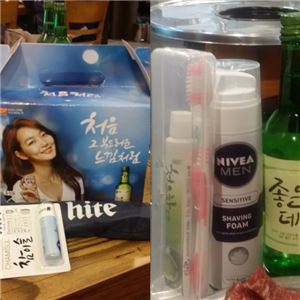 Competition in sales promotion events among liquor companies. (Photo by Asia Economy DB)
They also shifted promotion costs to suppliers without written agreements. Lotte Shopping conducted 368 promotional events with 33 suppliers from January 2015 to April 2018, imposing approximately 10.8 billion KRW in costs without any written agreements.
CS Distribution, during the same period, held 240 promotional events with 9 suppliers, imposing about 1.9 billion KRW in promotion costs without written agreements. These actions violate Article 11, Paragraph 1 of the law.
Promotion events refer to all activities or events conducted to increase demand and boost sales of products, regardless of their name or format.
Lotte Also Abuses Suppliers Following Nonghyup
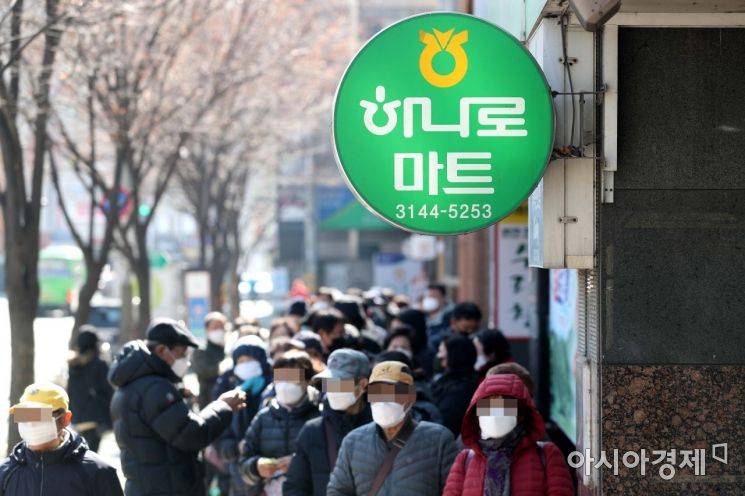 On the 25th, the Fair Trade Commission imposed a corrective order and a fine of 780 million won on Nonghyup Hanaro Mart and Nonghyup Distribution for illegal activities, including unfairly receiving incentives from suppliers. Photo by Mun Ho-nam munonam@
They used supplier employees without receiving voluntary dispatch requests. From January 2015 to May 2018, Lotte Shopping received 1,224 employees from 114 suppliers without obtaining voluntary dispatch requests or written agreements on dispatch conditions such as labor cost sharing, deploying them across 260 of its stores.
CS Distribution similarly received 225 employees from 42 suppliers without voluntary dispatch requests or written agreements on dispatch conditions, deploying them across 32 of its stores during the same period.
These actions violate Article 12, Paragraph 1 of the law.
They also improperly collected supplier incentives. Lotte Shopping collected approximately 10.2 billion KRW in sales incentives from 35 suppliers between January 2015 and April 2018 without establishing agreements on the purpose, timing, frequency, ratio, or amount of incentive payments in their annual basic contracts.
CS Distribution similarly collected about 1 billion KRW in sales incentives from 27 suppliers during the same period without such agreements. Sales incentives refer to economic benefits paid by suppliers to large-scale distributors under annual basic contracts to promote product sales in direct purchase transactions, regardless of the name.
These actions violate Article 15, Paragraph 2 of the law.
FTC: "Strengthening Monitoring of Large-scale Distributors' Unfair Promotion and Incentive Cost Shifting"
The FTC clearly stated that it will intensify monitoring of unfair practices by large-scale distributors to protect local retail sectors struggling amid the COVID-19 crisis.
Kwon Soon-guk, Director of the Distribution Transaction Division at the FTC, explained, "This case involves Lotte Super, a leading company in the SSM sector, being caught and sanctioned for shifting costs such as returns, promotion expenses, sales incentives, and labor costs to suppliers on a large scale from 2015 to 2018 to secure competitive advantages in local markets. We expect this to contribute to fostering a fair trading culture between large-scale distributors and suppliers in the SSM sector."
He added, "The FTC will continue to listen to suppliers' difficulties in the distribution sector. Especially amid the recent COVID-19 crisis, there is concern that incentives for large-scale distributors to unfairly shift promotion costs, sales incentives, and return costs to suppliers will increase. Therefore, we plan to continuously strengthen monitoring activities against their unfair practices."
© The Asia Business Daily(www.asiae.co.kr). All rights reserved.



















