Asia Economy & Seoul City Joint Project [Era of Work-Life Balance 2.0]
Song Dayoung, Director of Seoul City Women's Family Policy Office, Talks About 'Work-Life Balance'
Support Center Established in 2014
Improving Quality of Life and Achieving Gender Equality
Seoul City Ordinance Enacted This July
Good to Be with Family After Work
But Also Need Personal Time
Achieving True Work-Life Balance
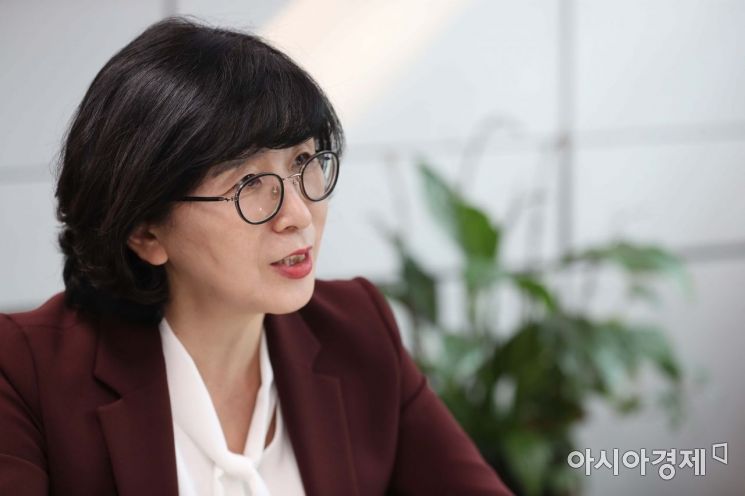 Song Dayoung, Director of the Women's and Family Policy Office of Seoul City, is being interviewed by Asia Economy on the 22nd. / Photo by Moon Honam munonam@
[Asia Economy Reporter Hyunju Lee] Industrialization and aging are rapidly transforming Korean society. Women's economic participation has increased, family structures have diversified, and various forms of employment such as startups and freelancers have emerged. As these changes progress, the '9 to 6' work model and the male breadwinner-centered model are becoming obsolete. Policies that help work and the 'traditional family' coexist are also failing to adapt. This concept now needs to shift to a 'work-life balance' paradigm that considers diverse generations, family types, and new forms of labor.
Since 2009, Seoul has been implementing projects to foster family-friendly workplace cultures. In 2014, the Seoul Foundation of Women & Family established the Work-Life Balance Support Center to provide customized workplace culture consulting and educational programs. In July of this year, the 'Seoul Metropolitan Government Ordinance on Work-Life Balance Support' was enacted to improve the quality of life in Seoul and realize gender equality. We spoke with Song Dayoung, Director of Women & Family Policy at Seoul City, who leads Seoul's overall women and family policies.
- How is the concept of work-life balance different from the traditional 'work-family balance'?
▲ Work-life balance is a paradigm that goes beyond work and family to guarantee individual life as well. Work-family balance assumes that everyone leads a normal family life. This concept helps women maintain social activities but ignores the issue of women returning home to resume work. In contrast, work-life balance emphasizes individual rights. Even those with families should be able to maintain personal lives. It is a broad approach that encompasses various lifestyles, including singles and families without children.
- What is the goal of work-life balance policies?
▲ Fundamentally, a society where work and life are not balanced is unsustainable. Speaking from a childcare perspective, past childcare policies were based on the assumption that 'someone will raise the child at home.' In reality, when children enter elementary school, women had to decide on career breaks. Korean women began to consider this issue seriously from the early 2000s. In a society that maintains this mindset, marriage inevitably becomes a choice because having children introduces the possibility of career interruption. Therefore, a society that guarantees appropriate working hours, time to care for family, and personal time is sustainable. Without balancing work and life, we cannot prevent falling into a demographic cliff society.
Consulting and Policy Introduction by Company
Direct Dispatch of Labor Management Experts
Most Important: Management's Will
Considering Childcare for Non-Regular Workers
Expanding Care for Single-Person Households
- From the perspective of private companies, there are many practical difficulties in spreading work-life balance culture. What efforts is Seoul City making?
▲ We operate the Work-Life Balance Support Center to provide corporate consulting. 98% of companies under Seoul's jurisdiction have fewer than 50 employees. Most find it difficult to utilize systems like leave of absence. Therefore, through company-specific consulting, we share best practices for introducing work-life policies even in small and medium enterprises. Many companies are unaware of government support policies, such as the Ministry of Employment and Labor's substitute workforce support system. Labor management experts from the Work-Life Balance Support Center are directly dispatched to propose suitable work-life balance systems for each company. Additionally, we are expanding public childcare centers and supporting elementary school care gaps through Our Neighborhood Care Centers.
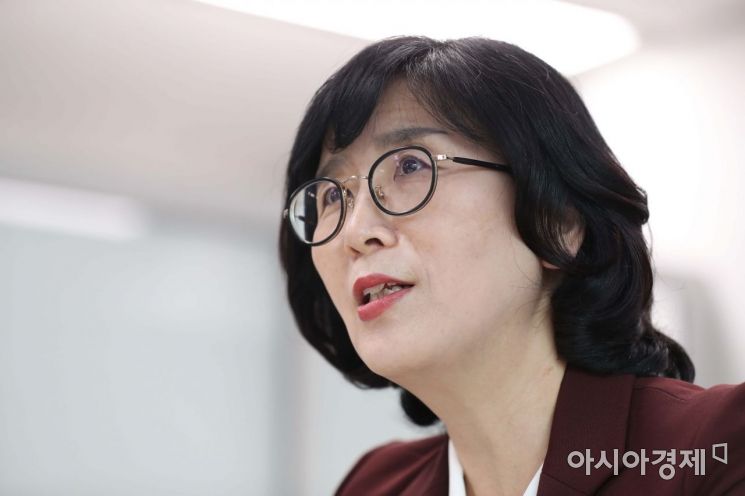 Song Dayoung, Director of the Seoul Metropolitan Government's Women and Family Policy Office, is being interviewed by Asia Economy on the 22nd. / Photo by Moon Honam munonam@
- Changing management's perception is essential. Is there a way to do this?
▲ The outdated notion that those who work late are good workers still prevails. This perception was possible because of the belief that 'someone is raising children at home.' If one person earns properly, the household could enter the middle class. However, now it takes two earners to maintain living standards. Therefore, culture must be changed starting from those in authority. Mark Zuckerberg, CEO of Facebook in the U.S., took two parental leaves of over two months each after having children. In Korea, it would have been impossible for a top executive of a large company to be absent for two months. Ultimately, changing management's perception is essential.
- What impact has COVID-19 had on a work-life balance society?
▲ Within Seoul City, many worked from home but complained about difficulty separating work and household duties. They had to perform work while caring for family simultaneously. The sudden arrival of an era of remote and untact work has deepened concerns about policy preparation. Paradoxically, remote work emphasizes the need to establish a social care infrastructure. COVID-19 seems to promote a work-life balance society. Meanwhile, the number of platform workers is increasing, but social infrastructure for them is lacking. Current childcare infrastructure suits typical workers. It does not fit workers who work from home or have night shifts or shift work. Not everyone can leave work at the same time to pick up children from care facilities. Seoul also operates a Single-Person Household Support Center. The proportion of single-person households in Seoul reaches 33%. Many middle-aged and older adults live alone, but related policies were lacking. Support methods to prevent their social isolation are also necessary.
© The Asia Business Daily(www.asiae.co.kr). All rights reserved.