Adjustment of Coal Emission Allowance BM Coefficient and Other Variables for HPS, Coal Total Quantity System, and Fuel Cost Linkage
Industry Focuses on System and Coal Power Generation Adjustments... Government Says "Nothing Confirmed" and Remains Silent
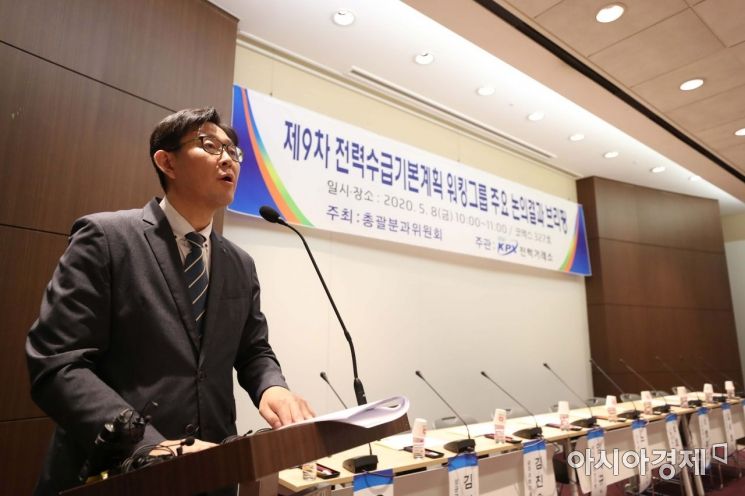 On May 8th, at COEX in Gangnam-gu, Seoul, Professor Yoo Seung-hoon from the Department of Energy Policy at Seoul National University of Science and Technology, who serves as the chair of the General Subcommittee, is seen speaking during the briefing on the main discussion results of the 9th Basic Plan for Electricity Supply and Demand Working Group. / Photo by Moon Ho-nam munonam@
[Asia Economy Reporter Moon Chae-seok] The likelihood of announcing South Korea's basic electricity supply and demand plan for the next 15 years within this year has increased. The variable is how much and in what way to incorporate the 'new environmental dispatch' measures?such as the coal total volume system, the mandatory hydrogen power generation system (HPS), and the electricity tariff fuel cost linkage system?into the supply and demand plan.
According to the energy industry on the 27th, the Ministry of Environment is expected to deliver the results of the strategic environmental impact assessment of the 9th Basic Electricity Supply and Demand Plan (9th Basic Electricity Plan) to the Ministry of Trade, Industry and Energy (MOTIE) within this month. The Ministry of Environment reportedly examined the consistency between major policies such as the '2030 Greenhouse Gas Reduction Roadmap Amendment,' 'Comprehensive Fine Dust Management Plan,' and 'Renewable Energy 3020' and the 9th Basic Electricity Plan, and proposed an 'environmental dispatch' measure.
After MOTIE receives the official document containing the strategic environmental impact assessment results from the Ministry of Environment, procedures such as 'government plan confirmation → reporting to the National Assembly's Industry, Trade, and Energy Committee → confirmation and announcement by the Electricity Policy Deliberation Committee' remain. Since MOTIE has been drafting the 9th Basic Electricity Plan for a long time, it plans to announce the finalized 9th Basic Electricity Plan as soon as possible after receiving the assessment results from the Ministry of Environment.
Will the scope of 'environmental dispatch' applied to the 9th Basic Electricity Plan expand?
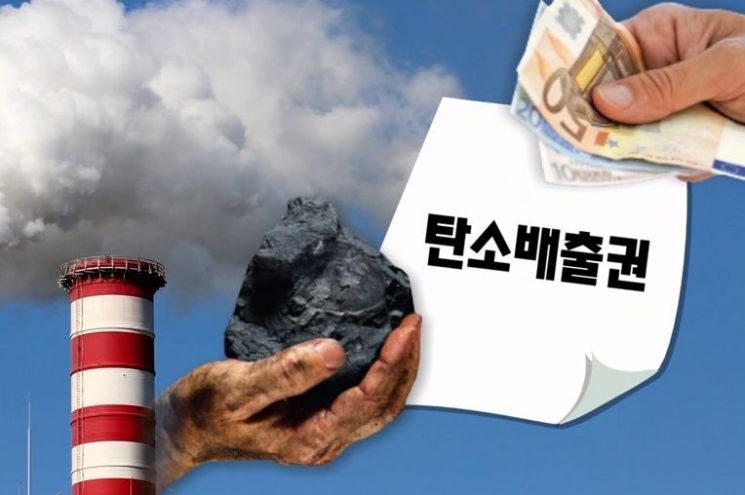
The reason for adding the Ministry of Environment's strategic environmental impact assessment procedure before MOTIE's exclusive authority to announce the Basic Electricity Plan is the principle that the electricity supply plan must include not only economic feasibility but also environmental aspects. Previously, it was sufficient to accurately forecast electricity demand for the next 15 years and ensure stable electricity supply and demand, but now it means that plans to reduce greenhouse gases and fine dust must be faithfully included.
The energy industry expected the scope of this 'environmental dispatch' to be limited to the degree of coal reduction, such as the allocation method (BM) based on greenhouse gas emission efficiency standards. Since the '3rd National Greenhouse Gas Emission Allowance Allocation Plan (3rd Plan)' was approved at the Cabinet meeting on the 29th of last month, and the 'integrated BM' coefficient for calculating the emission allowance for coal and liquefied natural gas (LNG) was set, it was anticipated that the establishment of the 9th Basic Electricity Plan would accelerate.
However, new variables have been added, such as the introduction of the coal total volume system by 2022 (reported by Minister Sung Yun-mo at the National Assembly audit on October 7), the introduction of HPS (announced by MOTIE on October 15), and the possibility of introducing the electricity tariff fuel cost linkage system (the Korea Electric Power Corporation board may prepare a tariff reform plan at the end of November or December). Although there is an opinion that the possibility of adding these variables is limited since a significant part of the plan was already drafted as of May 8 when the 9th Basic Electricity Plan draft was released, there is also a view that explanations of policy options may be added as in the draft.
The 16-page draft of the 9th Basic Electricity Plan released in May included ▲electricity demand forecast models and peak electricity demand ▲consideration of energy demand management systems ▲standard reserve margin ▲decommissioning of power plant facilities and generation volume ▲plans to achieve greenhouse gas emission targets ▲transmission and substation facility plans ▲measures to activate distributed power sources.
Possible inclusion at MOTIE's discretion... Advisory body says "No information received"
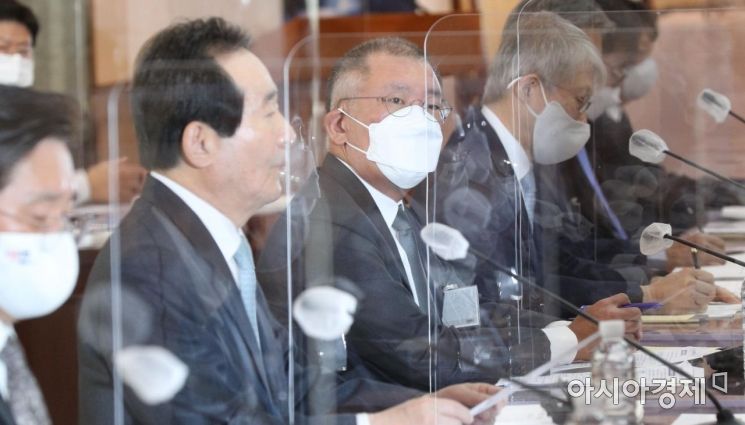 Prime Minister Chung Sye-kyun delivering a keynote speech at the '2nd Hydrogen Economy Committee' held at the Government Seoul Office in Jongno-gu, Seoul on the 15th. The committee announced the introduction of the Hydrogen Power Obligation System (HPS). Photo by Kang Jin-hyung aymsdream@
MOTIE has the authority to include such new environmental dispatch elements in the 9th Basic Electricity Plan at its discretion. Although the Ministry of Environment is known to have scrutinized in detail the appropriateness of the means to be applied for greenhouse gas reduction, it reportedly did not mention new environmental dispatch measures such as HPS, the fuel cost linkage system, or the coal total volume system. A Ministry of Environment official said, "It is currently difficult to respond based on such assumptions."
Within MOTIE, it is reported that the diesel tax increase (which the National Climate and Environment Council plans to request from the Ministry of Economy and Finance) is not being considered as a 'new environmental dispatch' element speculated by the industry. However, regarding HPS, the fuel cost linkage system, and the coal total volume system, the answer is "nothing has been decided yet." Since ruling party lawmakers such as Kim Seong-hwan of the Democratic Party have openly insisted that the 9th Basic Electricity Plan must include content on distributed transition, it remains uncertain how much of the new environmental dispatch elements will be included in the final 9th Basic Electricity Plan.
It is reported that the advisory working group for the 9th Basic Electricity Plan has not yet received this information. According to a working group official, there have been no meetings in the past month. The official said, "We have not yet received any request from MOTIE to include related content such as the coal total volume system, HPS, or the fuel cost linkage system in the 9th Basic Electricity Plan," adding, "Whether the 9th Basic Electricity Plan will be announced within this year and which environmental dispatch elements and to what extent they will be included is entirely up to MOTIE."
An MOTIE official said, "Whether to reflect (these environmental dispatch elements in the 9th Basic Electricity Plan) will be decided while establishing the supply and demand plan after the strategic environmental impact assessment is completed," adding, "There is currently no conclusion on whether to include or exclude any elements."
He continued, "Regarding the coal total volume system, related ministries have discussed the need for its introduction due to emission allowance issues," and added, "Whether to include it in the 9th Basic Electricity Plan is still under discussion and has not been finalized."
Industry focuses on grid issues and coal power generation adjustments
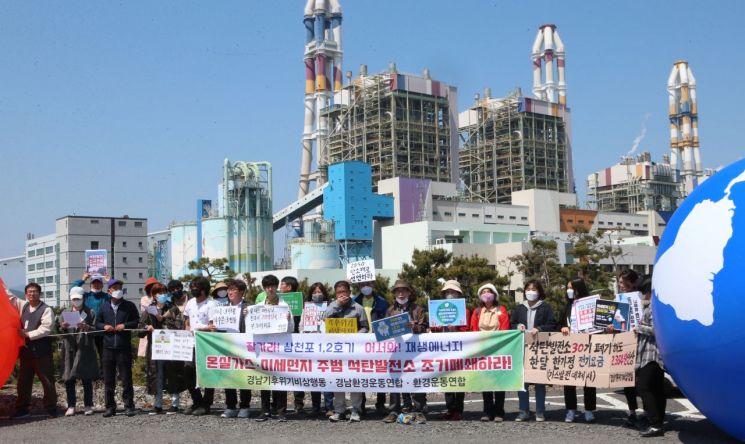
The energy industry is paying attention to the possibility that the 9th Basic Electricity Plan may include ▲grid issues between hydrogen fuel and renewable energy ▲adjustments in coal power generation volume due to the introduction of the coal total volume system. Although the 9th Basic Electricity Plan should have been announced last year according to regulations and is already close to completion, there is an opinion that it is better to prepare for possible variables despite the 'general theory' that no new variables will affect it.
A working group official said, "The most important principle of the 9th Basic Electricity Plan is to forecast long-term demand," but also noted, "If hydrogen fuel cell facilities increase, it will not be easy to solve output control issues." Hydrogen fuel cells have the characteristic that output control is more difficult than other energy sources. There is also concern that, in the worst case, grid issues may force a reduction in renewable energy such as solar and wind power.
The coal total volume system is an issue that the Ministry of Environment promised to introduce while adjusting the coal-LNG integrated BM coefficient in the 3rd Plan, stating that "instead of immediately allocating the same emission allowances to coal and LNG in 2024," MOTIE would introduce the system. Minister Sung stated at the National Assembly Industry, Trade, and Small and Medium Enterprises Committee (ITSME Committee) audit report on the 7th, "We will introduce a coal total volume system that limits the increase in coal power generation as an additional measure to reduce greenhouse gases."
A working group official said, "Among various variables, the coal total volume system is the most important," and predicted, "Its introduction is expected around 2022, but it will be possible to include phrases such as 'plan to introduce the coal total volume system' or 'plan to develop and implement specific policies by 2022' in the Basic Electricity Plan."
Earlier in May, the working group announced a goal to decommission 30 out of 60 coal power plants by 2034 and convert 24 of them to liquefied natural gas (LNG) power generation.
© The Asia Business Daily(www.asiae.co.kr). All rights reserved.



















