[Asia Economy Reporter Suyeon Woo] Hyundai Kia Motors has recovered quality costs amounting to 3.4 trillion KRW through continuous structural improvements. By improving the sales mix focused on high value-added vehicles such as sports utility vehicles (SUVs) and gaining recognition for product competitiveness overseas, the company has laid the foundation for a full-scale profitability improvement.
On the 26th, Hyundai Motor announced that its operating loss for the third quarter of this year was 313.8 billion KRW, turning to a deficit compared to the same period last year. During the same period, sales increased by 2.3% to 27.5758 trillion KRW, but global wholesale sales decreased by 9.6% to 997,842 units compared to the previous year. This is the first time Hyundai Motor has recorded a quarterly operating loss since adopting the International Financial Reporting Standards (IFRS) in 2011. This loss was influenced by the one-time reflection of a quality cost provision amounting to 2.1 trillion KRW.
In the third quarter, Kia Motors avoided turning to a deficit with an operating profit of 195.2 billion KRW, and sales increased by 8.2% year-on-year to 16.3218 trillion KRW. Despite the impact of the novel coronavirus disease (COVID-19), global sales remained steady at 699,402 units, showing a slight decrease of 0.4% compared to the previous year.
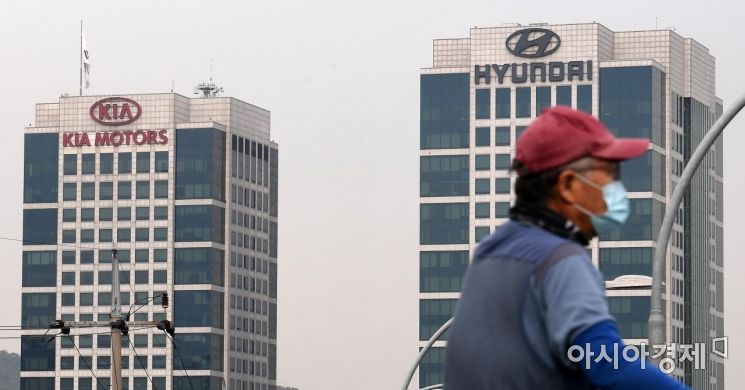
If Hyundai Kia Motors had not reflected the large-scale quality costs at once, it is estimated that each would have recorded operating profits exceeding 1 trillion KRW. Hyundai Motor reflected a provision of 2.1 trillion KRW in the third quarter of this year, and Kia Motors reflected 1.26 trillion KRW. Excluding the provision costs, Hyundai Motor is calculated to have recorded an operating profit of 1.8 trillion KRW, and Kia Motors 1.2 trillion KRW.
Initially, the securities industry expected operating losses of about 800 billion KRW for Hyundai Motor and 300 to 400 billion KRW for Kia Motors when reflecting the provisions, but the actual earnings exceeded the consensus. The reason Hyundai Kia Motors succeeded in defending profitability is that they had a solid financial foundation to support it.
Despite the impact of COVID-19, Hyundai Motor saw continued recovery in domestic demand due to the extension of the individual consumption tax reduction, and the effects of new models such as the GV80, G80, and Avante continued. In the third quarter, Hyundai Motor's domestic sales rose 22% year-on-year to 199,051 units, and the product mix effect was maximized as the portfolio was reorganized mainly around the high value-added Genesis models. Overseas markets also saw a gradual recovery in demand across all regions except for some markets such as China and India.
On this day, Hyundai Motor also revealed key strategies to compensate for the sluggish Chinese market, which has been a "pain point." Hyundai Motor plans to launch the Genesis brand in China next year and release a total of seven new models from the second half of this year through next year. They also announced strategies to improve the dealer network structure and strengthen online sales channels.
A Hyundai Motor official said, "We will now minimize dealer burdens through retail-centered sales operations in the Chinese market and maintain normal market prices," adding, "We will enhance brand competitiveness by equipping new cars launched in China with new safety control technologies, connectivity, ADAS, and other new technologies that customers desire."
Meanwhile, Kia Motors has entered a full-fledged virtuous cycle structure as its RV product competitiveness has been recognized overseas and cost reduction effects through fixed cost cuts have been maximized. It showed improvement mainly in advanced markets such as North America (5.5%) and Europe (4.2%), overcoming the impact of COVID-19, and also showed gradual sales recovery in emerging markets such as India and China.
In particular, Kia Motors’ popular SUVs such as the Telluride have been recognized for their product competitiveness, leading to the stabilization of incentives in the U.S. market at historically low levels. As a result, Kia Motors’ third-quarter export average selling price (ASP) increased by 14.1% to 18,400 USD. A Kia Motors official said, "As market demand is rapidly recovering overall and structural effects are appearing in Kia Motors’ fundamentals, a virtuous cycle is taking place," adding, "We expect global sales growth in the single digits or higher in the fourth quarter as well."
© The Asia Business Daily(www.asiae.co.kr). All rights reserved.
![Clutching a Stolen Dior Bag, Saying "I Hate Being Poor but Real"... The Grotesque Con of a "Human Knockoff" [Slate]](https://cwcontent.asiae.co.kr/asiaresize/183/2026021902243444107_1771435474.jpg)















