Establishment of Medical Centers in Vulnerable Areas, Expansion of Medical Services
Support for Supplies and Transfer of Farming Methods to Alleviate Food Crisis in Response to COVID-19
[Asia Economy Reporter Lim Cheol-young] El Salvador, a Latin American country, remains unfamiliar to most Koreans. Occasionally, news about incidents caused by security instability or the impact of the novel coronavirus disease (COVID-19) is reported.
However, contrary to perception, El Salvador has maintained a long-standing relationship with Korea, marking the 58th anniversary of diplomatic relations (since 1962). Over the years, Korea has actively conducted various international cooperation projects in El Salvador. Korea's annual support to El Salvador amounts to approximately 6 million USD (about 7 billion KRW, based on 2018).
Korea, led by KOICA, is building a social safety net by providing universal education and health services to ensure no one is left behind in El Salvador. It supports sustainable agricultural industries and carries out projects to improve El Salvador's security system, as well as support projects responding to COVID-19.
Korea-El Salvador Medical Center and National Health Education Center Established in El Salvador
Last September, the Korea-El Salvador Medical Center opened in Soyapango City, El Salvador, where the medical system is weak. Soyapango is a region where urban poor with the lowest income levels in El Salvador reside, and it has very high crime rates, firearm incidents, and trauma cases. However, the number of medical facilities is relatively low, and there is a shortage of medical personnel, causing many difficulties for local residents in accessing medical services.
KOICA, in cooperation with the El Salvador Ministry of Health, has been promoting the 'Korea-El Salvador Medical Center Construction Project' in Soyapango City since 2013, with a budget of 3.55 million USD (about 410 million KRW). The project was initiated on the occasion of the 50th anniversary of diplomatic relations between Korea and El Salvador in 2012. The project includes constructing a 1,500㎡ health center, strengthening medical personnel capacity, supplying medical equipment, and developing an electronic medical record system. With the opening of the 'Korea-El Salvador Medical Center,' more than 60,000 Soyapango citizens are expected to access medical services such as internal medicine, obstetrics and gynecology, pediatrics, dentistry, ophthalmology, family psychological counseling, and rehabilitation therapy.
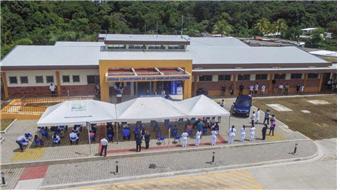
Notably, this center is El Salvador's first paperless health center, utilizing an electronic medical record system established with KOICA's support. If this system is successfully implemented and utilized, it is expected to expand to other healthcare facilities in the future.
Dr. Antonio Orellana Rivas, director of the Korea-El Salvador Medical Center, said, "I am very pleased to have modern infrastructure that can help the most vulnerable people. I am confident that the modern equipment and professional, diverse services provided by the center will become a major reference case for surrounding areas and serve as a regional medical hub."
Projects to strengthen El Salvador's central health capacity are also underway. The 'Establishment of the El Salvador National Health Education Center and Strengthening Health Education Project' aims to provide systematic training for El Salvador's health personnel and improve primary healthcare by 2022. To this end, KOICA is investing 6.5 million USD from 2019 to 2023 to build a National Health Education Center with a total floor area of 3,010㎡ in Sakamile, the capital San Salvador.
Once established, the National Health Education Center will provide stable and systematic training to about 30,000 primary healthcare workers and improve medical services for approximately 4.6 million people, accounting for about 72% of El Salvador's total population. Additionally, El Salvador's experience in improving primary healthcare will be shared with neighboring countries such as Central America and the Dominican Republic, expanding the Korean Wave in healthcare and promoting South-South cooperation.
Yoon Ji-hyun, KOICA El Salvador office chief, stated, "KOICA's health projects in El Salvador are meaningful as they focus on cooperation benefiting vulnerable groups such as teenage pregnant women and basic health promotion in high-risk areas. Our goal is to successfully complete the National Health Education Center project."
Emergency Support for El Salvador in Response to COVID-19
Support continues in various ways to overcome COVID-19. Currently, the number of confirmed cases in El Salvador exceeds 30,000, with nearly 900 deaths. In addition, Tropical Storm Amanda struck El Salvador in May, causing 30 deaths and over 13,000 flood victims, resulting in a double hardship.
KOICA office and the alumni association of trainees took action. The alumni association is a group of trainees who studied in Korea with KOICA's support and returned home, conducting various activities under the name 'Friends of Korea' in El Salvador. In May, the Meca area was isolated due to COVID-19 control, and residents requested help through local broadcasts. Upon learning this, KOICA and the alumni association provided about 500 residents in the area with essential COVID-19 response items such as masks, hand sanitizers, and emergency daily necessities.
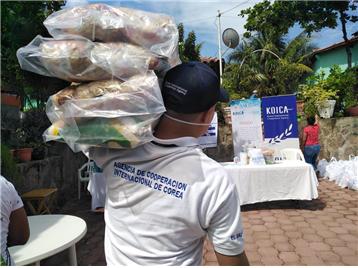
KOICA and the alumni association also provided quarantine supplies and emergency daily necessities to the El Pimenta area, which was severely affected by Tropical Storm Amanda, in June. Ricardo Guadron, president of the KOICA El Salvador alumni association, said, "At the request of the committee for water and sanitation improvement in El Salvador, the alumni association urgently supported the area and was able to participate in humanitarian aid through KOICA."
Preparing for Post-COVID, El Salvador Food Security Project
KOICA is also conducting additional projects linked to ongoing climate change response projects to address the food crisis caused by the COVID-19 spread. El Salvador is part of the dry zone in Central America vulnerable to climate change, especially the eastern region, which includes three of the five departments with the highest poverty rates, and 82% of the local population has experienced damage from drought and other abnormal climate phenomena.
KOICA is conducting additional projects in nine municipalities of Morazan and San Miguel departments in eastern El Salvador, which were severely affected by COVID-19, to ensure food and residents' income and enable sustainable agricultural economic activities. KOICA supplies about 750,000 seeds of eight crops (radish, coriander, green onion, pumpkin, etc.) suitable for responding to the COVID-19 food crisis to 162 households, cultivating a total area of 515㎡ linked to 162 small-scale irrigation facilities established by the project.
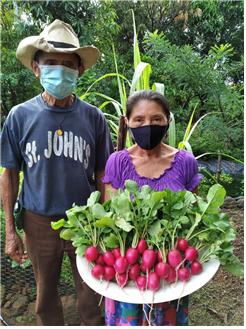
In addition, farmers with no experience in vegetable cultivation are educated on vegetable growing, harvesting, organic fertilizer and pesticide production, and irrigation system use, along with marketing and sales support. Ten percent of the harvested crops are consumed directly by beneficiaries, and the remaining 90% are distributed to the market to contribute to alleviating El Salvador's food crisis.
Office chief Yoon Ji-hyun explained, "El Salvador imports most of its food from neighboring countries, so income reduction due to COVID-19 threatens food security. This additional project, linked to irrigation facilities established through climate change response projects, is expected to promote the production and domestic sales of vegetables, which have the highest foreign dependency, and contribute to increasing food self-sufficiency."
© The Asia Business Daily(www.asiae.co.kr). All rights reserved.


















