 Rimoai
[Asia Economy Yang Nak-gyu, Military Specialist Reporter] Battalion-level unmanned aerial vehicles (UAVs) deployed in the Army have been crashing every year, leading to criticism that they are "useless drones." In particular, since the cause of UAV crashes continues to be reported as "unknown defects," it is expected that operation and maintenance costs will increase uncontrollably in the future.
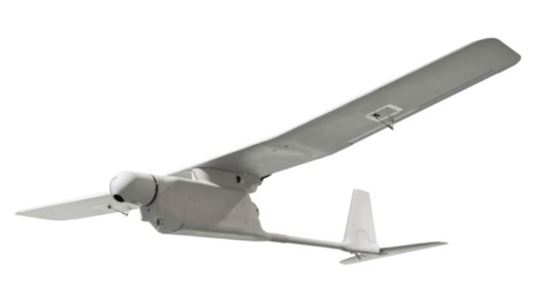
According to the operational status of battalion-level UAVs submitted by the Army Headquarters to Kang Dae-sik, a member of the National Assembly Defense Committee from the People Power Party, the Army decided to introduce RemoEye from the domestic defense company Yucon Systems in 2011. At that time, the Defense Acquisition Program Administration explained, "RemoEye, developed purely with independent technology over three years starting in 2012, can perform missions for over an hour at a maximum speed of 80 km/h and can transmit real-time video taken from 300 to 500 meters altitude to the ground." It added, "Equipped with automatic flight, automatic return, and real-time day and night video transmission functions, it is comparable to small drones from the U.S. and Israel."
However, the number of RemoEye crashes has been increasing every year. In 2015, the first year of introduction, there were nine crash incidents, followed by eleven in 2016, and thirteen crashes each in 2017, 2018, and 2019. Up to September this year, twelve crash incidents have occurred.
The problem lies in the causes of the crashes. The Army concluded that all nine crashes in 2015 were due to operator inexperience. However, subsequent crashes have continued due to unknown defects. Although there were only four such cases in 2017, they increased to five in 2018 and eight last year. This year, three crashes with unknown causes have occurred, and nine more incidents are under investigation, suggesting that crashes with unknown causes will increase further. The military estimates that the crashed UAVs had equipment defects such as loss of control during flight, onboard communication device failure, servo motor malfunction, thrust motor stoppage during flight, and GPS signal loss, but the exact causes have not been identified.
As unknown defects continue, repair costs are also rising. The UAVs introduced by the Army have a three-year free repair period. However, since last year, the number of models out of the free repair period has increased, and repair costs, which were only 160 million KRW in 2018, have risen to 790 million KRW. This year, costs are expected to exceed 812 million KRW.
Assemblyman Kang said, "Battalion-level UAVs serve as the 'eyes' responsible for frontline surveillance, but not only is the number of crashes increasing recently, the causes of these crashes remain unidentified." He added, "Since repair costs are likely to increase significantly in the future, it is necessary to thoroughly re-examine from the ground up whether the equipment has fundamental defects."
© The Asia Business Daily(www.asiae.co.kr). All rights reserved.
















