Remote Video Conferencing Initiated During COVID-19 Surpasses 2,274 Sessions, Saving Approximately 460 Million KRW in Meeting Costs... Full Adoption of Remote Video Conferencing Reduces Massive Travel Expenses, Savings Used to Improve Network Infrastructure and Establish Foundation for Leading the 4th Industrial Revolution... Employees Welcome Reduced Travel Time
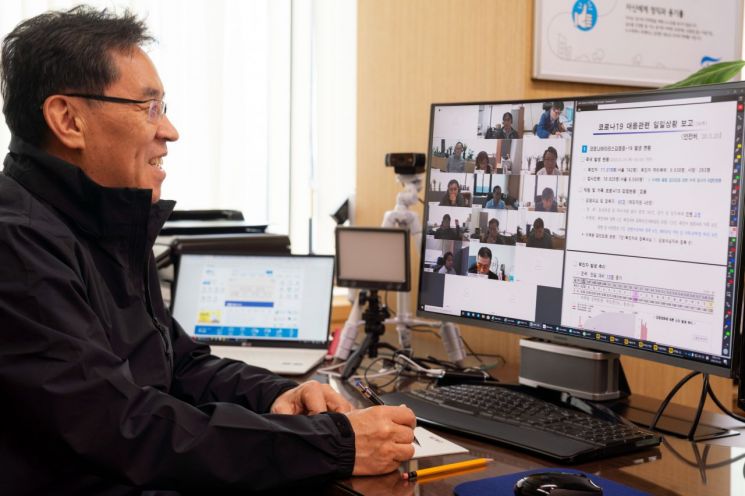
[Asia Economy Reporter Park Jong-il] The Seoul Facilities Corporation (Chairman Jo Seong-il) has attracted attention as its remote video conferencing, initiated in response to the COVID-19 pandemic, recently surpassed 2,274 sessions, reportedly saving about 460 million KRW in meeting costs and other expenses.
Since March 23, the corporation has conducted all internal meetings and training sessions via remote video conferencing to improve work processes for the post-COVID era and to comply with social distancing measures.
Within just over two months from the first remote video conference, the number of sessions exceeded 1,000. As of 4 p.m. on the 29th, including a meeting chaired by Chairman Jo Seong-il, there have been 1,518 reporting sessions, 13 open innovation sessions, 99 remote video training sessions, and 644 other external meetings, totaling 2,274 sessions.
This averages about 22 sessions per day (excluding weekends and holidays).
As a result, the corporation has calculated savings of approximately 460 million KRW in total, including travel expenses (190 million KRW), training costs (160 million KRW), meeting expenses (60 million KRW), and paper printing costs (50 million KRW).
Notably, since Chairman Jo Seong-il took office in July last year, the corporation has been promoting work process improvements by simplifying reporting methods. Managing various sites across Seoul, the corporation had concerns that employees working on-site would spend significant time traveling to report face-to-face to headquarters executives, potentially causing work gaps at the sites. Therefore, after Chairman Jo’s appointment, instead of mandating face-to-face reporting, the corporation recommended reporting focused on key points via email or KakaoTalk, reserving face-to-face reports only for matters requiring in-depth discussion.
While attempting these changes, the COVID-19 crisis became an opportunity to apply the remote video conferencing system to many reports and meetings within the corporation, transforming work processes. This effort led to surpassing 2,274 sessions in about six months.
Currently, the corporation conducts most reports and meetings via video conferencing, from regular executive meetings to construction site meetings.
The ‘Open Innovation’ tool, used by the corporation to generate innovative ideas, is also conducted through remote video conferencing.
Recently, the corporation introduced a webinar (web + seminar) format, holding open innovation meetings remotely with participation from Seoul city officials and external experts.
Internal training is also conducted via remote video conferencing. Through adopting remote work methods, the corporation expects employees to actively use the saved time for self-development, thereby improving work efficiency and strengthening employee capabilities.
In particular, by fully adopting remote video conferencing, the corporation has significantly reduced travel expenses. The saved costs are reportedly being used to improve network infrastructure and establish a foundation for leading the Fourth Industrial Revolution era.
Since the video conferencing system was established after Chairman Jo’s appointment, employees who need to stay on-site have been relieved from the burden of traveling to headquarters for reports and meetings, receiving positive evaluations.
Chairman Jo Seong-il of the corporation stated, “The most valuable outcome is that our employees have gained pride and confidence in leading new work methods through the full adoption of remote work. We will continue to make solid preparations for the post-COVID era by activating remote work, repurposing unused meeting rooms as other workspaces, and improving the Smart Work Center.”
© The Asia Business Daily(www.asiae.co.kr). All rights reserved.
![Clutching a Stolen Dior Bag, Saying "I Hate Being Poor but Real"... The Grotesque Con of a "Human Knockoff" [Slate]](https://cwcontent.asiae.co.kr/asiaresize/183/2026021902243444107_1771435474.jpg)















