Kim Kyung-man, Democratic Party Lawmaker
47% of All Patent Lawsuits Involve SoBuJang... 9 Cases This Year, Concentrated in July
Secondary Battery Technology Is the Main Target... "Countermeasures Needed"
[Asia Economy Reporter Kim Hyemin] Japan, which imposed retaliatory export restrictions last July, is now threatening the domestic materials, parts, and equipment industry (Sobu-jang) by filing patent lawsuits about once a month. In particular, there is a growing concern that lawsuits related to secondary battery technologies such as electric vehicle batteries are increasing, prompting calls for countermeasures.
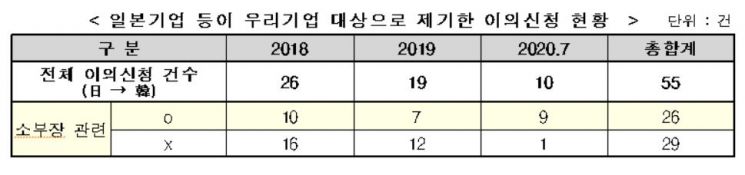
According to data submitted by the Korean Intellectual Property Office to Kim Kyung-man, a member of the National Assembly’s Industry, Trade, Energy, Small and Medium Enterprises Committee from the Democratic Party of Korea, Japan filed nine patent lawsuits related to domestic Sobu-jang technology patents just this year.
Types of patent lawsuits include opposition, invalidation trials, and infringement lawsuits, but Japan has filed only oppositions. This means requesting a re-examination of the appropriateness of the patent registration decision within the initial six months after the patent right is registered. If defects are found during the re-examination by the Korean Intellectual Property Office, the patent registration can be completely canceled.
From 2018 to July this year, Japanese companies have filed a total of 55 patent lawsuits against Korean companies. Among these, 26 cases (47%) are related to Sobu-jang. The number of lawsuits has been increasing, from 10 cases in 2018 and 7 in 2019 to 9 cases in the first seven months of this year. Especially in July alone, 4 cases were concentrated, raising concerns that the pressure on domestic Sobu-jang technologies may intensify.
While retaliatory export restrictions mainly targeted semiconductor materials, patent lawsuits are focusing on secondary battery technologies. In February, lawsuits were filed concerning rechargeable lithium-ion battery technologies, and in March, lawsuits were filed regarding methods for manufacturing cathode active materials for lithium secondary batteries. This indicates an increase in patent lawsuits targeting secondary battery technologies, where global competition is expected to intensify.
Secondary batteries are core materials for electric vehicles and energy storage systems (ESS). Sung Yun-mo, Minister of Trade, Industry and Energy, emphasized their importance by stating, "In the era of the Fourth Industrial Revolution, secondary batteries are the 'heart of industry.'"
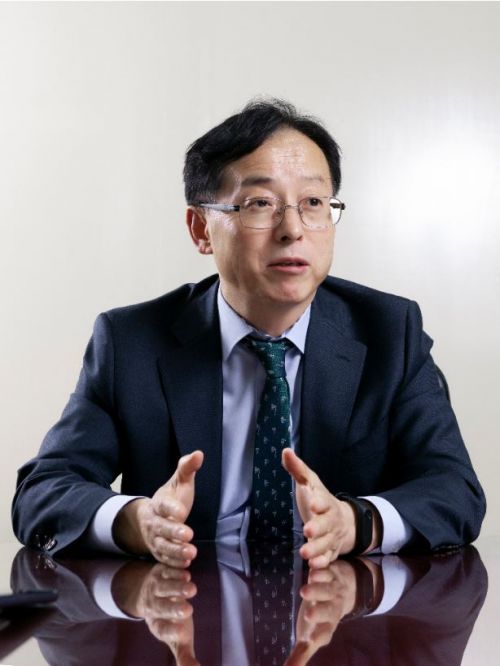
Since Japan’s retaliatory export restrictions last July, the Sobu-jang industry has achieved results such as the localization of hydrogen fluoride gas and fluorinated polyimide, which were previously dependent on Japan. It is pointed out that Japan’s pressure has resumed, focusing on secondary battery technologies. Representative Kim said, "Behind the achievements in Sobu-jang, Japan’s patent lawsuits are intensifying," and added, "We must prepare extraordinary measures to secure Sobu-jang competitiveness while safely protecting our technologies."
© The Asia Business Daily(www.asiae.co.kr). All rights reserved.


















