Seoul City 'Try Everything 2020' Mentor-Mentee Group Meeting Scene
25 Startup and Prospective Entrepreneur Teams Attend
From Securing Basic Operating Funds to Customized Individual Diagnosis
[Asia Economy Reporter Jo In-kyung] "We analyze athletes' nutritional status and supply supplements. We want to expand our customer base to general consumers, but we don't know how to approach large corporations or what kind of proposals to present."
"We produced and sold a walking tumbler for companion dogs, and consumer responses were good. However, competitors quickly emerged, and we are worried they might follow us."
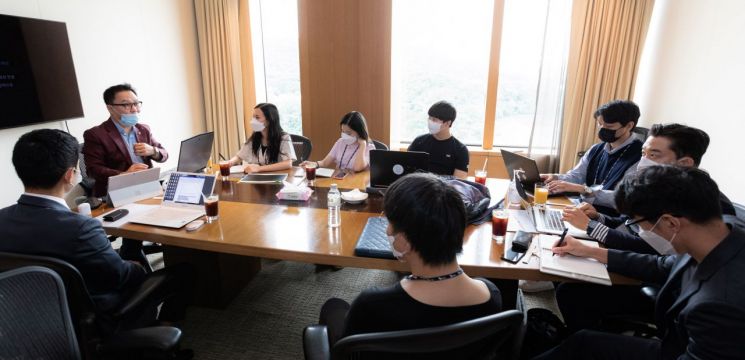
On the 17th at a conference room in the Shilla Hotel in Seoul, young people who had just started startups or were preparing to launch their businesses took out carefully written notes and sought advice from Lee Kang-seok, CEO of WideOne. It was a meeting between startup founders (mentees) and senior entrepreneurs (mentors). While running his main business in import-export logistics services, Lee also works as an accelerator, helping startups with investment attraction and incubation. The five startups attending this event represented diverse industries and fields, including a travel agency selling tourism products to foreigners residing in Korea, a creator of long-form scenario-style e-books and audiobooks, and a management company helping freelance video producers generate steady income.
Their common concern was securing basic operating funds necessary to realize their businesses. Although there are various support programs and project businesses offered by the government and local governments, thorough effort and preparation are required to overcome the competition ratio of dozens to one to be selected. Lee explained the contents and precautions necessary to write a business plan that support agencies and competition judges can trust and recognize. He emphasized, "Each ministry or project has required items, and if even one of these scores very low, it is difficult to be selected. You should prepare 90% of the documents in advance before next year's competitions or project announcements and then supplement the necessary parts in detail once the project is announced."
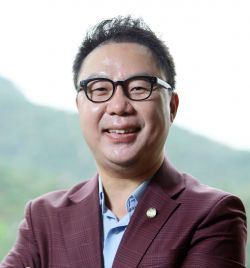 Lee Kang-seok, CEO of Wide One
Of course, there is no need to wait until being selected for support projects. If you can start with some self-capital, it is good to start first and then apply for government projects to receive funding when the business enters the growth stage. This funding can be used for labor costs or marketing expenses to seize opportunities for advancement. Lee pointed out, "You must prepare all stages well and proceed step by step like interlocking gears. You should not approach it with the mindset of just getting government subsidies."
He also provided customized diagnoses for individual startups. Regarding the supplement sales company for athletes, Lee advised, "Gather customers by age group or group and have free discussions like focus groups to hear what they want or their difficulties. Inside the company, you can get hints you hadn't thought of and analyze items that can be realized in the short and long term and review business feasibility."
At another mentor-mentee meeting, Choi Won-seo, CEO of the Mobile App Development Cooperative, answered questions related to application development, which has become essential for startups. He explained smoothly the institutions that can help prepare app development plans, precautions when outsourcing app development to developers, how to hire short-term university student developers through 'ICT Credit-linked Project Internships,' how to hire IT personnel and receive labor cost support through the 'Youth Digital Job Project,' and costs related to app server maintenance and management?areas that founders often find daunting.
Since the COVID-19 pandemic, non-face-to-face (untact) items have gained significant attention in the startup market, and startups that have already started businesses feel an even more urgent need to expand untact and online services.
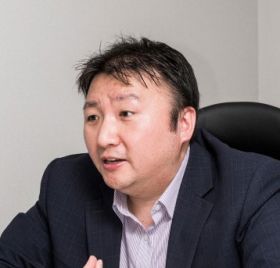 Choi Won-seo, CEO of Mobile App Development Cooperative
CEO Choi advised, "After the mid-stage of app development, it is good to have one person inside to manage and operate it. In the case of chat or multimedia service apps, when first developed, you may not think about it, but when users start uploading many photos or videos, there can come a time when server costs become unaffordable, so you need to consider these costs as well."
The group meeting between senior and junior startup members was part of the 'Mentor-Mentee Program,' one of the events of the global startup festival 'Try Everything 2020' held by Seoul City from the 16th to the 18th. With participant numbers limited due to social distancing measures, 25 startup and prospective founder teams attended to receive advice from senior mentors such as KOSDAQ-listed companies and prospective unicorn companies and to ask questions.
Park Shin-jung (23), preparing a music sharing and editing site for video, theater, and media, said, "I thought it would take a lot of time and money to develop an app and was hesitant, but listening to the mentor's words gave me an opportunity to make a concrete plan. I want to create a business with peer developers who have a young sensibility through the credit-linked project internship."
© The Asia Business Daily(www.asiae.co.kr). All rights reserved.

![User Who Sold Erroneously Deposited Bitcoins to Repay Debt and Fund Entertainment... What Did the Supreme Court Decide in 2021? [Legal Issue Check]](https://cwcontent.asiae.co.kr/asiaresize/183/2026020910431234020_1770601391.png)