Gwangju Chamber of Commerce Announces '2020 Q4 Business Survey Index'
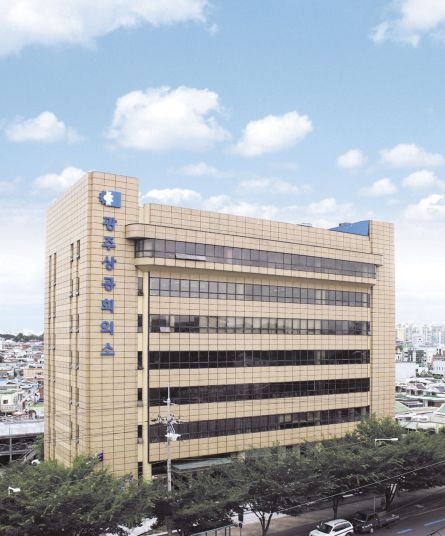
[Asia Economy Honam Reporting Headquarters Reporter Park Seon-gang] The Gwangju Chamber of Commerce and Industry (Chairman Jeong Chang-seon) announced on the 28th that the BSI (Business Survey Index, baseline=100) forecast was recorded at '66' in a survey of the '2020 4th Quarter Business Outlook Index' targeting 149 manufacturing companies in the Gwangju area.
This figure, following the previous quarter (70), is significantly below the baseline (100), and it appears that the perceived business conditions of local manufacturers will not easily recover in this 4th quarter either.
The manufacturing sector's perceived business conditions have failed to improve for six consecutive quarters, which is interpreted as local companies not having fully overcome the economic downturn caused by COVID-19, and concerns about prolonged demand reduction due to economic activity contraction amid the continued spread of local infections.
Meanwhile, the 3rd quarter performance was '62', showing a 4-point increase from the previous quarter (58), but still significantly below the baseline (100) due to sluggish domestic demand and exports/imports caused by the spread of COVID-19, reflecting poor performance.
Along with the 4th quarter outlook, when asked about the possibility of achieving this year's business performance targets, 'Below target (71.8%, 107 companies)' accounted for the highest proportion, followed by 'Achieving or close to target (24.2%, 36 companies)' and 'Exceeding target (4.0%, 6 companies)'.
Companies that responded that this year's performance would fall short of targets expected an average 24% decrease in operating profit compared to their targets.
By industry, most sectors forecasted below the baseline (100), anticipating continued overall economic sluggishness.
'Automotive parts (63→65)' showed continued sluggish perceived business conditions despite positive factors such as new car launches due to the COVID-19 pandemic, and 'IT & home appliances (88→84)' also forecasted a negative 4th quarter due to decreased demand for parent company products caused by domestic and international economic contraction and raw material losses from flood damage.
'Machinery & molds (54→61)' and 'Steel & metal processing (53→83)' expected no recovery in perceived business conditions as demand slowdown and inventory increases continued in front industries such as automotive and construction, while 'Chemicals, rubber & plastics (80→73)' and 'Food & beverages (67→42)' forecasted further deterioration in perceived business conditions despite increased demand for hygiene products and daily necessities due to increased economic uncertainty and soaring raw material prices.
'Glass, cement & concrete (83→100)' also failed to exceed the baseline (100), which is interpreted as the continuation of last quarter's sluggishness due to decreased construction starts caused by COVID-19 despite the end of the construction industry's off-season.
By company size, both large enterprises (70→33) and small and medium enterprises (68→70) anticipated economic downturns.
In particular, the large enterprise outlook (70→33) sharply worsened with a 37-point drop from the previous quarter, attributed to increased domestic and international uncertainties due to COVID-19 and concerns over demand reduction entering the seasonal off-season.
By export scale, both export companies (76→79) and domestic companies (68→63) fell below the baseline (100). This reflects continued negative perceived business conditions due to sluggish global demand in key local industries and ongoing domestic demand contraction caused by the spread of local infections.
In the situation of COVID-19 resurgence, when asked about maintaining normal operations, 43.6% (65 companies) responded that they have been maintaining emergency management since the beginning of the year, 31.5% (47 companies) said they are maintaining normal operations as usual, and 24.8% (37 companies) answered that they plan to switch to emergency management due to signs of resurgence.
Regarding countermeasures if the COVID-19 spread prolongs, 'Cost reduction (64.4%)' accounted for the largest share, followed by 'Reduction of production and operating rates (40.3%)', 'Discovery of new businesses or restructuring (34.2%)', and 'Securing cash liquidity (32.9%)'.
Meanwhile, regarding South Korea's economic growth rate in 2020, 67.8% (101 companies) forecasted 'below -1.5%', 31.5% (47 companies) predicted 'between -1.5% and 0%', and 0.7% (1 company) expected 'above 0%'.
For policy tasks that must be pursued alongside the successful implementation of the 'Korean New Deal,' 'Strengthening financial and R&D support for individual companies' accounted for the highest proportion at 47.7%, followed by 'Support for diversified work types (e.g., flexible working hours) (43.0%)', 'Ensuring continuity of the policy (e.g., mid- to long-term predictability) (43.0%)', 'Innovation of outdated laws and systems (38.3%)', and 'Training manpower in advanced industrial fields (18.1%)'.
A Gwangju Chamber of Commerce official said, "With the spread of COVID-19, local manufacturers continue to face management difficulties, deepening concerns about operating losses," adding, "Urgent measures such as economic stimulus to activate investment and consumption, along with institutional support for COVID-19 response, are needed."
© The Asia Business Daily(www.asiae.co.kr). All rights reserved.

















