50 Recommendations to the Ministry of Justice Including Diversifying the Appointment of the Prosecutor General... Criticism That It "Backslides on Prosecutorial Reform"
[Asia Economy Reporter Baek Kyunghwan] The 2nd Legal and Prosecutorial Reform Committee under the Ministry of Justice, which was the 'second directive' after the inauguration of former Minister of Justice Cho Kuk, has concluded its activities after about a year. The 2nd Reform Committee recommended diversifying the appointment of the Prosecutor General, abolishing the prosecution's information-gathering function, and guaranteeing prosecutors' right to raise objections. However, some recommendations were criticized for undermining the political neutrality of the prosecution and regressing prosecutorial reform.
On the morning of the 28th, the 2nd Legal and Prosecutorial Reform Committee held its 50th meeting and issued a recommendation to "disclose and enhance transparency of the Ministry of Justice and Supreme Prosecutors' Office's non-disclosure regulations." This meeting was the committee's final official activity and was held as a closing ceremony.
◆ 2nd Reform Committee made 50 recommendations to the Ministry of Justice including diversifying Prosecutor General appointments = The '2nd Reform Committee,' established last September under former Minister Cho's directive, held regular weekly meetings and convened extraordinary meetings as needed to discuss and decide on major reform agendas through committee members' discussions. The committee prepared reform measures feasible without legislation and recommended them to the Minister of Justice.
During its tenure, the 2nd Reform Committee made 50 recommendations to the Ministry of Justice. Key recommendations included diversifying the appointment of the Prosecutor General, abolishing the prosecution's information-gathering function, guaranteeing prosecutors' right to raise objections, and disclosing non-prosecution decision documents related to lawmakers, judges, and prosecutors.
However, some recommendations, such as abolishing the Prosecutor General's investigative command authority, were criticized for not reflecting reality. In July, the committee recommended abolishing the Prosecutor General's investigative command authority over specific cases and distributing it to each high prosecutor, but there was insufficient rational basis for dispersing the authority to ensure political neutrality and investigative independence.
In the final activity held that day, issues regarding the Supreme Prosecutors' Office's non-disclosure of internal directives and regulations were raised. The committee pointed out that the Ministry of Justice and the Supreme Prosecutors' Office maintain many directives and regulations as non-disclosed based on arbitrary standards, undermining public trust in the prosecution. The prosecution organization has damaged the rule of law and administrative transparency by keeping even internal regulations directly related to constitutional fundamental rights non-disclosed.
Currently, there are about 280 non-disclosed internal regulations across all government ministries, with about 35% belonging to the Ministry of Justice and the Supreme Prosecutors' Office. Notably, the Supreme Prosecutors' Office holds nearly 30% of these non-disclosed internal regulations.
Accordingly, the committee recommended that the Ministry of Justice and the Supreme Prosecutors' Office disclose internal regulations maintained as non-disclosed according to certain standards and establish criteria for transparent management of newly enacted or amended internal regulations. It urged that disclosure should be the principle even when administrative matters require it to improve transparency in justice and prosecutorial administration. However, if non-disclosure is unavoidable, the titles of such internal regulations must be published on the Ministry of Justice and Supreme Prosecutors' Office websites.
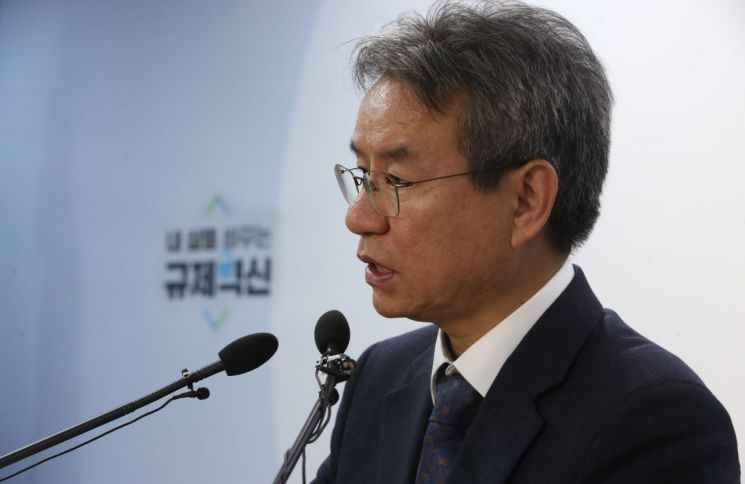
◆ Kim Nam-jun, Chair of the Legal and Prosecutorial Reform Committee: "Prosecutorial reform is a historic task reflecting the people's will" = On the day, Chair Kim briefed after issuing the 25th recommendation from the Ministry of Justice, stating, "The committee reports the progress to the public as it concludes its activities."
Chair Kim said, "We have seriously considered what true prosecutorial reform means," adding, "While power institutions that grew excessively during the military dictatorship have gradually found their place after democratization, the prosecution cannot be an exception." According to Chair Kim, prosecutorial reform means restoring the prosecution to the position mandated by the Constitution.
Regarding prosecutorial personnel authority, he said, "There has been much debate over whether the Minister of Justice or the Prosecutor General should exercise it," and added, "The answer is to prevent anyone from unilaterally controlling prosecutorial personnel decisions." Previously, the committee recommended regularizing the Prosecutorial Personnel Committee to meet monthly and granting real authority by including democratically elected prosecutor representatives by rank to review appointments of agency heads. Chair Kim explained, "If the Prosecutorial Personnel Committee functions properly, it becomes difficult for either the minister or the prosecutor general to wield personnel authority alone."
He also mentioned the 'comprehensiveness' of prosecutorial reform. Chair Kim said, "This is why a well-coordinated reform package is necessary," and added, "For reform measures to be properly implemented, the reform package must be realized comprehensively."
Finally, Chair Kim addressed the mixed evaluations so far, saying, "Some criticisms are justified, but in some cases, there may have been political criticism," and requested, "Please consider these aspects carefully when evaluating."
© The Asia Business Daily(www.asiae.co.kr). All rights reserved.
![Clutching a Stolen Dior Bag, Saying "I Hate Being Poor but Real"... The Grotesque Con of a "Human Knockoff" [Slate]](https://cwcontent.asiae.co.kr/asiaresize/183/2026021902243444107_1771435474.jpg)
















