Ministry of Environment Evaluates Recycling Ease Grades for Packaging of 6,000 Companies
48% Achieve Top and Excellent Grades... 'Difficult' Grade Accounts for 32%
Mandatory 'Recycling Difficulty' Labeling on Products from March Next Year
Products Must Be Released After Packaging Material and Structure Verification by Korea Environment Corporation
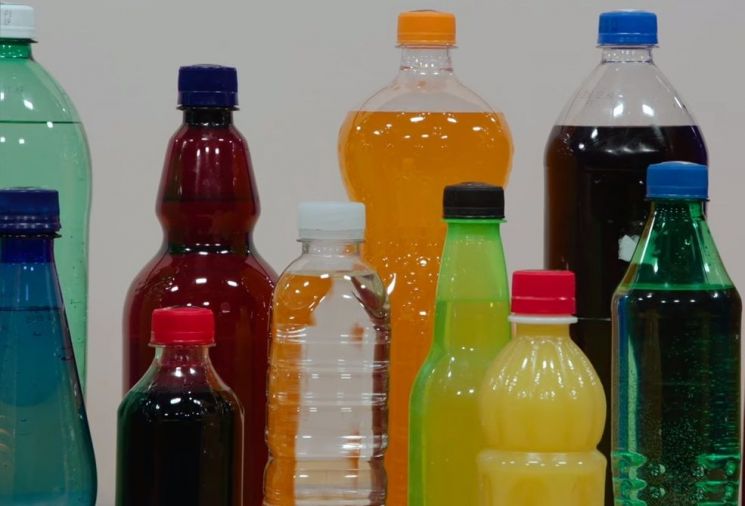
[Asia Economy Reporter Kim Bo-kyung] Starting next year, companies that receive a rating of 'Difficult' in the recyclability grading of packaging materials such as PET bottles will see their Extended Producer Responsibility (EPR) fees increase by 20%. It will also be mandatory to label packaging materials with 'Recycling Difficult.' This is an initiative by the Ministry of Environment to promote the spread of easily recyclable packaging materials such as transparent PET bottles.
On the 27th, the Ministry of Environment announced the recyclability ratings of about 27,000 packaging materials manufactured or imported by over 6,000 domestic companies, classifying them into four grades: 'Excellent,' 'Good,' 'Average,' and 'Difficult.'
In December last year, the Ministry introduced the 'Packaging Material Composition and Structure Grading System' through an amendment to the Recycling Promotion Act. This aims to prevent increased costs and deterioration in the quality of recycled raw materials caused by difficult-to-recycle packaging and to improve packaging materials to be easily recyclable from the production stage.
Accordingly, approximately 6,000 packaging material producers with sales exceeding 1 billion KRW, subject to EPR, were required to have their packaging materials such as PET bottles, paper packs, glass bottles, and metal cans evaluated for recyclability by the 24th of last month.
As a result of this evaluation, 161 items were recognized as 'Excellent' in recyclability, and 12,702 items were rated 'Good,' accounting for half (48%) of the total. Including the 'Average' grade, the number reached 18,294, representing 68%.
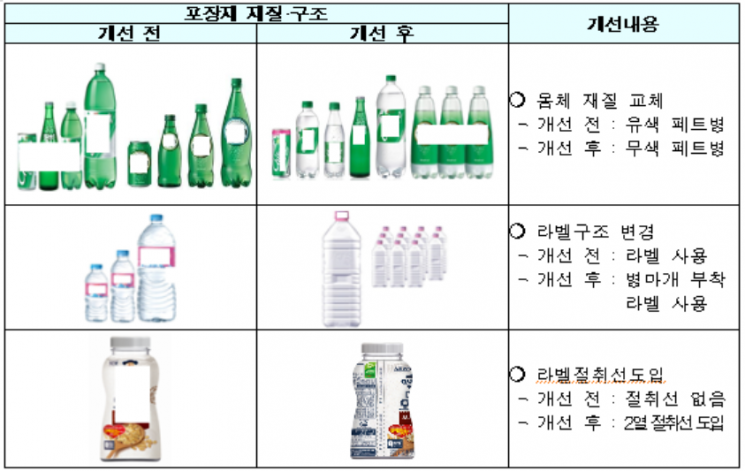
The issue lies with the 8,715 packaging materials (32%) rated as 'Difficult.' The Ministry of Environment has mandated that from March 24 next year, packaging materials must be labeled with the phrase 'Recycling Difficult.'
However, exemptions apply to cases where changes in material or structure are deemed difficult due to concerns about product functionality, such as with aseptic packs.
Additionally, starting next year, EPR fees will be differentiated, with a 20% surcharge applied to the 'Recycling Difficult' grade. The funds secured through this will be used for incentives to promote improvements in packaging material composition and structure, as well as for R&D.
An official from the Ministry of Environment stated, "From next year, the 20% additional EPR fee will first be applied to PET bottles, glass bottles (fruit wine and whiskey), and aseptic packs, and will be gradually expanded to all product categories."
In the future, products released without confirmation of packaging material composition and structure from the Korea Environment Corporation will be subject to fines. However, products manufactured or imported before December 25 last year will be exempt from fines if they apply for recyclability evaluation.
Lee Young-gi, Director of Resource Circulation Policy at the Ministry of Environment, said, "To improve the quality of packaging recyclability, it is important to produce packaging that is easy to recycle from the manufacturing stage," adding, "We will continue to make efforts to promote the spread of easily recyclable packaging materials."
© The Asia Business Daily(www.asiae.co.kr). All rights reserved.
![Clutching a Stolen Dior Bag, Saying "I Hate Being Poor but Real"... The Grotesque Con of a "Human Knockoff" [Slate]](https://cwcontent.asiae.co.kr/asiaresize/183/2026021902243444107_1771435474.jpg)
















