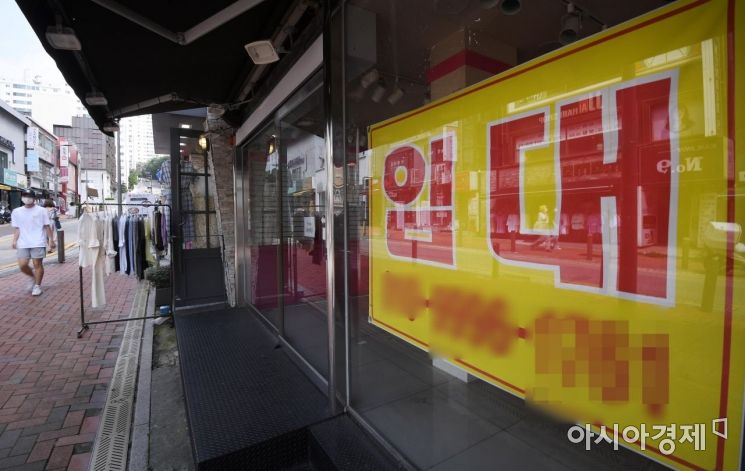
 Due to the aftermath of the novel coronavirus infection (COVID-19) and the ongoing economic downturn, a rental notice is posted at a shopping street in front of Ewha Womans University in Seodaemun-gu, Seoul, on the 18th. Photo by Kim Hyun-min kimhyun81@
[Asia Economy Reporter Jusangdon] In the future, tenants of commercial properties who suffer damage in disaster situations such as the novel coronavirus infection (COVID-19) will be able to request a reduction in rent. The six months following the enforcement of the amendment to the Commercial Building Lease Protection Act will be excluded from the delinquency period. This means landlords will not be legally allowed to request eviction even if tenants fail to pay monthly rent for six months.
On the 24th, the amendment to the Commercial Building Lease Protection Act to protect commercial tenants in response to the economic crisis caused by COVID-19 passed the plenary session of the National Assembly.
The amendment stipulates that tenants’ rent arrears of up to six months will not be grounds for refusal to renew the lease. According to the existing Commercial Building Lease Protection Act, landlords can terminate contracts if the tenant’s rent arrears reach three months’ rent. Now, even if tenants fail to pay rent for six months, they cannot be forcibly evicted.
However, rent arrears incurred before the enforcement of the amendment will not disappear. For example, if a tenant who has already failed to pay one month’s rent again fails to pay two months’ rent after March 23, the landlord can terminate the contract. While tenants may avoid immediate contract termination even if they cannot pay rent, which is expected to help protect small business owners, landlords will not be able to exercise property rights even if they do not receive rent for six months. Regarding this, a Ministry of Land, Infrastructure and Transport official said, "The purpose is to protect tenants who could face immediate disadvantages if they fall behind on three months’ rent," adding, "Since overdue rent is not waived, landlords will not suffer unilateral losses."
The amendment also specifies the conditions under which tenants can request rent reductions, changing from "changes in economic circumstances" to "changes in economic circumstances due to first-class infectious diseases under the Infectious Disease Control and Prevention Act." This provides grounds for small business owners affected by quarantine measures for first-class legally designated infectious diseases, including COVID-19, to request rent reductions from landlords. However, if landlords refuse the reduction, tenants must apply for mediation through the Commercial Building Lease Dispute Mediation Committee, and if mediation fails, they must file a civil lawsuit.
© The Asia Business Daily(www.asiae.co.kr). All rights reserved.
![Clutching a Stolen Dior Bag, Saying "I Hate Being Poor but Real"... The Grotesque Con of a "Human Knockoff" [Slate]](https://cwcontent.asiae.co.kr/asiaresize/183/2026021902243444107_1771435474.jpg)















