MFDS "No Driving After Taking Cold Medicine... Avoid Taking If You Have Drunk Heavily"
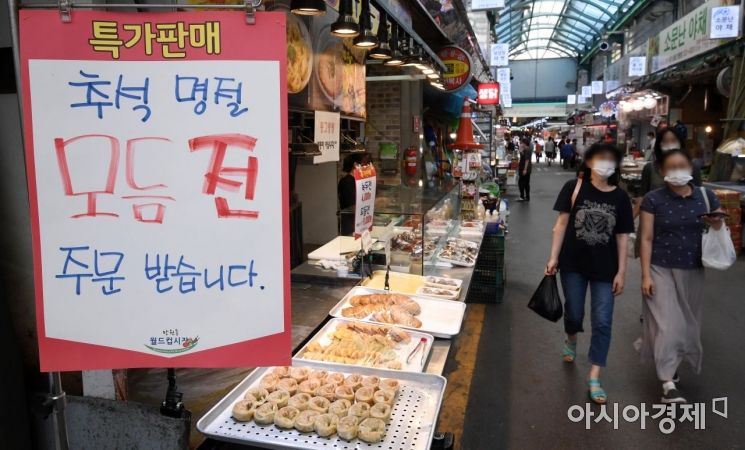 On the 17th, about fifteen days before the Chuseok holiday, a Chuseok holiday assorted jeon order notice is posted at a store in Mangwon Market, Mapo-gu, Seoul. Photo by Kim Hyun-min kimhyun81@
[Asia Economy Reporter Seo So-jeong] If you sprain a joint and swelling occurs, use a cool patch, and if pain continues after the swelling subsides, apply a hot patch.
The Ministry of Food and Drug Safety announced on the 23rd that it provides "safety information such as proper purchasing guidelines and usage methods for medicines, cosmetics, and medical devices" to ensure a safe Chuseok holiday.
There are cool patches and hot patches that can be used for muscle pain and other symptoms caused by preparing food during the holiday season.
If a joint is sprained and swelling occurs, it is recommended to use a cool patch containing menthol, which cools the skin and relieves pain. If pain continues after the swelling has gone down, it is better to use a hot patch containing capsaicin extract, which warms the painful area and helps blood circulation.
Patches should not be applied repeatedly to the same area, and use should be discontinued if itching, rash, or other symptoms occur. If the patch does not come off easily from the skin, soak it in water for about 1-2 minutes before removing it.
Digestive medicines are divided into enzyme preparations that break down food in the gastrointestinal tract and gastrointestinal motility enhancers that promote gastrointestinal movement. Enzyme preparations are medicines used to promote digestion of carbohydrates, proteins, fats, etc., with main ingredients such as pancreatin and biodiastase. Enzyme digestive medicines may cause allergies in some people, so caution is needed.
Gastrointestinal motility enhancers are prescription medicines used under a doctor's guidance for symptoms such as abdominal bloating, abdominal pain, and loss of appetite caused by decreased gastrointestinal function. If symptoms do not improve after taking the medicine for a certain period, long-term use should be avoided.
Do Not Take Anti-Diarrheal Medicine If Diarrhea Is Accompanied by Fever, Bloody Stool, or Severe Abdominal Pain
Children’s Antipyretics Can Cause Liver Damage If Overused... Follow Dosage and Instructions Carefully
Anti-diarrheal medicines that can be taken when symptoms such as diarrhea or loose stools occur include intestinal motility inhibitors and astringent/adsorbent agents. Intestinal motility inhibitors reduce intestinal peristalsis to stop diarrhea, but if diarrhea is accompanied by fever, bloody stool, or severe abdominal pain, infectious diarrhea is suspected, so do not take medicine and seek medical attention.
Astringent/adsorbent agents quickly expel toxic substances or bacteria from the intestines to stop diarrhea. It is best to take these medicines on an empty stomach, and when taking with other medicines, it is advisable to leave an interval between them.
Cold medicines and headache medicines should also be taken according to usage instructions. When taking medicine to relieve cold symptoms, drowsiness may occur, so avoid driving. Cold and headache medicines containing acetaminophen can cause liver damage, so it is better to avoid taking them if you have consumed alcohol during the holiday.
Children’s bodies react differently to medicines than adults, so it is important to check the exact dosage and method according to age and weight. Especially, infants under 24 months must take cold medicine only under a doctor's guidance, and if cold medicine is taken inevitably, caregivers should monitor carefully.
If a child develops a fever above normal body temperature due to long trips or other reasons, medical attention is necessary, but if hospital visits are not possible, antipyretics can be used. In this case, antipyretics containing acetaminophen and ibuprofen can be used, but they must be taken strictly according to the dosage and instructions on the product.
Taking acetaminophen in amounts not suitable for weight or age or not following the dosing interval can cause liver damage. Ibuprofen can irritate the stomach or impair kidney function, so it is better not to give it to children who are vomiting or have diarrhea, as there is a risk of dehydration.
© The Asia Business Daily(www.asiae.co.kr). All rights reserved.
![Clutching a Stolen Dior Bag, Saying "I Hate Being Poor but Real"... The Grotesque Con of a "Human Knockoff" [Slate]](https://cwcontent.asiae.co.kr/asiaresize/183/2026021902243444107_1771435474.jpg)















