Passed ICT Regulatory Sandbox
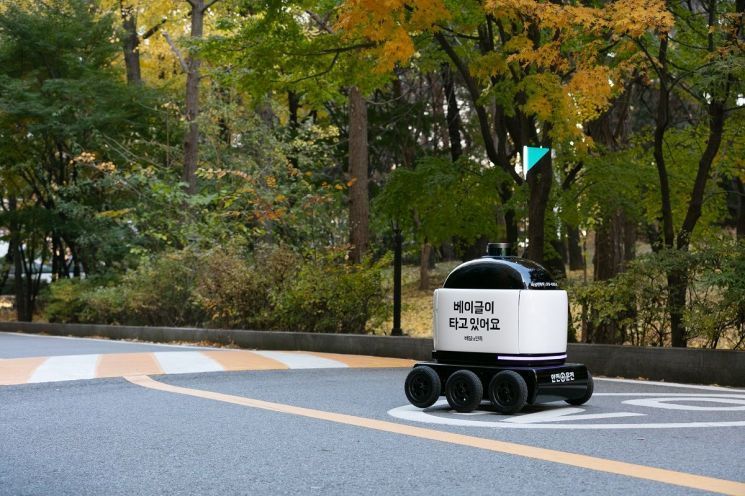
[Asia Economy Reporter Joeslgina] The Baedal Minjok delivery robot is now allowed to roam on sidewalks and in parks, areas that were previously prohibited. Additionally, a project to provide accommodation facilities to travelers by leasing vacant houses in rural fishing and farming villages for at least 10 years is set to be fully launched.
The Ministry of Science and ICT announced on the 23rd that it held the 12th New Technology and Service Deliberation Committee meeting to review a total of eight ICT regulatory sandbox projects.
As a result of the review, five projects received demonstration exemptions: ▲Visual impairment walking route guidance service (LBS Tech) ▲Accommodation using vacant houses in rural fishing and farming villages (Dajayo) ▲Indoor and outdoor autonomous delivery robots (Woowa Brothers) ▲85KHz-based electric bus wireless charging service (WiPowerOne) ▲Mobile-linked open karaoke booths (MediaScope). The mobile credit information linkage service by the National Pension Service and Kakao Bank, and the non-alcoholic liquor sales service using smart ordering by Shinsegae L&B received temporary permits. Telaum’s remote power management system for unmanned telecom base stations received approval for changes to its temporary permit conditions.
Accordingly, a service that guides visually impaired people by voice from their smartphone’s location information (GPS) to nearby commercial, public, and convenience facilities and destinations will begin. Under current regulations, accessing and issuing building floor plans containing information on building entrances and internal corridors requires the owner’s consent, making it impossible to provide services targeting the visually impaired.
The Deliberation Committee granted a demonstration exemption to LBS Tech’s ‘Mobility and Life Convenience Service for the Visually Impaired’ to improve mobility for the visually impaired. Public offices and institutions can issue floor plans without owner consent, and multi-use buildings such as shopping centers can issue them except where restricted by other laws for security reasons. However, security measures for the building status map must be submitted.
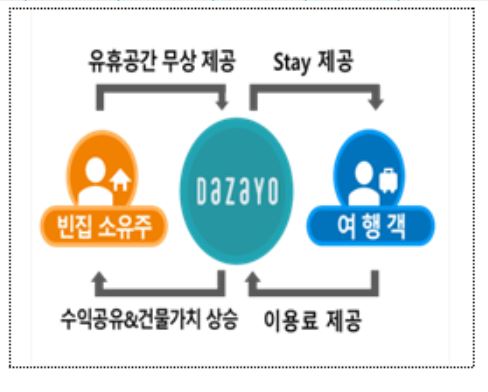
Accommodation using vacant houses in rural fishing and farming villages has also become possible. Dajayo applied for a demonstration exemption to lease vacant houses from owners in rural fishing and farming villages for at least 10 years, remodel them, and provide them as accommodation facilities to travelers through a brokerage platform.
The Deliberation Committee decided that vacant houses (under 230㎡) in rural and semi-rural areas can be operated in up to five cities/counties/districts (one per province) with a total of up to 50 houses (up to 15 per local government). The operating days are limited to 300 days per year, and the project will proceed by fulfilling business requirements and resident consultation procedures for coexistence with village residents. Through this, it is expected to meet diverse accommodation demands of tourists while addressing the social issue of vacant house neglect in rural areas and contributing to the revitalization of tourism and dining industries in rural fishing and farming villages.
Woowa Brothers, the operator of Baedal Minjok, applied for and received approval for a demonstration exemption for an autonomous delivery robot service that recognizes its location, route, and objects by itself to pick up and deliver food around Konkuk University in Seoul and Gwanggyo Lake Park in Suwon. When ordering via the app, the robot moves to the store to pick up food, travels outdoors to deliver it, and if the final delivery location is above the second floor, it uses the elevator to deliver to the final destination.
Under current regulations, autonomous delivery robots are classified as ‘vehicles’ rather than pedestrians under the Road Traffic Act, restricting their passage on sidewalks and crosswalks. Under the Park and Green Space Act, powered devices over 30kg (maximum load about 50kg) are prohibited from entering parks. Also, under the Personal Information Protection Act, it is impossible to obtain prior consent from unspecified pedestrians for video recording by cameras attached to robots for food delivery and collision prevention. Elevator safety standards also restrict wireless control and communication module installation for robots in elevators.
The Deliberation Committee granted a demonstration exemption to Woowa Brothers’ ‘Indoor and Outdoor Autonomous Delivery Robot’ to advance autonomous robot technology and activate the market. The applicant plans to proceed with the demonstration under conditions including measures to ensure driving safety, personal information protection, and recognition of elevator safety inspection exemptions.
Additionally, WiPowerOne applied for a demonstration exemption to verify a wireless charging service that attaches a wireless charging device (receiver) to electric buses, installs wireless chargers (transmitters) under bus stops, and uses an 85kHz frequency to wirelessly charge before, after, and during bus stops. The Deliberation Committee granted a demonstration exemption to test up to seven electric buses (subject to consultation with related ministries if the scope expands) at two bus stops within the Daedeok Research and Development Special Zone circular electric bus route in Daejeon, including the Korea Advanced Institute of Science and Technology (KAIST). It is expected that this will improve electric bus charging convenience and contribute to the activation of industries related to electric buses and wireless charging infrastructure, as well as job creation.
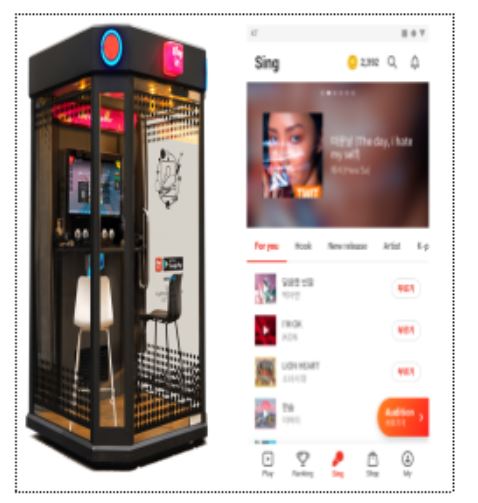
MediaScope applied for a demonstration exemption for a service that installs open karaoke booths in public places such as shopping malls, cinemas, and terminals, and operates them in small numbers (1-2 units) linked with a self-developed mobile app karaoke accompaniment device. Under the current Music Industry Act, ‘mobile-linked open karaoke booths’ must register as karaoke rooms despite differences in location, form, and number of installations from existing karaoke businesses.
The Deliberation Committee granted a two-year demonstration exemption to MediaScope’s ‘Mobile-Linked Open Karaoke Booth’ by exempting some requirements for karaoke room registration under certain restrictive additional conditions. Accordingly, it is expected to improve accessibility to karaoke rooms in shopping malls, cinemas, and amusement facilities, create sales synergy with main facilities, increase additional income for existing small business owners, and generate new startup items, contributing to the activation of the karaoke and music content industries.
Furthermore, a service was discussed at the committee that allows users of the Kakao Bank app who need income and employment information to provide such information online between Kakao Bank and the National Pension Service without submitting separate income verification documents, with the user’s consent.
The committee judged that the linked information (CI) held by the National Pension Service is not classified as unique identification information under the Personal Information Protection Act but has high identifiability and can be used with the data subject’s consent. The income and employment information that Kakao Bank seeks from the National Pension Service is credit information under the Credit Information Act and can be used for purposes other than the original one if the credit information subject consents, so temporary permission is unnecessary. However, since there was confusion in the market regarding legal and regulatory interpretations when implementing the ‘applied service,’ the committee decided to notify the applicant company of the results by official letter. This is expected to improve convenience in submitting income and employment verification documents through online linkage services and contribute to creating various additional services.
In addition, Shinsegae L&B received temporary permission for a service that allows customers to order and pay for non-alcoholic beverages online via smart ordering at liquor specialty stores and pick up products without waiting at the store. Going forward, this is expected to expand consumer choice for non-alcoholic beverages, increase small business profits, and reduce unnecessary customer waiting times through smart ordering.
The committee also approved changes to the temporary permit conditions for Telaum’s remote power management system for unmanned telecom base stations. Telaum applied to expand the system’s application scope from telecom unmanned base stations to places where public access is prohibited or restricted under related laws.
The Ministry of Science and ICT announced that since the ICT regulatory sandbox system was implemented in January, a total of 206 projects have been submitted, with 172 processed so far. Among 74 designated projects for temporary permits (30) and demonstration exemptions (44), 37 new technologies and services have been launched in the market, and the remaining 37 projects are preparing for rapid service launch.
Minister Choi Ki-young of the Ministry of Science and ICT said, “Despite the difficult conditions due to COVID-19, the 12th Deliberation Committee reviewed new projects in various fields such as services providing convenience for the disabled, accommodation using vacant houses in rural fishing and farming villages, and wireless charging electric buses, thanks to active cooperation from 12 ministries.” He added, “As various companies with ICT new technologies and services in the digital new deal sector continue to seek the ICT regulatory sandbox, we will strengthen in-depth consultations through various channels such as visiting briefings and actively support their utilization.”
© The Asia Business Daily(www.asiae.co.kr). All rights reserved.
![Clutching a Stolen Dior Bag, Saying "I Hate Being Poor but Real"... The Grotesque Con of a "Human Knockoff" [Slate]](https://cwcontent.asiae.co.kr/asiaresize/183/2026021902243444107_1771435474.jpg)

















