Improvement of Activated Carbon Sealed Area and Introduction of Ozone Facilities
Reinforcement of Workforce and Priority Placement of Specialists at Water Purification Plants
Promotion of 'Incheon-type Water Care' Including Aging Pipeline Improvement
[Asia Economy Reporter Park Hyesook] Incheon City will establish a hygienic tap water production system at a food-grade level following the tap water larvae incident in July.
On the 23rd, the city announced that it will implement a "Comprehensive Tap Water Hygiene Management Plan," which includes the introduction of ISO22000 (Food Safety Management System) to block the inflow of organisms into water purification plants and strengthen hygiene standards.
The comprehensive plan was prepared to analyze the causes of tap water larvae occurrence and seek recurrence prevention measures, including the recurrence prevention proposals from the "Joint Expert Precision Investigation Team" formed for this purpose and the comprehensive measures announced by the Ministry of Environment on the 3rd.
First, the city plans to reinforce and install blocking facilities such as fine insect screens, air curtains, and pest traps to fundamentally block the inflow, habitation, and outflow of organisms in water purification plants.
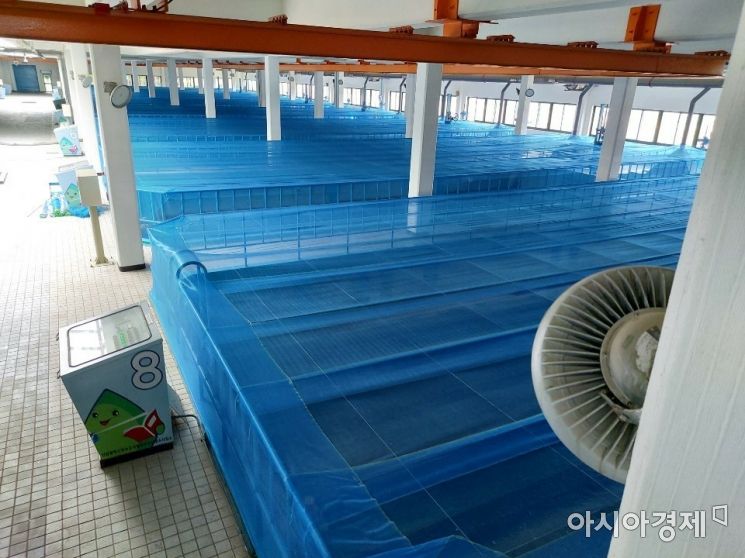
The activated carbon filter beds (pond-type facilities for water purification using powdered activated carbon), which were operated in an open form, will be improved to a sealed type, and the completion of the ozone oxidation facility at Gongchon Water Purification Plant will also be finished by June next year.
Additionally, to produce hygienic tap water according to advanced country standards, the city will introduce the international standard ISO22000, establishing a hazard control system at the level of food factories, while strengthening daily and regular inspections and hygiene measures in the water purification process.
The expertise of water supply operation personnel will also be enhanced. Personnel with qualifications in water purification facility operation and specialized qualifications for each purification process will be prioritized for placement at water purification plants, and a new facility management position will be created and recruited to reinforce personnel by February next year.
The city will also actively promote the "Incheon-type Water Care" project to strengthen tap water service administration, including indoor pipe diagnosis using endoscopic equipment and improvement of aging pipes.
Furthermore, following the real-time disclosure of water quality information for 31 water distribution reservoirs in June, water quality information for 26 distribution pipe terminals will be disclosed on the website and smartphones by the end of this year.
Park Younggil, head of the Incheon Waterworks Headquarters, stated, "We will inform the public about tap water policies and operational status through the website and local communities (Mom Cafes), respond promptly to complaints, and sufficiently reflect citizens' opinions in water supply policies. We will do our best to implement the comprehensive tap water hygiene management plan without fail to hygienically improve the tap water production system, prevent recurrence of incidents, and restore trust."
In Incheon, in July, a type of gnat, a small flying insect, entered the activated carbon filter beds of the water purification plant, laid eggs, and larvae were found in the tap water of about 250 households.
© The Asia Business Daily(www.asiae.co.kr). All rights reserved.
![Clutching a Stolen Dior Bag, Saying "I Hate Being Poor but Real"... The Grotesque Con of a "Human Knockoff" [Slate]](https://cwcontent.asiae.co.kr/asiaresize/183/2026021902243444107_1771435474.jpg)















