Efficacy of 'Antimicrobial Peptoid' in Treating Multidrug-Resistant Bacteria
Suggests Potential for Developing New Antibiotics
[Asia Economy Reporter Junho Hwang] Domestic researchers have developed a peptoid-based antibiotic to combat super bacteria resistant to antibiotics due to antibiotic misuse. A joint research team including Professor Ji-won Seo of the Department of Chemistry at Gwangju Institute of Science and Technology and Professor Song-yeop Shin of Chosun University announced on the 22nd that they developed a peptoid-based antibiotic and elucidated the mechanism of its antibacterial activity. The related research paper was recently published in ACS Infectious Diseases, an international journal in the field of infectious diseases.
Using Peptoids to Combat Multidrug-Resistant Bacteria
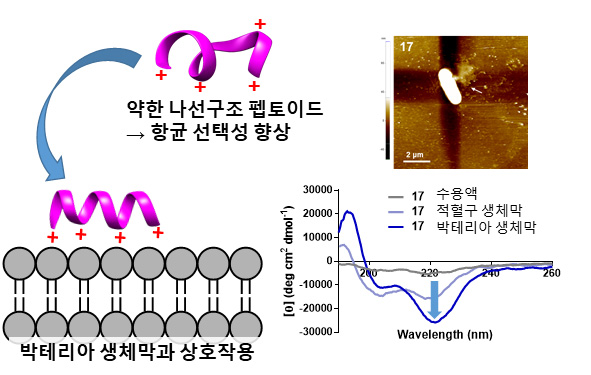
The research team developed a new antibiotic using antimicrobial peptoids that structurally mimic antimicrobial peptides, which are innate immune molecules of living organisms. These peptoids enhanced selectivity against bacteria by regulating their helical structure. Selectivity is the ratio between antibacterial activity and mammalian cell toxicity; a higher selectivity value means lower toxicity.
These peptoids showed activity against a broad range of Gram-positive bacteria (including Mycobacterium tuberculosis, Corynebacterium diphtheriae, Actinomyces species) and Gram-negative bacteria (including Escherichia coli, Shigella, Neisseria gonorrhoeae), including multidrug-resistant strains. Unlike natural peptides, they exhibited high stability against metabolic enzymes in the body.
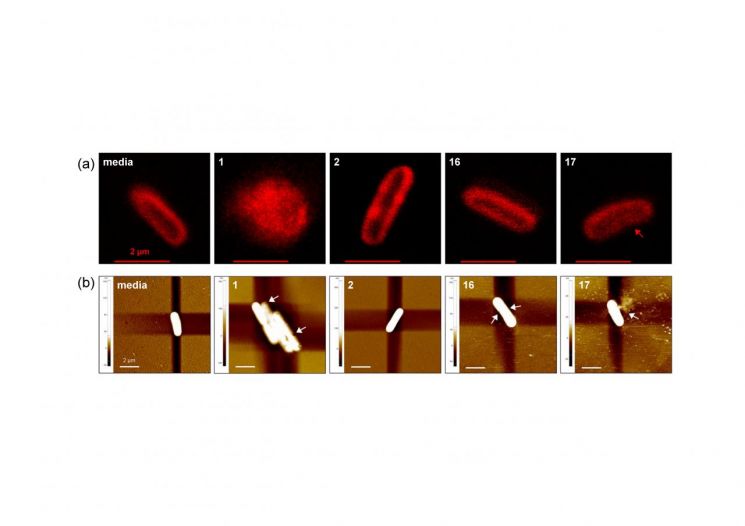
The research team also demonstrated through circular dichroism spectroscopy, which can confirm the secondary structure of biomolecules such as proteins, that peptoid number 17 exhibited a stronger helical structure, which increased selectivity in bacterial membranes. Using confocal laser microscopy and atomic force microscopy, they observed changes on the surface of Escherichia coli caused by the antimicrobial peptoids, confirming the antibacterial mechanism based on cell membrane disruption.
Enhancing the Potential of New Antibiotics Using Peptoids

The research team evaluated this study as presenting the potential for developing new antibiotics utilizing antimicrobial peptoids.
Professor Ji-won Seo said, "This study proposed drug design principles to improve bacterial selectivity of existing antimicrobial peptoids," adding, "We will continue research and development so that antimicrobial peptoids can become an important chemical weapon in the war between humans and microorganisms."
Meanwhile, bacteria have acquired resistance to antibiotics due to antibiotic misuse and pharmaceutical companies' hesitation to develop new antibiotic drugs over the past 30 years. In this way, multidrug-resistant bacteria (super bacteria) resistant to multiple antibiotics have emerged as a new factor threatening human health.
© The Asia Business Daily(www.asiae.co.kr). All rights reserved.
![Clutching a Stolen Dior Bag, Saying "I Hate Being Poor but Real"... The Grotesque Con of a "Human Knockoff" [Slate]](https://cwcontent.asiae.co.kr/asiaresize/183/2026021902243444107_1771435474.jpg)

















