80% of Food Service Industry Workers Willing to Use Eco-Friendly Packaging
Cost Increase Burden High...Production Cost Triples When Replacing Plastic Bags with Paper
Orion, CJ CheilJedang Lead Transition to Eco-Friendly Packaging
High Burden on SMEs... "Economic Support Measures Needed"
[Asia Economy Reporter Choi Saeng-hye] With the increase in single-person households and the prolonged COVID-19 pandemic, food delivery and dining-out delivery services have expanded, causing a sharp rise in the use of packaging materials. Due to cost burdens, many use cheap packaging materials that are not recyclable instead of eco-friendly packaging, making urgent countermeasures necessary.
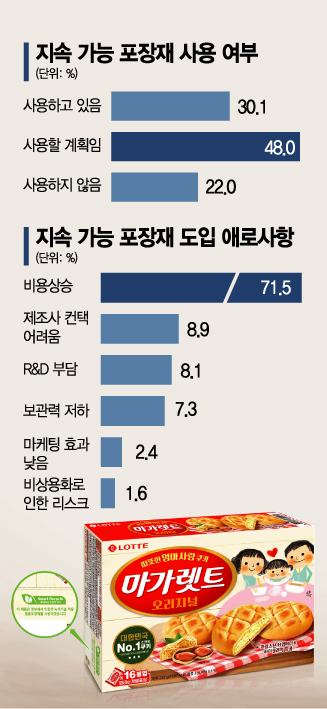
On the 22nd, the Korea Agro-Fisheries & Food Trade Corporation announced that according to a recent online survey on sustainable food packaging conducted with 123 food and dining industry workers, about 30.1% of respondents are applying sustainable packaging materials, and 48% said they plan to use them. However, despite the need for adoption, difficulties in utilization were found due to high costs of new materials and research expenses for applying packaging technology.
The biggest issue faced by the industry was the "burden of increased costs (71.5%)." Producing eco-friendly food packaging requires new printing equipment, biodegradable films (PLA), and packaging materials mixed with calcium carbonate. Also, switching from plastic bags to paper bags increases production costs by about three times.
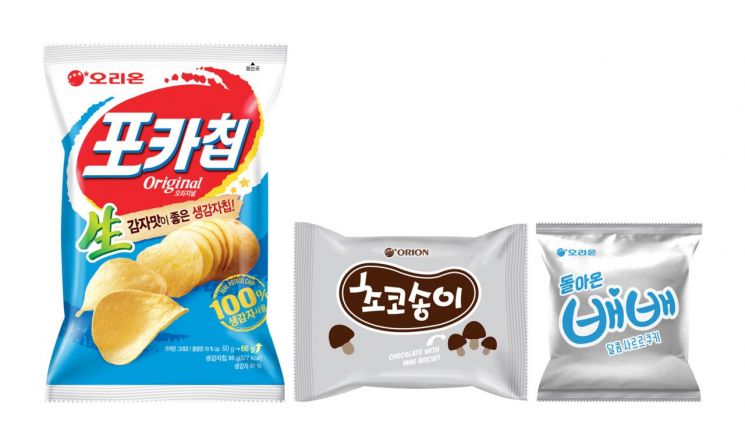
Large corporations are increasing the proportion of sustainable packaging materials. Orion started producing eco-friendly packaging using 'Flexo' printing equipment from March. They produce 'Pocachip' packaging and individual inner packaging for products like 'Baebae' and 'Choco Song-i' using flexo printing. Unlike traditional gravure printing, flexo printing uses a relief printing method that significantly reduces ink usage, making it environmentally friendly. They invested approximately 7 billion KRW solely in flexo printing equipment.
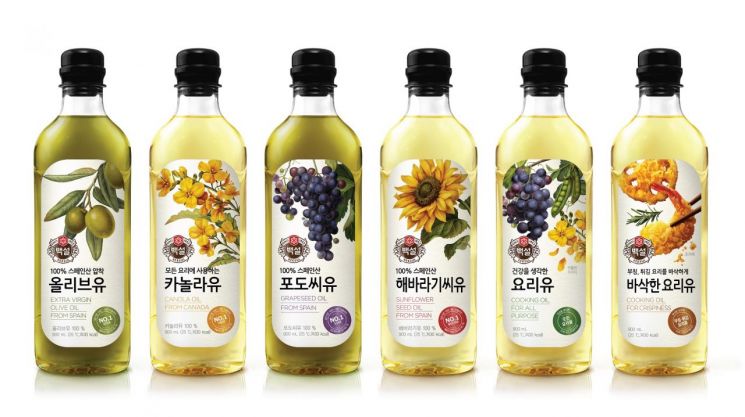
CJ CheilJedang is reducing plastic packaging across its products. By reducing the thickness of Hetbahn containers, they cut about 340 tons of plastic annually and reduced carbon dioxide emissions by 550 tons. For the 'Baeksul Premium Oil Package,' they changed colored PET bottles to transparent ones and used 'water-separable adhesives' for labels to improve recyclability. They also reduced plastic used in caps and containers by about 10%, expecting to cut approximately 111 tons of plastic annually.
Pulmuone uses calcium carbonate mixed packaging materials in natto and soft tofu containers that pose no recycling issues, reducing plastic use by about 30%. SPC developed packaging materials that produce vivid colors without using toxic chemicals and applied eco-friendly printing technology to bread wrapping films. Starbucks began using SKC's eco-friendly biodegradable film made from corn extract for banana packaging in 2018 and has since expanded its use to cake protective films, muffins, and sandwich packaging.
Although companies are actively developing eco-friendly packaging, the costs range from several hundred million to tens of billions of KRW, making it difficult for smaller businesses to adopt. A Korea Agro-Fisheries & Food Trade Corporation official stated, "From a policy perspective, support measures should be prepared to alleviate the cost and R&D burdens companies face so that the food and dining industry can actively adopt and utilize sustainable food packaging." They also emphasized the need to address concerns related to 'delivery containers,' whose usage has increased due to the expansion of non-face-to-face consumption.
© The Asia Business Daily(www.asiae.co.kr). All rights reserved.
![Clutching a Stolen Dior Bag, Saying "I Hate Being Poor but Real"... The Grotesque Con of a "Human Knockoff" [Slate]](https://cwcontent.asiae.co.kr/asiaresize/183/2026021902243444107_1771435474.jpg)

















