Ministry of Employment Announces Remote Work Manual
"There Is Corporate Culture... Too Much Interference" Mixed Reactions from Employees
[Asia Economy Reporter Han Seung-gon] "They'll manage well on their own...", "There should be at least some kind of manual."
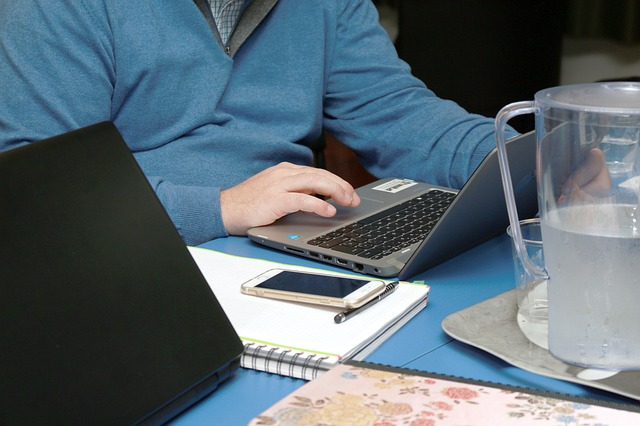
As remote work increased due to the spread of the novel coronavirus disease (COVID-19), the Ministry of Employment and Labor announced a comprehensive manual for remote work to minimize confusion. Reactions among office workers are mixed. While some believe that a standardized manual is difficult to apply due to the unique characteristics and individuality of each company, others see it as merely providing overall guidelines and consider it a minimum standard manual for remote work.
The manual includes detailed content such as procedures for introducing remote work, personnel and organizational management plans, methods for calculating working hours and break times, attendance management methods, and types of work-related accidents.
According to the manual, if a remote worker leaves their workplace during working hours without the employer's approval or engages in personal errands, it may be considered a violation of employment rules or service regulations.
However, it also states that employers should show understanding for socially acceptable activities that do not interfere with work, such as caring for sick family members or infants, answering home phone calls, or taking showers during summer.
Additionally, if an employee feels confined working at home and chooses to work at a nearby cafe or similar place, it is allowed only if there is a basis in the collective agreement, labor-management agreement, or employer approval. Otherwise, changing the workplace arbitrarily by the employee may be considered a violation of service regulations.
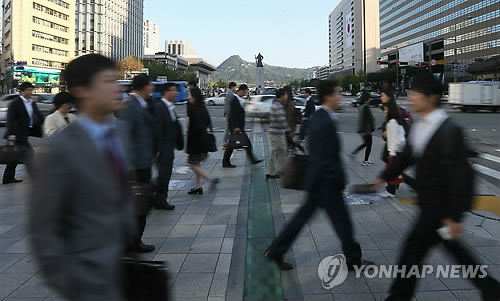
The part drawing attention among office workers is how far socially acceptable activities during remote work can go.
Kim, a company employee in his 30s working at a Seoul-based company, said, "I think people will manage their work well on their own, but the manual itself feels a bit restrictive." He added, "It probably varies depending on each company or department head, but it seems like the higher-ups will pay attention to this manual," expressing some regret.
On the other hand, some believe that remote work should be strictly supervised just like commuting to and from work. Lee, a worker in his 40s, said, "If the efficiency of remote work drops, criticism is inevitable," and added, "I saw the manual in an article, and it seems to be about working properly within the bounds of common sense."
Another company employee in his 30s, Park, said, "I don't view the existence of the manual negatively," but also said, "Since the higher-ups will likely see this manual, it's a kind of guideline on 'how to work,' so it probably can't be ignored." He explained, "Among colleagues, there are already talks like 'I should definitely report before working at a cafe' or 'I won't be able to go to cafes anymore.'"
While various opinions about the usefulness of the manual are emerging among office workers, satisfaction with remote work appears to be high. However, anxiety due to competition remains.
According to a survey conducted in July by the market research company Embrain Trend Monitor, which surveyed 1,000 male and female office workers aged 19 to 59 nationwide regarding perceptions of remote work, 45.2% reported having experienced flexible work arrangements such as remote work and flexible working hours.
Among office workers who have experienced remote work, 84.4% responded that they were "satisfied." Younger workers in their 20s and 30s showed higher satisfaction rates with remote work (89.3% for those in their 20s, 90.6% for those in their 30s). Those who said remote work has more advantages than disadvantages accounted for 61.5%, while only 15.1% said there were many disadvantages.
In particular, 65.6% of those with remote work experience responded positively that they have "more psychological relaxation" than before. 64.3% of respondents said that if remote work becomes more widespread, the 'work-life balance' culture could be established in our society, and 61.3% expected it would help with leisure activities and self-development.
On the other hand, since there is a perception that remote work means "working at a relaxed pace" at home (66.2%), many office workers expect the importance of work management and supervision systems to increase (77.7%). 81.8% of respondents predicted that if remote work becomes widespread, "work performance" will become more important than "diligent work attitude."
A company official who conducted the survey explained, "This shows that the weight of work evaluation in personnel assessments is expected to increase," and interpreted this as reflecting anxious views that performance-related stress may also increase accordingly.
© The Asia Business Daily(www.asiae.co.kr). All rights reserved.
![Clutching a Stolen Dior Bag, Saying "I Hate Being Poor but Real"... The Grotesque Con of a "Human Knockoff" [Slate]](https://cwcontent.asiae.co.kr/asiaresize/183/2026021902243444107_1771435474.jpg)


















