Increase in Insurance Payouts Due to Surge in Natural Disasters
Decline in Fossil Fuel Corporate Value... Impact on Investment Worth
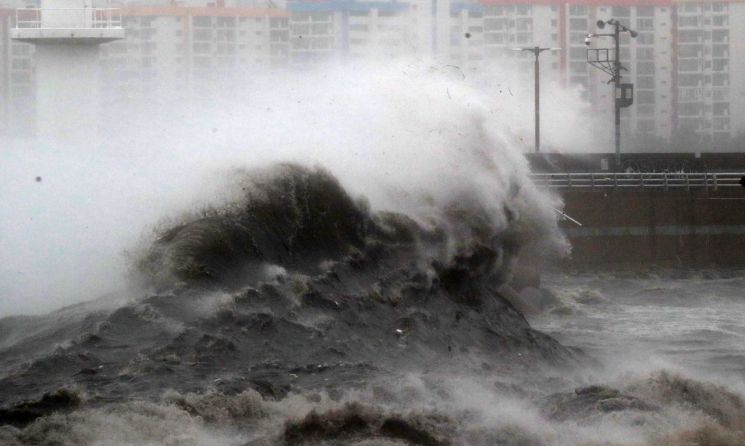
[Asia Economy Reporter Oh Hyung-gil] With record-breaking heavy rains and successive typhoons hitting the Korean Peninsula, the era of the 'climate crisis' has arrived.
Active responses are required worldwide, including in South Korea, to the 'Green Swan' shocks where climate change threatens economic and financial stability.
In particular, the insurance industry, which deals with risk as a product, is pointed out to need to prepare countermeasures suitable for the climate crisis in key areas such as underwriting and investment.
According to the Korea Insurance Research Institute on the 19th, the frequency and severity of natural disasters worldwide are increasing due to the impact of climate change.
In 2019, the number of natural disasters worldwide was 820, more than three times the 249 cases in 1980, and economic losses caused by natural disasters show large annual volatility but are on an increasing trend.

Underwriting and Asset Investment Strategies Considering Climate Change Must Be Established
The term 'Green Swan' refers to economic and financial crises caused by changes in ecosystems and climate, derived from the term 'Black Swan,' which denotes unpredictable events that cause massive damage when they occur.
The Green Swan directly affects the financial stability of insurance companies.
As the frequency and severity of natural disasters increase, the scale of insurance payouts rises, potentially resulting in damage to assets held by insurers.
Additionally, companies dependent on fossil fuels during the transition to a low-carbon economy are exposed to 'stranded asset' risks, which are expected to lead to declines in corporate value and asset impairment.
Representative examples include companies in carbon-intensive industries such as coal, oil, and gas, as well as energy-intensive sectors like forestry, paper, metals, and mining. Due to the impact of stranded assets, financial assets are also re-evaluated, which may change the value of insurers' investment assets.
Furthermore, liability risks are anticipated as parties responsible for damages caused by climate change may shift costs to insurers through third-party liability insurance.
Insurance companies are advised to analyze the impact of climate scenarios on insurance payouts and the value of insurance company assets, establish asset acquisition strategies considering climate change risks, and assess financial soundness.
Moon Hye-jung, a research fellow at the Korea Insurance Research Institute, suggested, "It is necessary to identify exposure risks to climate change and prepare underwriting and asset investment strategies that consider the impact of climate change. Potential exposure risks related to climate change litigation should be evaluated, carbon emission reduction strategies established and implemented, and related information transparently disclosed."
© The Asia Business Daily(www.asiae.co.kr). All rights reserved.
![Clutching a Stolen Dior Bag, Saying "I Hate Being Poor but Real"... The Grotesque Con of a "Human Knockoff" [Slate]](https://cwcontent.asiae.co.kr/asiaresize/183/2026021902243444107_1771435474.jpg)
















