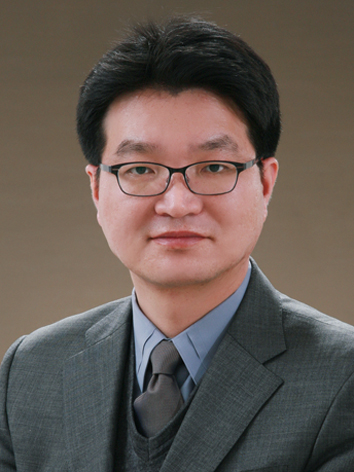
[Attorney Song Gi-chul, Shin Young Law Firm] The K5 gas mask has been supplied to our troops since 2016, thanks to the successful research and development by Sancheong Co., Ltd. (currently Hancom Lifecare). The K5 gas mask, equipped with two canisters, maximizes survivability by applying patented technology that automatically blocks gas inflow during the canister replacement process. Additionally, it is usable by eyeglass wearers and features easy attachment and detachment, minimizing combat power loss in chemical, biological, radiological, and nuclear (CBRN) situations. The K5 gas mask is the second product developed worldwide modeled after the U.S. military’s M50 gas mask and is even considered superior in performance to the M50.
While the U.S. company AVON invested $100 million in developing the M50 gas mask, the Korean government (with the Defense Acquisition Program Administration as the competent authority) invested only 3.2 billion KRW in the developer that succeeded in the K5 gas mask R&D. Achieving such remarkable R&D results with a small investment was possible because the developer applied its patented technology (automatic gas inflow blocking during canister replacement). In fact, the company rejected AVON’s proposal demanding astronomical fees for technology cooperation on the M50 gas mask and secured its own patented technology through design-around methods, then applied it to the K5 gas mask. Since this patented technology was an indispensable prerequisite for developing a new gas mask without infringing on AVON’s patents, the Defense Acquisition Program Administration repeatedly confirmed the application of Sancheong’s patented technology during the R&D and national defense standard establishment processes.
Typically, when a weapon system R&D is successful, the weapon system is designated as a defense material, and the R&D company is designated as a defense contractor (qualified to produce the defense material). Consequently, the R&D company secures the legal status of a defense contractor, allowing exclusive production of the developed weapon system (defense material) and compensation for actual costs during mass production. This is why companies actively engage in R&D despite considerable losses.
In practice, developers who succeed in weapon system R&D have been responsible for production, modification, improvement, and maintenance of the designated defense materials. From the military’s perspective, receiving quality products from verified developers is stable. However, since the Lee Myung-bak administration, additional designation of defense contractors has been promoted to expand market competition principles. Additional designation is only possible under special circumstances such as military strategy-related regional dispersion, timely supply, necessity to replace defense contractors, price and quality enhancement, etc. Furthermore, in practice, additional designation occurs after initial and subsequent mass production following R&D, once strict quality assurance and production stabilization of the defense material are achieved, and with the confirmation of the requesting military unit’s position and consent. Ultimately, additional designation is made after careful review of supply and quality following multiple mass production deliveries that allow cost recovery for the R&D company (existing defense contractor) that invested in development and production facilities after national defense standard establishment.
For example, the old K1 gas mask was exclusively produced by Samgong Mulsan from 1983 until 2006, when additional defense contractor designation was made to ensure smooth gas mask supply following the National Gas Mask Incident. Similarly, for rifles, S&T Motiv was designated as a defense contractor from 1973, responsible for rifle development and production, but it was only in 2016, after 43 years, that Dasan Gikong was designated as an additional defense contractor for main military rifles such as K1, K1A, K2, K2C1, and K3.
However, while Sancheong was in the process of initial mass production contracts with over 20 billion KRW invested in facilities under government interest differential compensation to meet military demand, the Defense Acquisition Program Administration forcibly designated SG Safety (formerly Samgong Mulsan), a CJ affiliate, as an additional defense contractor. Moreover, before Sancheong was even designated as a defense contractor, the Defense Acquisition Program Administration unlawfully disclosed K5 gas mask specification data to SG Safety. This unprecedented act granted unfair preferential treatment to a large corporation affiliate (effectively allowing them to seize the results of risky R&D through corporate capital).
When the company protested the sudden additional designation by the Defense Acquisition Program Administration, the administration launched all-out legal actions, including criminal accusations alleging that Sancheong secretly applied its patented technology to the K5 gas mask, and pressured for a full review of the K5 gas mask project. After acquiring Sancheong’s patents free of charge, SG Safety was immediately designated as an additional defense contractor. However, at the time of this additional designation, SG Safety had confirmed delivery defects of 380,000 K1 gas masks and 600,000 canisters and had not fulfilled related defect repairs, raising reasonable doubts about SG Safety’s capability to produce the K5 gas mask.
The defective delivery issue of the K1 gas mask remains unresolved. Regardless, with SG Safety designated as an additional K5 gas mask producer, the third mass production of the K5 gas mask in November 2019 proceeded as a designated competitive bidding between Hancom Lifecare and SG Safety. The Defense Acquisition Program Administration held the bidding three times to establish competition, but SG Safety never participated. Consequently, the administration had no choice but to conclude a contract with Hancom Lifecare as the sole bidder. Although SG Safety is a defense contractor obligated to produce the K5 gas mask upon government request, it shirked this production duty. In practice, no defense contractor with production capability avoids participating in designated competitive bidding. If a defense contractor avoids supplying defense materials, it risks cancellation of its designation and suspicion of collusion among contractors. Yet, the Defense Acquisition Program Administration took no action against SG Safety for non-participation. This raises suspicion that the administration sought to conceal responsibility for forcibly designating SG Safety, which lacked production capability, as a defense contractor.
Coincidentally, after this bidding, in January 2020, the Seoul Central District Prosecutors’ Office Defense Acquisition Investigation Division concluded after a three-year investigation that Sancheong did not conceal the application of its patented technology and that Defense Acquisition Program Administration officials knew or could have known about the patent application, resulting in a no-charge decision for Sancheong personnel. This investigation outcome officially declared that the Defense Acquisition Program Administration’s criminal accusations were baseless and malicious. At this point, it is necessary to clearly verify the truth surrounding the additional designation of the K5 gas mask defense contractor through an Audit Board audit and/or prosecution investigation. Furthermore, institutional improvements regarding the timing and conditions for additional defense contractor designation should be actively considered to promote weapon system R&D.
© The Asia Business Daily(www.asiae.co.kr). All rights reserved.

















