Abdulaziz bin Salman Saudi Energy Minister
Pressure to Implement Oil-Producing Countries' Production Cut Agreement
Possibility of OPEC+ Extraordinary Meeting in October
[Asia Economy Reporter Naju-seok] Saudi Arabia, the leader of Middle Eastern oil-producing countries, is firmly angry at crude oil traders and members of the Organization of the Petroleum Exporting Countries (OPEC). Since crude oil demand has hardly recovered after the COVID-19 pandemic, it has started to crack down. There is also speculation that additional measures to boost oil prices will be announced, with the possibility of a special meeting next month.
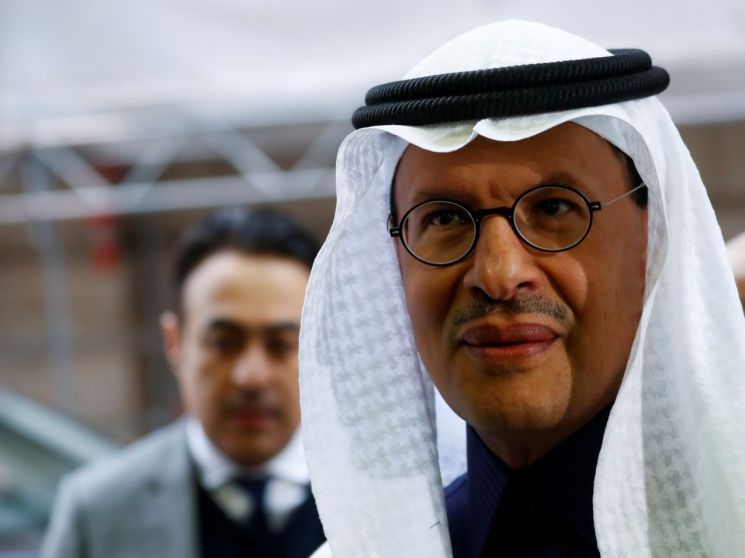
On the 17th (local time), according to CNBC and others, Abdulaziz bin Salman, Saudi Energy Minister, said at a press conference immediately after the ministerial-level video joint monitoring committee of OPEC member countries and the non-OPEC consultative group OPEC+ that he would "make the market restless" regarding the crude oil futures market, warning, "Those who play games with oil prices will scream as if in hell." This was an open threat to crude oil traders. Abdulaziz, who has been in charge of Saudi oil policy since September last year, is the fourth son of King Salman of Saudi Arabia and the half-brother of Crown Prince Mohammed bin Salman, the de facto ruler of Saudi Arabia. The appointment of a royal family insider as energy minister, a position traditionally held by technical bureaucrats, attracted attention from the start.
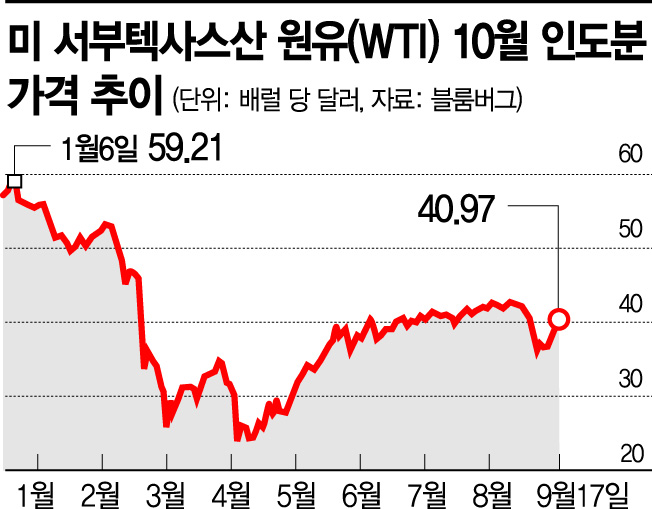
The powerful minister of the world's largest oil-producing country expressed dissatisfaction with crude oil traders because oil prices have hardly risen despite production cuts. On the New York Mercantile Exchange (NYMEX), October delivery West Texas Intermediate (WTI) crude oil rose 2% ($0.81) to $40.97 per barrel compared to the previous day, but this was largely due to a temporary effect from a U.S. hurricane. Since the unprecedented plunge to negative prices in April, oil prices have recently remained in the $30 range. He judged that this result was because traders were manipulating market supply volumes to seek arbitrage profits.
At the joint monitoring committee meeting that day, he criticized oil-producing countries while reviewing the market situation following the largest production cut in history in April. He emphasized that the production cut agreement within OPEC+ must be thoroughly implemented. He said, "The tactic of producing more than the agreed amount and hiding the violation of the agreement has always ended in failure," adding, "Such violations have only damaged reputation and trust without producing results." He continued, "Countries that violate the production cut agreement not only lower their own credibility but also weaken the common goal," and said, "To achieve results, production volumes and agreement facts must be honestly disclosed to the market and OPEC+."
Foreign media report that although Minister Abdulaziz did not mention specifics, he was pointing to the problem of the United Arab Emirates (UAE) not properly implementing the production cut agreement. OPEC+ had agreed to reduce daily crude oil production by 9.7 million barrels starting in May this year. Although the production cut volume was later reduced to 7.7 million barrels, there have been continuous criticisms that some countries have not properly implemented the promised cuts.
According to the International Energy Agency (IEA), the UAE was allocated a quota to produce 2.45 million barrels per day but produced 420,000 barrels more than this. In August, it was allocated 2.49 million barrels but produced 520,000 barrels more. The IEA inferred these production volumes using satellites and other means, but the UAE is actively disputing this.
The issue of non-compliance with the agreement has been continuously raised within OPEC+. In this regard, OPEC+ has taken additional production cuts targeting countries that have not complied with the agreement, such as Iraq, Nigeria, and the UAE, to ensure they fulfill their promises. The idea is to supply less to the market by the amount produced beyond the agreement. OPEC+ has extended the compensation period for non-compliance until the end of the year.
Minister Abdulaziz did not make additional remarks on whether OPEC+ would take further measures to stabilize the crude oil market. However, according to sources, Minister Abdulaziz mentioned that if weak crude oil demand continues, an extraordinary meeting could be held next month. Originally, OPEC+ had planned to hold a regular meeting over two days on November 30 this year.
© The Asia Business Daily(www.asiae.co.kr). All rights reserved.
![Clutching a Stolen Dior Bag, Saying "I Hate Being Poor but Real"... The Grotesque Con of a "Human Knockoff" [Slate]](https://cwcontent.asiae.co.kr/asiaresize/183/2026021902243444107_1771435474.jpg)
















